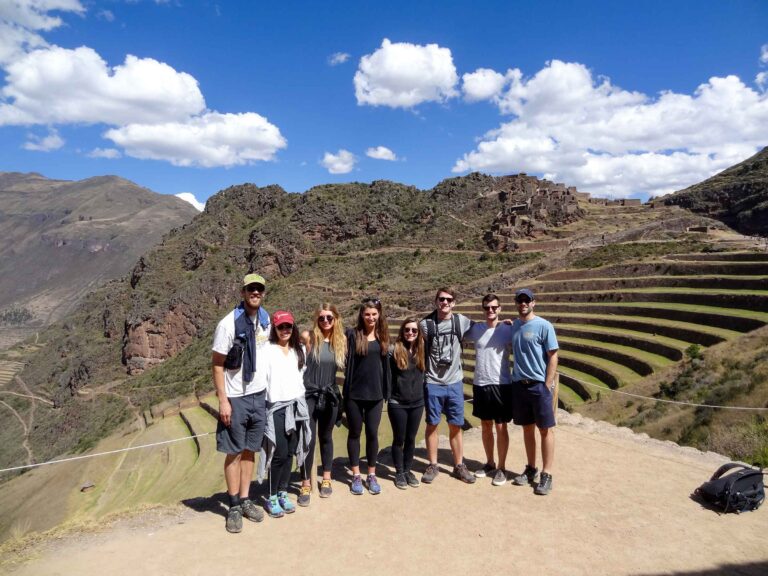

Sacred Valley is just an hour’s drive from Cusco, but you’ve entered another area. With Inca ruins scattered along the sides of the Andes Mountains, Peru’s Sacred Valley is a bizarre place that makes you feel like you’ve traveled back in time. Discover off-the-beaten-path Inca ruins, tackle some of the best Sacred Valley hikes, and fall in love with the Sacred Valley in Peru. Explore the Inca ruins on a beaten track and experience some of the Sacred Valley’s beauty.
Peru’s Sacred Valley is unique, one-of-a-kind, and enchanted. The Sacred Valley of the Incas is another name for the Inca Valley. The Sacred Valley offers a plethora of unique activities. Discover stunning Inca ruins in sizable archaeological sites, salt mines, snow-capped mountains, and countless trekking routes. There is no lack of extraordinary and one-of-a-kind encounters.
The best guide to the Sacred Valley focuses on the Urubamba Valley’s famous and hidden sights, from the beautiful town of Pisac to Ollantaytambo and everything in between. Give in to the overwhelming desire to explore this enchanted area.
Learn helpful advice about how to travel to and stay in the Peruvian Sacred Valley, what to do, where to eat, and how to take easy public transportation. The primary goal of the top Sacred Valley guide is to help guests design customized tours of the Sacred Valley.

-

- Potato Park Pisac

Where is the Sacred Valley in Peru?
The Sacred Valley of Peru is situated to the north of Cusco. The region between the Ollantaytambo and Pisac communities is typically known as the Sacred Valley. Because the Urubamba River flows through the lush valley, the Sacred Valley of Peru is known as the Urubamba Valley. The Urubamba River changes its name as it flows through the valley towards Machu Picchu and Quillabamba.
The three cities of Pisac, Urubamba, and Ollantaytambo are the easiest ways to reach the Sacred Valley from Cusco. Although Pisac is less than 30 kilometers from Cusco, the Sacred Valley has a remarkably different climate from the city of Cusco.
Cusco is at an elevation of 3,400 meters (1,152 feet), and the Sacred Valley city reaches 2,743 meters (9,000 feet). Although the sun seems to shine more here than in Cusco, which has a reasonable and exceptional climate, the temperature here is generally mild and can feel that way.

How do I get to the Sacred Valley in Peru?
The most well-known gateway cities to the Sacred Valley are Pisac, Urubamba, and Ollantaytambo. Various methods are available to reach the Sacred Valley in Peru. Local colectivos and minibusses serve these popular destinations.
Transportation is safe and fast, and luggage can be secured on the roof of local vehicles. When visiting during the rainy season, cover your bags with a waterproof tarp.
Travel agencies or hotels organize private transportation services so travelers can travel safely and directly to the Sacred Valley of the Incas.

How do you get from Cusco to Pisac in the Sacred Valley?
Local Cusco-Pisac vehicles are on Puputi Street near the Garcilaso monument (intersection). Several vans depart from both sides of Puputi Street. While some colectivos continue to Calca or Urubamba for a slightly higher fee, others drive to Pisac to drop off passengers near the main Pisac bridge.

Sacred Valley Tour Moray
How do you get from Cusco to Urubamba in the Sacred Valley?
Cusco’s primary bus station, on Calle Pavitos near the Grau Bridge, is the departure point for local transportation and buses to Urubamba, the gateway to the Sacred Valley.
The mode of transportation travels via the charming communities of Maras and Chinchero. The trip takes 60 minutes, and the vehicle drops travelers at Urubamba’s central bus terminal.

How do you get from Cusco to the Sacred Valley and then to Ollantaytambo?
The principal bus terminal in Cusco, on Calle Pavitos, is where local transportation and buses to Ollantaytambo depart. Frequent services run from 03:30 to 22:00. The route travels via Izcuchaca before descending into the Pomatales Valley to Pachar. The one-hour and thirty-minute local tour lasts.
Local transport drops travelers off at Ollantaytambo Train Station. To return, travelers should go to the Ollantaytambo train station or the main square in Ollantaytambo to board a local bus to return to Cusco via Pachar.

Alternative Ollantaytambo Tour
Which town is the best to explore in the Sacred Valley of Peru?
Charming towns abound in the Sacred Valley of Peru. Each city offers its own unique charm.
The most beautiful towns in the Sacred Valley of the Incas are:
- Pisac
- Taray
- Coya
- Lamay
- Calca
- Huaran
- Yucay
- Urubamba
- Maras
- Yanahuara
- Ollantaytambo
Between Yucay, Urubamba, Yanahuara, and Ollantaytambo, exploring all the highlights of the Sacred Valley of the Incas is easy and convenient! It has a central location and some of the best hiking and tourist circuits in the Sacred Valley.

When is the ideal time to travel through Peru’s Sacred Valley?
Rainy season and dry season of the Sacred Valley, Cusco
The Andes of the Sacred Valley of the Incas have two seasons: rainy and dry. The rainy season usually lasts from December to mid-April, while the dry season lasts from May to November.
The nights in the rainy season are hotter than in the dry season, but it rains often. Sometimes the rain in the Sacred Valley comes as a gentle drizzle, while at other times it can be torrential.
During the rainy season, the weather is unpredictable, and landslides are unlikely. But after the rainy season, the holy valley is verdant and beautiful.
During the dry season, skies are usually bright blue, and conditions are dry and fair, with breathtaking views of the Andes and the Sacred Valley. Despite being the dry season, the snow-capped mountains in the Sacred Valley make the nights even colder.

Sites to Visit in Peru’s Sacred Valley
The following are the most stunning locations in Peru’s Sacred Valley and its branches, each offering breathtaking views:
Pisac
Pisac is a famous colonial town on the Sacred Valley tourist circuit. Pisac is 45 minutes from Cusco. Pisac Archaeological Park is one of the most visited locations in the Sacred Valley.
Several communities around Pisac offer a variety of outdoor activities in the Andes’ valleys and mountains.


Things to Do in Pisac
Pisac’s main square and craft market
Find the daily artisan market in the main square of Pisac. You can get a range of Andean textiles at Pisaq Market to purchase Peruvian mementos. Pisac’s market, with its more laid-back, local vibe, is bustling on Sundays. The town is visited by the Andean Mountain residents who come to market their handicrafts and agricultural goods. On Sunday, too, local people come to buy supplies for the week.
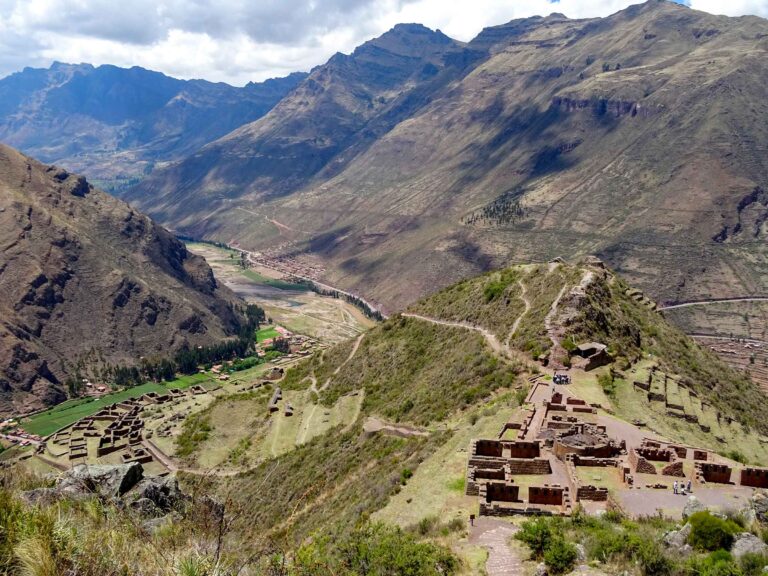
Built on a mountain, the vast Inca ruins of Pisac are the primary draw for visitors. Generally speaking, the “Pisac Inca Trail” leads behind the central plaza to the Archaeological Park of Pisac. It is preferable to take a road when traveling to get to the Pisac ruins.
Pisac Archaeological Park is a large park built around an enormous mountain with various trails leading to various Inca temples.
Pisaq ruins have four main parts: P’isaqa, Inti Watana, Qalla Q’asa, and Kinchiraqay. The ruins also have their own sun temple, with beautiful Inca Empire architecture on the walls. The Pisac Ruins offer breathtaking views of the Sacred Valley, the Andes Mountains, the Inca terrace system, and Inca structures.
Kinsa Cocha o Paru-Paru Potato Park
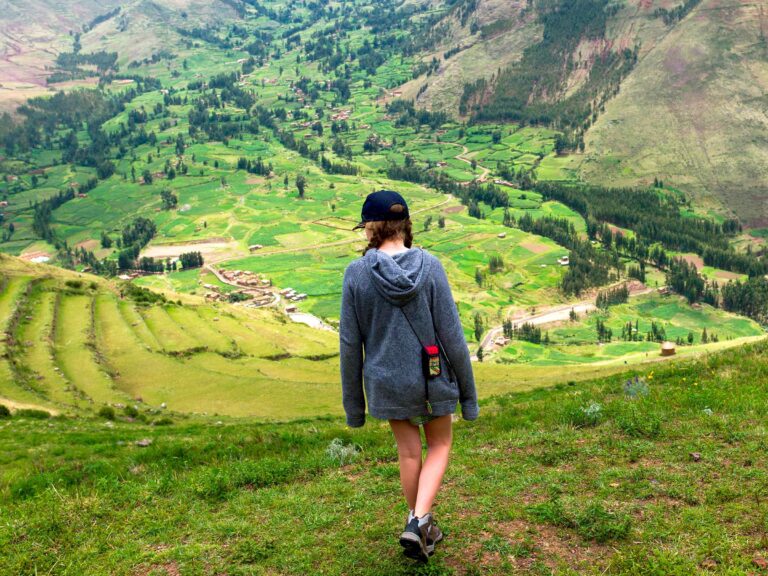
The Andes Mountain range is dominated by three magnificent lakes in Kinsa Cocha, a unique natural reserve close to Pisac. Kinsa Cocha, in Paru Paru, is a small mountain community open to tourists. Residents of Paru-Paru preserve more than 3,000 varieties of potatoes.
Kinsa Cocha offers a variety of potato experience tours. We’ll teach you how to recognize the various potato varieties first; then, we’ll dance and plant with traditional Inca tools. Finally, we’ll head to the communal hall for a delectable potato feast.
Walk through the Chapel of Pisac in the colonial town of Pisac
A few blocks from Pisac’s main square, we have a colonial chapel—”we’re looking for the colonial chapel, not the main church”—that offers morning or evening walks in the fresh air with panoramic views of cornfields. Follow ancient Inca aqueducts, meander through cornfields, and get a different perspective on this lovely town.
Calca
Calca is one of the most beautiful towns in Cusco’s Sacred Valley. Calca has two beautiful colonial-style main squares. The remains of Uno Urqo are located on the outskirts of Calca and can be reached in five minutes by local transportation or a half-hour walk. If you are up for a challenging hike, Calca has the Pitusiray mountain, the “sacred mountain of the Incas and the beginning of Inca ancestral mythology.”
Calca has two beautiful colonial-style main squares. See the ruins of Uno Urqo on the outskirts of Calca; it takes 5 minutes by public transportation or 30 minutes on foot to reach it. If you’re looking for a challenging hike, Calca is home to Pitusiray Mountain, “the sacred mountain of the Incas and the beginning of the legend of the Inca ancestors.”
Two well-trafficked bus terminals in Calca will take you to Pisac, Urubamba, or Ollantaytambo, as well as the entire Sacred Valley of the Incas. In addition, Calca serves as the primary entry point to the Lares Valley, where hikers can explore the Andean remains of Ancasmarca and the Lares hot springs.
In the area of Lamay, near Calca, we have the hiking trail to the Huchuy Qosqo ruins, “the royal palace of the eighth Inca ruler.” The archaeological site of Huchuy Qosqo was built on a mountain in the middle of the slope.


Things to Do in Calca
Relax and stroll through Calca’s main squares.
Calca’s two central plazas are lovely, with views of the Sacred Valley and well-kept gardens. A beautiful water fountain is present.
Many street food vendors selling sweets, as well as cafes, surround the two main squares in Calca.
Both sections surround the main church. We appreciate the beautiful colonial-style architecture of Calca. Also, Calca is the capital of the Sacred Valley of the Incas.
Explore the remains of the Uno Urqo temple.
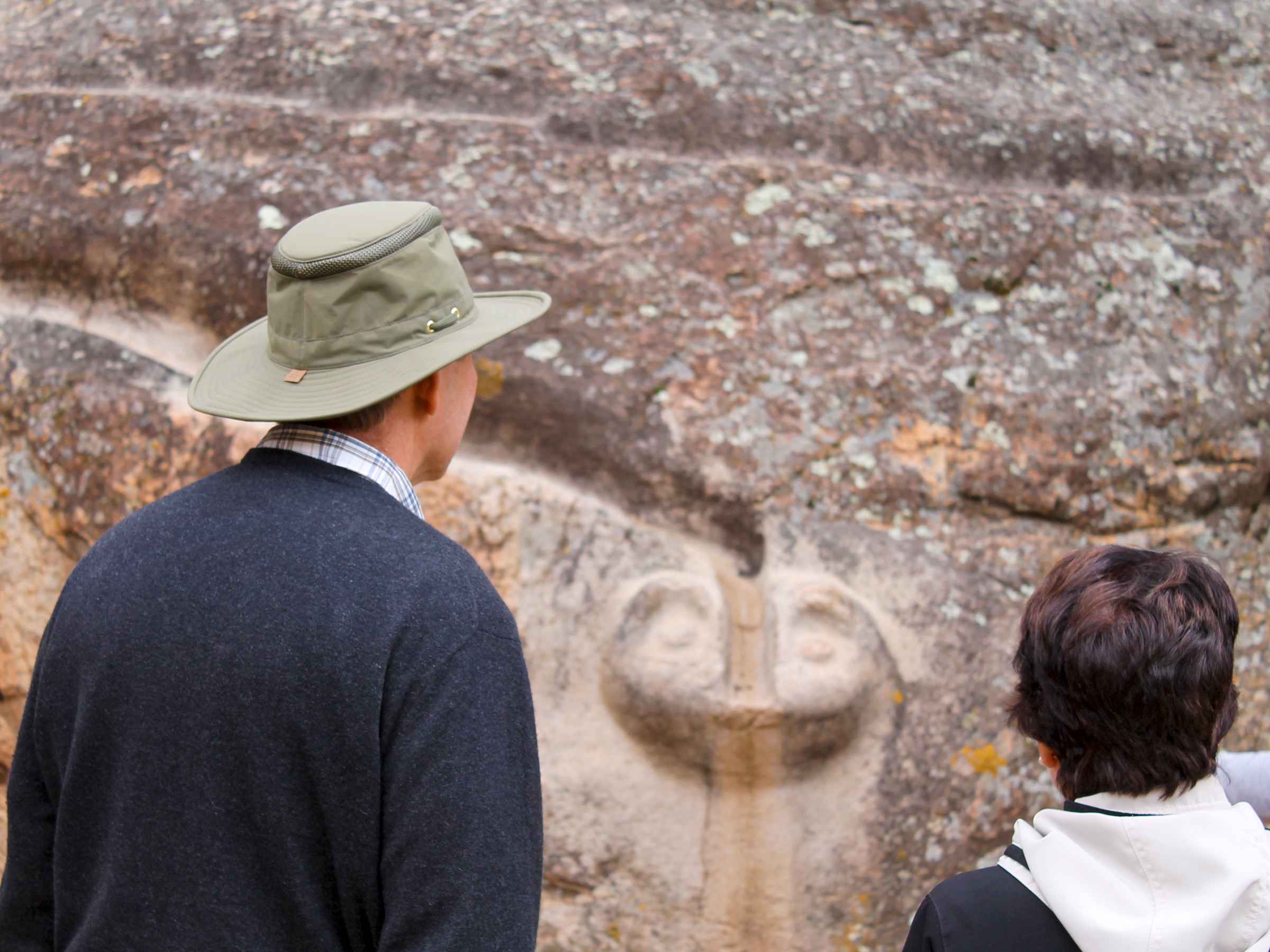
An Inca sacred location, Uno Urqo, is also called Uno Urco. Walking from Calca’s main square to Uno Orqo takes less than 30 minutes. One of the primary rocks in the Urqo Archaeological Park features an odd, unique engraving depicting a puma’s ritual head and a snake. The scouts note that it appears more like an extraterrestrial face, though.
In addition to Uno Orqo’s main temple, priests and guardians once occupied a few modest, rustic houses during the Inca era.
Before entering the archaeological site of Uno Urqo, we find a circular building with window designs in the shape of an Inca cross, ending in trapezoidal windows. The structure was utilized for spiritual practice and meditation.
Difficult Trek from Calca to Apu Pitusiray Mountain
The mountain known as Mount Pitusiray is shrouded in mystery. Hikers with experience can trek to the stunning Pitusiray Lake across the Andes for a whole day.
Impressive, sweeping views of Calca, the Sacred Valley, the Andes, and the lovely corn plantations can be seen from Pitusiray Mountain.
In the winter and summer solstices, in a sequence of shadows, you can see the figure of the awakening of an Inca guardian, “ancestral Inca mythology.” For this reason, the Pitusiray walking circuit region exudes a mystically wonderful vibe that is perfect for those seeking energetic Andean experiences.
Spectacular walking circuit of Huchuy Qosqo Trek
The Huchuy Qosqo trek offers several routes, including Sacsayhuaman, Tambomachay, Ccorccor, and Cupper Alto. Even so, one of the most accessible trekking circuits can be accessed by walking directly from Lamay, ascending towards Huchuy Qosqo for 2 hours.
The Huchuy Qosqo royal residence belonged to Viracocha, the seventh Inca emperor. Support terraces for all Inca construction may be found in Huchuy Qosqo. Ceremonial fountains, Inca streets, a hostel system, and multiple Inca paths leading to various Andean locations are all present.
Enjoy the thermal baths of Lamay.
The Lares Thermal Baths are a two-hour drive from Calca. Most hikers will dip in hot springs before hiking the Lares Trek’s trails.
Natural minerals give the Lares hot springs their orange hue, and there are several pools with varying temperatures for enjoyable dives. There are snacks, coffee, food, and other things for sale on the edge of the Lares thermal baths.
Enjoy fantastic hiking trails through the Lares Trek.
There are multiple hiking trails through the Valle de Lares in Peru. The Lares Trek is one of the alternative routes to Machu Picchu. There are walks ranging from 1 to 5 days.
We have several circuits of the Lares Trek Walk, such as:
- Lares Trek starting from Quiswarani: “Pachacuteq Pass, Cancha Cancha, Huaran, Machu Picchu”
- Lares Trek starting from Patacancha “Paso Ipsay, Patacancha, Ollantaytambo, Machu Picchu”
- Lares Trek starting from Pumahuanca “Paso Pumahuanca, Urubamba, Ollantaytambo, Machu Picchu”
- Lares Trek starting from Yanahuara: “Paso Aurora, Yanahuara, Ollantaytambo, Machu Picchu”
Chinchero
A must-see in the Sacred Valley is the ancient city of Chinchero. Chinchero is 28 km from Cusco. Another name for Chinchero is the Land of Rainbows. The remnants of the Tupac Yupanqui Inca palace will be visible to you. It is also a legendary Sunday program renowned worldwide for its artistry. There is a lot to see in Chinchero, so make sure your schedule accounts for it.
You can begin your tour by visiting one of the weaving centers in Chinchero. Discover the age-old, customary methods for weaving and dying fabrics. The conventional know-how of fabrics is preserved from generation to generation. Another tourist attraction is the colorful Chinchero Sunday market in the main square.
Another attraction in Chinchero not to be missed is the Tupac Yupanqui Palace. Constructed in 1480, the Chinchero royal residence is part of the vast archeological complex. The main square features an Inca wall, including twelve trapezoidal niches. Also, there is the 17th-century Church of Our Lady of Montserrat, which has many frescoes and altars decorated in the Baroque style.
-
- Sacred Valley Day Trek


Things to Do in Chinchero
Explore the archaeological park of Chinchero.
Chinchero Ruin is the palace of the Inca ruler Tupac Yupanqui. The Chinchero Inca complex consists of terraces with architectural integrity, a sacred temple used for various ceremonial purposes, an Inca route, and the Chinchero Church, which is situated atop the sun temple.
Savor the pleasure of the market for artisan weaving in Chinchero.
Chinchero is known today as the route of traditional Inca textiles. There are several textile centers in Chinchero where visitors can observe textile extraction, dyeing, and spinning using traditional Inca methods.
Enjoy a walk in the open air from Chinchero to the Urquillos Trek.
An Inca trail begins at the ruins of Chinchero. Before starting the walk, we will explore the sacred temples of Chinchero. A short hike that leads into the Sacred Valley of the Incas and toward Wayllabamba is the one from Chinchero to Urquillos via the Poc-Poc waterfalls.
The ancient Inca Trail of Urquillos descends along a spectacular panoramic route through the beautiful Poc Poc Waterfalls. Continue walking to Urquillos, where the tourists’ vehicles usually wait to continue their adventures toward the Sacred Valley of the Incas.
Maras
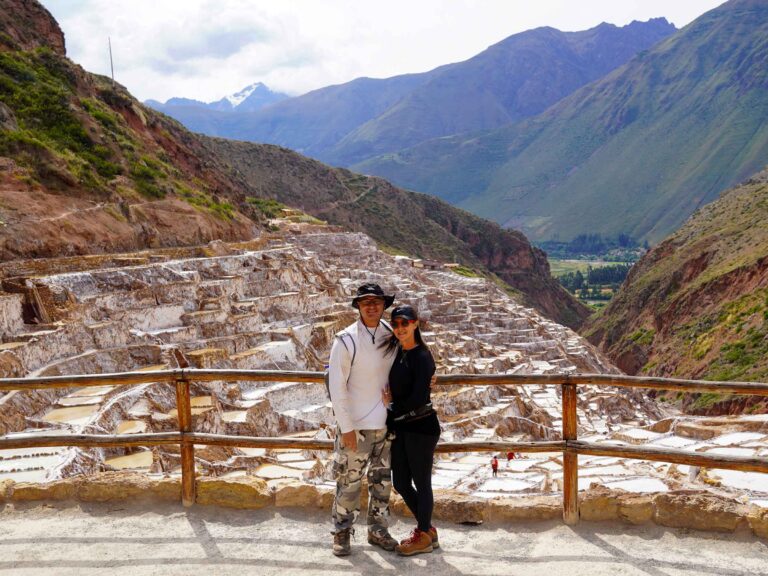
Explore the spectacular maras with the Inca salt mines. Maras and salt mines are located 50 km from Cusco city. Maras and Salineras are a natural visual spectacle that will amaze you with the landscapes of the salt mines in the Sacred Valley of the Incas.
The Maras Salt Mines are a large area with approximately 5,000 natural salt wells fed by an underground salt spring. The salty waters of Maras date back more than 100 million years to their formation. Salineras are essential to the salt supply in Cusco and the Sacred Valley. It is a valuable source for the export of this primary Peruvian cuisine.


-
- Sacred Valley Urubamba

Things to Do in Maras, Peru
Explore the magnificent archaeological park of Moray
Four sizable, peculiar terraces are at the Moray Ruins, one greater than the others. The enormous archeological site of Moray emphasizes the Peruvian Sacred Valley.
Several easily accessible hiking trails on the terrace lead to different viewpoints and areas for short walks with breathtaking views and archaeological sites.
During the Inca period, the Moray Circular Terraces were used as laboratory greenhouses for the genetic adaptation of plants to different altitudes in the Andes, the coasts, and the forests of the Inca Empire.
Visit the impressive salt mines of Maras.
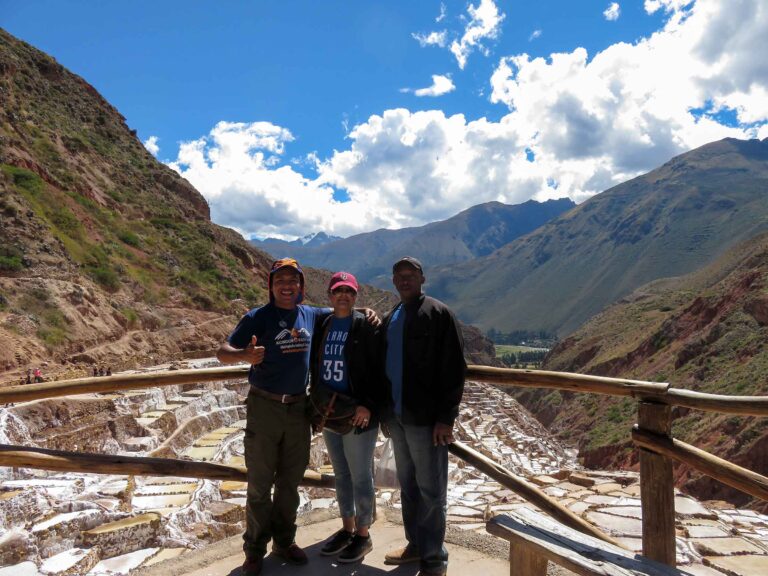
The salt ponds of Maras are pretty striking for hikers visiting the Sacred Valley of Peru. The viewpoints of the salt mines in Maras have excellent photographic angles.
The Urubamba River can be crossed at Pichingoto; the village of Maras can be reached on foot, by vehicle, or by other cycling paths to descend to the salt mines.
Combine your vacation to the salt mines of Maras with the ruins of Moray for a full day of exploring the Sacred Valley, Peru. Start early and walk to the salt mines of Maras.
A worthwhile trek in Maras from Moray to the Salineras
- Distance: 11.3 km (7.01 miles)
- Hiking time: 2 hours and 49 minutes. Hiking from Moray to Maras Urubamba River
- Minimum Altitude: 2,841 m (9,324 ft).
- Maximum Altitude: 3,514 m/11,529 ft.
From the Moray ruins, a lovely walking track connects to the banks of the Maras, Minas de Sal, and Urubamba rivers. Beautiful vistas of the Andes Mountains and the Sacred Valley can be seen while hiking.
The colonial city of Maras offers beautiful houses with distinctive doors and spectacular iconography. Before reaching the Salineras salt pans, we have an incredible panoramic view of the salt areas.
Urubamba
Experience the highlights of many Sacred Valley Peru excursions in Urubamba, Peru, a quaint community in the Sacred Valley.
The Urubamba Valley is perfect for a few days to familiarize yourself with the great altitudes of the Andes or the city of Cusco. Visitors from Urubamba can plan trips to beautiful tourist sites in the Sacred Valley of the Incas.
The four amazing Sacred Valley archeological parks—Pisac, Ollantaytambo, Chinchero, Moray, Machu Picchu, etc.—can be independently visited from Urubamba.
-
- Sacred Valley Urubamba


Best Things to Do in Urubamba, Peru
Sacred Valley, Saywa Archaeological Park Day Hike
The Saywa trekking circuit in Peru’s Sacred Valley is among the top treks. To reach the Inca ruins of Saywa, we must climb Urubamba Mountain.
At the top of Saywa Mountain, find two ancient Inca pillars and the remains of the mighty Inca dynasty. The Saywa Archaeological Park has pedestrian access and incredible views of the Sacred Valley and Urubamba.
- Distance: 5.2 km/ 3.26 miles
- The hike from Urubamba Plaza to Saywa Summit takes one hour and eighteen minutes.
- Minimum Altitude: 2,869n/9,416 ft.
- Maximum Altitude: 3,809 m/12,497 ft.
Take part in the top treks from Urubamba to the breathtaking Juchuycocha Lagoon.
The picturesque alpine Juchuycocha Lake lies in the beautiful mountains behind Urubamba in the Sacred Valley of Peru. This demanding day climb from Urubamba is lengthy but worthwhile.
Start your trek with a gradual incline from San Isidro to the main hiking trail. Proceed to ascend the picturesque yet steep Juchuycocha Lagoon. The hiking trail runs along an impressive mountain slope with great views of Chicon Mountain and the glacier.
- Distance: 9.6 km (6 miles)
- Trekking from San Isidro, Urubamba, to Juchuycocha Lagoon takes five hours.
- Minimum Altitude: 3,329m/10,925 ft.
- Maximum Altitude: 4,645 m/15,242 ft.
Pachar Peru
The small settlement of Pachar lies between Ollantaytambo and Urubamba. Pachar is the perfect base for exploring the best outdoor hiking trails in the Sacred Valley.
Explore the temple of Ñaupa Iglesia, a unique and exciting Inca temple in the Sacred Valley of the Incas. A shuttered Inca window, which may be a dimensional doorway, is cut into the side of the Ñaupa Iglesia building.
The impressive Perolniyoc waterfalls, “a short distance from Socma village,” can also be accessed from Pachar, Peru. Take the expansive view of the waterfall and follow the trail until you arrive at the Perolniyoc or Raqaypata ruins. Socma is also the gateway to the Ancascocha Trail.
Things to Do in Pachar, Peru
Enjoy the craft breweries of the Sacred Valley.
Visit one of the Sacred Valley’s most well-known microbreweries in Peru. The Pachar Brewery may be found at the town’s main bus terminal. Sacred Valley Brewery has a beautiful beer garden next to the river.
The outdoor space at Pachar Brewery is spectacular, and the beer is delicious in various flavors. The brewery has long been a favorite destination for locals and foreigners alike to enjoy craft beer, whether with food or as appetizers to share with friends. Don’t miss this incredible adventure at Pachar, Peru’s Sacred Valley of the Incas.
Follow the incredible ancient Inca Trail from Pachar to Ollantaytambo
Across the Pachar, after the bridge, is the old Inca Trail that leads to the lovely town of Ollantaytambo. This ancient Inca trail is part of the original Inca trail.
The Main Inca Trail connected several significant parts of the Inca Empire. Before entering Ollantaytambo, this stretch of the Inca Trail goes via the Choqana Ruins on the banks of the Urubamba River.
Enjoy a short walk from Pachar to Ollantaytambo and admire the vast natural landscapes on the hiking circuit. During your adventure, explore some Inca terraces, where locals grow corn and other agricultural products.
- Distance: 5 km/ 3.13 miles
- Hiking time: 1 hour and 15 minutes; hiking from Pachar, Urubamba, to Ollantaytambo
- Minimum Altitude: 2,806m/9,209 ft.
- Maximum Altitude: 2,854 m/9,364 ft.
Explore the temple of Ñaupa Iglesia.
Ñaupa Iglesia, also known as Choquequilla, is an Inca site built halfway up the mountain of Pachar.
The Ñaupa Iglesia temple promenade is a ruin within a naturally occurring cave. It is believed that the Incas built a fountain, trapezoidal Inca windows, and dimensional windows there.
Ñaupa Iglesia translates to “old church.” This magical place has a lot of positive energy. Don’t pass on this breathtaking outdoor experience in Peru’s Sacred Valley.
Lovely hike to Perolniyoc waterfall and Raqaypata ruins
Tucked away in Cusco’s breathtaking Sacred Valley is the Perolniyoc Waterfall. The waterfall is impressive and worth it. Also, explore the Inca ruins of Raqaypata or Socma.
Hiking adventures can start in Soqma and take you to the stunning Perolniyoc Waterfall and Raqaypata Archaeological Park. On the cliff where this Perolniyoc waterfall is located are the ruins of Raqaypata.
The Socma Trek in Peru’s Sacred Valley takes place year-round. When visiting the Sacred Valley, the Socma walk is a must-do since it passes by the fascinating Inca ruins of Raqaypata and the comical Perolniyoc waterfall.
- Distance: 6.2 km/ 3.90 miles
- The hike from Socma to Perolniyoc, Raqaypata, takes one hour and thirty-four minutes.
- Minimum Altitude: 2,941m/9,652 ft.
- Maximum Altitude: 3,611m/11,850 ft.
Ollantaytambo
Ollantaytambo is a picturesque village at the entrance to the Sacred Valley. The Sacred Valley is home to the ruins of Ollantaytambo, one of the most visited tourist attractions in Peru. There are several exciting tourist routes just outside Ollantaytambo.
Ollantaytambo’s top hiking paths, including the Pumamarca Inca Trail and the Inti Punku Ruins, are in the Sacred Valley. Explore the cozy streets of the Incas in the city of Ollantaytambo. Native Inca streets and several perfectly carved Inca water canals are paved.
Finally, Ollantaytambo is the gateway to Machu Picchu. Take a train on the Peruvian Railways. The train journey takes 1 hour and 40 minutes. It is a fantastic journey that takes you from the Andes to the Sacred Valley of Ollantaytambo and the cloud forests of Machu Picchu.


Things to Do in Ollantaytambo
Explore the entire archaeological park of Ollantaytambo.
Ollantaytambo is a strategic, religious, and agricultural center that will amaze any explorer. The archaeological site of Ollantaytambo dates back to the Inca Empire. The Ollantaytambo ruins served briefly as a refuge for Inca kings and nobles during the Spanish colony. The Ollantaytambo ruins are enormous boulders from the Cachicata Quarries, 6 km away.
Ollantaytambo’s temple faces Cusco because the Inca architects of antiquity chose the site for its underground water routes, its position between three valleys, its climate, and the location of the sacred valley’s entry and departure. The Sun Temple consists of six large rectangular stone blocks at the summit of Mount Ollantaytambo.
The fact that all the rocks in Ollantaytambo are perfectly smooth, unharmed, and undamaged implies that the builders could lift and move the stones without causing any damage, which is one of the complex’s most remarkable features. Some. Ollantaytambo was built on a very high slope, which is quite an achievement. Undoubtedly, Ollantaytambo is one of the great wonders of Inca architecture, and questions still arise today, many of which remain unanswered.
Enjoy the nearby ruins of Ollantaytambo for free.
You can visit many excellent Inca sites when touring the Sacred Valley of Ollantaytambo.
Pinkuylluna
Discover the sacred mountain of Pinkuylluna. You must proceed to Ollantaytambo’s main square and look for the closest triangular-shaped peak to reach the Pinkuylluna ruins.

Qellorakay
Before entering Ollantaytambo, visit the archaeological site of Qellorakay. Discover the Inca-hanging homes atop Pinkuylluna Mountain’s reefs, the great Ollantaytambo entryway, and Qellorakay’s agricultural terraces on either side of the Urubamba River.
Enjoy the trek through the Inca Trail of Pumamarca.
The most impressive Inca site in Peru’s Sacred Valley is Pumamarca. To get to Pumamarca, take a vehicle in the town of Ollantaytambo to go up the river from Patacancha in “20 minutes by car.” The trail to Pumamarca winds through a beautiful Andean forest in the Ollantaytambo valley.
The trekking path to Pumamarca is excellent for descending the mountain towards Ollantaytambo; along the way, we discover stunning vistas, and certain ruins comprise an Inca platform system that spans nearly the whole mountain, known as the “Inca platforms of Pata-Pata.”
The walk ends on the colonial trail along the Patacancha River until you reach the plaza of Ollantaytambo. Discover the Sacred Valley’s Pumamarca Inca trek in Ollantaytambo.
- Distance: 12.7 km (7.92 miles)
- Hiking time: 3 hours and 11 minutes; hiking from Pumamarca to Ollantaytambo Plaza
- Minimum Altitude: 2,844 m (9,331 ft).
- Maximum Altitude: 3,397m/11,148 ft.
Reach the top of the Intipunku of Ollantaytambo with an impressive view
Walk along the beautiful Inca Quarry, hike the Inca Trail to the Sun Gate, and discover Intipunku in Ollantaytambo. Overlooking the Veronica Glacier, Intipunku, the Sun Gate, offers one of the most astonishing views in the Sacred Valley of the Incas.
Impressive sun gate in front and on top of Ollantaytambo village. As you reach the top of the mountain, you will see the panorama of Nevada Veronica (5682 m), the region’s highest and most visible mountain.
The best way to reach Intipunku is on foot or horseback, enjoying the beautiful scenery of the Sacred Valley and the snow-capped Andes.
- Distance: 8.8 km/ 5.47 miles
- Hiking time: 2 hours and 11 minutes. Hiking from Ollantaytambo to Intipunku of Ollantaytambo
- Minimum Altitude: 2,806m/9,209 ft.
- Maximum Altitude: 3,888m/12,756 ft.
Stroll through the cobbled streets of Ollantaytambo
Inca and colonial architecture are preserved in Ollantaytambo. The two architectural styles are astounding for Peru’s living culture and legacy. Along the cobblestone lanes of Ollantaytambo are rows of Inca aqueducts.
The Andes mountains of the Sacred Valley surround Ollantaytambo’s picturesque central plaza. Ollantaytambo is a terrific base for a few nights or for an exciting trip that takes you higher, to places like Cusco City or the Rainbow Mountain trekking trail.
Ollantaytambo: The Gateway to Machu Picchu
Ollantaytambo is the gateway to Machu Picchu. Arriving in Ollantaytambo, most tourists take the train to Aguas Calientes. Two rail companies travel to Machu Picchu: Inca Rail and PeruRail. The town of Aguas Calientes is only accessible by train. When arriving in Aguas Calientes, take the bus to Machu Picchu.
Many travelers also visit Ollantaytambo and spend the night at various tourist routes, such as Lares, Huchuy Qosqo, Pumamarca, Urquillos hikes, and tours of the Sacred Valley, Maras, Moray, etc.
The next day, many travelers continue their direct journey to Machu Picchu by train or by connecting with the Short Inca Trail Adventure, Inca Jungle, etc. Ollantaytambo in the Sacred Valley is a focal point for several archaeological sites and spectacular excursion circuits.
How many kilometers does the Sacred Valley extend in Peru?
The Sacred Valley begins at Pisac, home to its beautiful Inca ruins. The Urubamba River passes through Calca, Urubamba, and Ollantaytambo. The Sacred Valley ends near Machu Picchu. The distance between Pisac and Ollantaytambo in the Sacred Valley is 100 km.
The Sacred Valley is about 1 km wide. Tall mountains surround both sides of the valley, some permanently covered with snow.

What are the entrance tickets to the Sacred Valley?
BTG: Integral Tourist Ticket: This entry ticket grants access to Cusco’s archaeological sites and to certain museums run by the Ministry of Culture. The entrance ticket to the Sacred Valley costs S/130 (approximately $45) for foreign adults; the integral tourist ticket is valid for 10 days.
On the other hand, partial tourist tickets are exclusive to visiting the ruins of the Sacred Valley, cost 70 soles (about $25), and are valid for two days.
You can buy entrance tickets to the Sacred Valley at any archeological park or in Cusco at Av. El Sol 103. Half a block separates “Tourist Galleries” from Cusco’s main center.

Between what elevations does the Sacred Valley fluctuate?
In general, the elevation of the Sacred Valley is first taken as a reference; the Pisac ruins are at 3,347 meters, the midpoint of the Sacred Valley route.
Then there is the ruin of Ollantaytambo at 2800 meters. There is a considerable height difference to explore or spend the night anywhere in Peru’s Sacred Valley between the ruins of Pisac and Ollantaytambo.
Chinchero, at 3,800 meters above sea level, is included if travelers take the full-day tour of the Sacred Valley to the highlands.

What is the weather forecast for the Sacred Valley throughout the year?
In May, June, July, August, September, October, November, and December, you will have good weather with an average temperature between 20 degrees Celsius (68°F) and 26 degrees Celsius (79°F).
What is the average annual temperature in Peru’s Sacred Valley?
It has mild temperatures year-round, ranging from 18°C (65°F) to 21°C (69°F).
Does Sacred Valley have a dry season?
May, June, July, and August are the dry seasons.
Which is the warmest month in Sacred Valley, Peru?
October has an average maximum temperature of 21°C (70°F) and is the year’s warmest month.
Which month in Peru’s Sacred Valley is the coldest?
The coldest month is July, with an average maximum temperature of 19°C (66°F).
Which is the wettest month in Sacred Valley, Peru?
January tops the wettest month list with 158mm (6.2in) of rainfall.
Which month in Peru’s Sacred Valley is the driest?
June is the driest month, with 2mm (0.1 in) of precipitation.
Which month in Peru’s Sacred Valley is the sunniest?
With 257 hours of sunshine on average, July is the sunniest month.
What is the geography of the Sacred Valley, Peru?
The high Andes surround the Sacred Valley, and its elevation regularly rises far above 2,895 meters (9,500 feet) and never drops below 2,042 meters (6,700 feet). The thin air at that altitude can be difficult for those who aren’t fully acclimated. At more than 5,791 meters (19,000 feet), the twin peaks of Sahuasiray and Veronica dominate the horizon. They are even higher.
The Urubamba River, which receives its water from a loose mountain stream, sculpted the Sacred Valley over millions of years. Urubamba comes from the valley’s name and means “sacred river.” The river, bordered by gently undulating green meadows, provides a haven from Cusco’s hot and muggy Amazonia and the untamed, harsh Andes.
History of the Sacred Valley, Peru
Archaeologists believe the Sacred Valley has been continuously inhabited for over 3,000 years. The Chanapata people arrived first, around 800-900 BC, while the Kilke civilization arrived 1200 years later through Qotacalli. These groups were attracted to the rich and fertile land there, which enabled them to grow crops that could more easily feed their populations.
The Incas spread throughout the area about 1000 AD, utilizing Cusco as their city and center of authority. After seizing control of the Sacred Valley, the Incas used a mix of diplomacy, military might, and administrative power to gradually expand their empire. They used the lush, fertile areas to grow corn and other vegetables, allowing their culture to thrive. Throughout the region, forts were erected as enduring reminders of their civilization.
The Incas would rule the region for over 400 years. When the Spaniards arrived in the Sacred Valley in search of gold, gems, and enslaved people, their rule over the area came to an end. However, carrying its Inca legacy, Cusco remains the region’s most prominent city.


What are the best personalized experiences in the Sacred Valley, Peru?
The best private tours within the Sacred Valley are the following:
- Private Sacred Valley Tour from Cusco, Peru
- Sacred Valley Tour from Urubamba, Peru
- Sacred Valley Tour from Ollantaytambo, Peru
- Maras Salt Flats Half Day from Sacred Valley, Peru
What are the best tour packages around the Sacred Valley, Peru?
We have several alternative tourist circuits to explore the Sacred Valley and its surroundings or spend the night in Ollantaytambo before entering Machu Picchu or leaving the Sacred Valley, Peru.
- Short Inca Trail 2 Days
- 4 Day Inca Trail
- 5 Day Inca Trail
- 3 Day Inca Trail
- 1 Day Inca Trail
- Sacred Valley Private Tour, Full Day Tour
- Sacred Valley Tour from Urubamba 1-Day
- Super Sacred Valley Full-Day Tour
- Full-Day Tour to Ancasmarca Ruins
- Ñaupa Iglesia Tour Choquequilla
- Full-Day Moonstone Tour
- Pumamarca Ruins Hike
- Pisac Ruins Hike 01-Day
- Maras Moray Hike – Sightseeing views from the Snow Mountains
- Hike to Urquillos, 1-day hike in the Sacred Valley
- Potato Park Pisac
- Sacsayhuaman Megalithic Tour
- Chinchero Ruins Full-Day Tour
- Alternative Tour Ollantaytambo Full-Day
- Day Trip to Pisac + Textiles + Traditional Market
- Sacred Valley ATV Tour – Full-Day
- Chinchero textile Experience & Easy hike
- Sacred Valley Trip from Ollantaytambo