Salkantay + Classic Inca Trail 6 Days





Discover Peru’s beautiful landscapes on the classic 6-day Salkantay & Inca Trail Hike!
The Salkantay + Classic Inca Trail 6 Days is the ONE tour that combines BOTH iconic Peru high-mountain passes + the FULL Classic Inca Trail + ALL 7 archaeological sites.
1. INCA CHIRIASKA PASS 5,200m — HIGHEST in catalog ⭐ UNIQUE HIGH INCA TRAIL variant. No other Kondor Path trek crosses this altitude. The HIGH INCA TRAIL route (vs standard Salkantay Pass 4,650m) takes you higher via Inca Chiriaska Pass 5,200m on Day 2 — with possible Condor sightings and 360° panoramic snow-capped mountain views. Peru’s highest recreational trekking pass.
2. BOTH iconic Peru passes in ONE trek ⭐ UNIQUE. Most trekkers complete only one iconic Peru pass. This expedition delivers BOTH: Inca Chiriaska Pass 5,200m (Salkantay side) Day 2 + Dead Woman’s Pass (Warmiwañusca) 4,215m (Classic IT side) Day 4. Bragging rights for life — completing both is a rare achievement.
3. FULL Classic Inca Trail Days 3-6 with ALL 7 archaeological sites. Unlike Salkantay + Short IT combos, this expedition includes the complete Classic Inca Trail route (not just a Short IT permit): Paucarcancha + Wayllabamba + Runkurakay + Sayacmarca + Phuyupatamarca + Wiñay Wayna + Machu Picchu. ALL 7 archaeological sites — the most comprehensive archaeological experience in the cluster.
4. Only $203 more than Classic Inca Trail 4-Day ($722) for complete Salkantay portion + Humantay area + Paucarcancha ruins + higher pass 5,200m + 2 additional days. Extraordinary value for adding the entire iconic Salkantay trek to the Classic IT experience.
5. Sun Gate arrival Day 6 + MP Circuit 3B + 2h guided tour — classic Inca Trail iconic finish. Sun Gate (Inti Punku) sunrise + descent to Machu Picchu + 2-hour private guided tour Circuit 3B + PeruRail Expedition 74P return + private transfer Ollantaytambo → Cusco.
| ⏱️ Duration | 6 days / 5 nights (all camping) |
| 🎯 Category | HIKING & CAMPING — ULTIMATE HIGH INCA TRAIL |
| 🏔️ Route | HIGH INCA TRAIL variant (via Inca Chiriaska Pass) ⭐ |
| 📅 Day 1 | Cusco → Soraypampa → Salkantay Pampa camp, 4,152 m |
| 📅 Day 2 ⭐ | Salkantay Pampa → INCA CHIRIASKA PASS 5,200m ⭐ HIGHEST → Pampaqawana camp |
| 📅 Day 3 | Pampaqawana → Paucarcancha ruins ⭐ → Wayllabamba → Ayapata camp |
| 📅 Day 4 ⭐ | Ayapata → DEAD WOMAN’S PASS 4,215m → Runkurakay + Sayacmarca → Chaquicocha camp |
| 📅 Day 5 | Chaquicocha → Phuyupatamarca + Intipata + Wiñay Wayna camp |
| 📅 Day 6 | Wiñay Wayna → Sun Gate + MP Circuit 3B + 2h guided tour → PeruRail + private transfer → Cusco |
| 🕐 Day 1 pickup | 05:00 AM Cusco hotel |
| ⛺ Camping nights | 5 (Salkantay Pampa + Pampaqawana + Ayapata + Chaquicocha + Wiñay Wayna) |
| 🏔️ Max altitude | Inca Chiriaska Pass 5,200m Day 2 ⭐ HIGHEST in catalog |
| 🏔️ Second highest pass | Dead Woman’s Pass 4,215m Day 4 |
| 🥾 Total distance | ~74 km |
| 🏛️ Archaeological sites | 7 (Paucarcancha + Wayllabamba + Runkurakay + Sayacmarca + Phuyupatamarca + Wiñay Wayna + MP) |
| ☀️ Sun Gate Day 6 | Iconic arrival |
| 🎫 MP Circuit Day 6 | Circuit 3B + 2h guided tour |
| 🚂 Return train Day 6 | PeruRail Expedition 74P ⭐ |
| 🚐 Return transfer Day 6 | Private transfer Ollantaytambo → Cusco ⭐ |
| 🎫 Inca Trail permit | Included |
| 🎫 MP entrance | Included (Circuit 3B) |
| 🍽️ Meals included | 15 (5B + 5L + 5D) |
| 🐴 Pack system | Horses/mules: Salkantay + porters; Inca Trail: dual system |
| 🎯 Format | PRIVATE TOUR |
| 👥 Group size | 1-10 hikers (min 1 client, +10 contact) |
| 🎓 Minimum age | 12+ with guardian (recommended 12-65) |
| 📅 Operating | March-December daily, on-demand (closed February) |
| 💪 Difficulty | Demanding (Level 4) — MOST demanding in catalog |
| 🎓 Guide ratio | 1:8 + assistant for 9+ hikers |
| 💲 From | $925 USD per person (group of 10) |



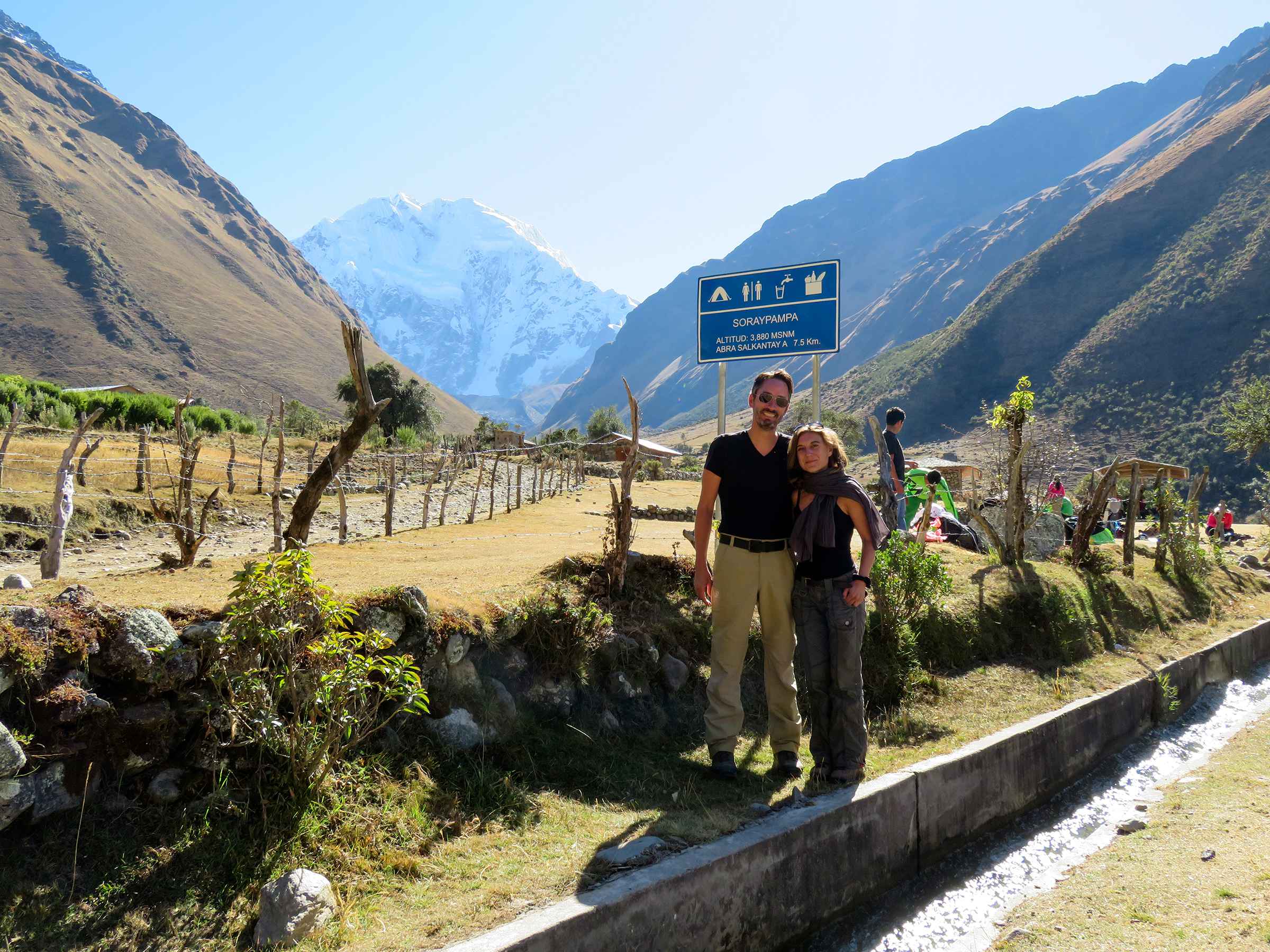


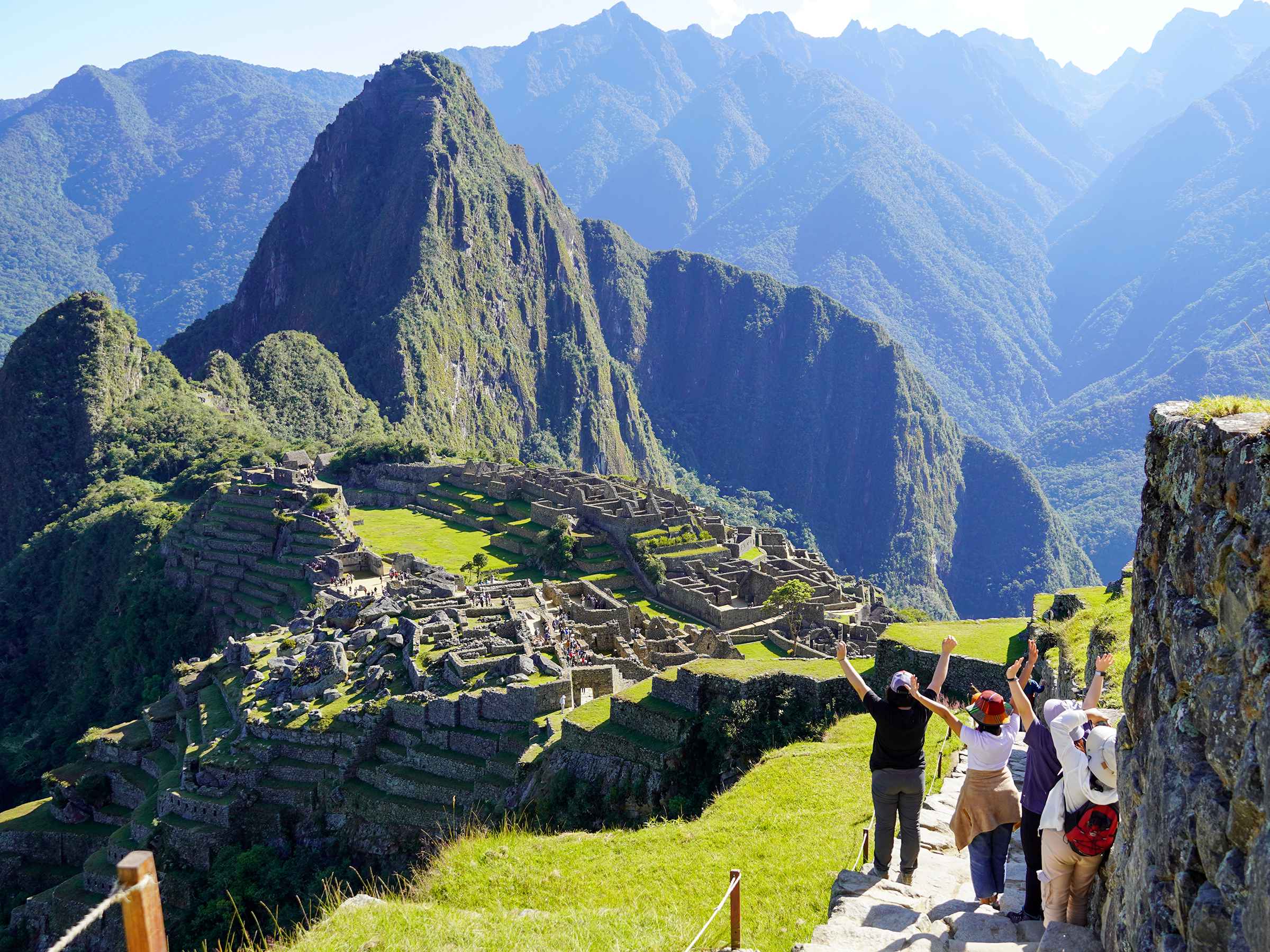
Join the Salkantay Trek and Classic Inca Trail to Machu Picchu on an unforgettable hiking adventure through the astonishing Peruvian landscapes. This adventure will take you through rugged mountain terrain, lush forests, and ancient ruins as you discover the rich history and culture of the Inca civilization. Get ready for the experience of a lifetime as you trek to one of the world’s most iconic destinations.
The Salkantay + Classic Inca Trail 6 Days — also known as the HIGH INCA TRAIL — is the MOST COMPREHENSIVE PERU TREK in the Kondor Path catalog — the ONLY expedition combining BOTH iconic Peru high mountain passes + FULL Classic Inca Trail + ALL 7 archaeological sites.
This IS the tour for:
Standard Salkantay routes cross Salkantay Pass at 4,650 m. This HIGH INCA TRAIL variant crosses Inca Chiriaska Pass at 5,200m — 550m higher — via a different route east through the Vilcabamba range.
Advantages of HIGH INCA TRAIL:
Peru’s two most iconic mountain passes — completing both in one trek is a rare accomplishment:
| Pass | Altitude | Day | Location |
|---|---|---|---|
| Inca Chiriaska Pass | 5,200m | Day 2 | Salkantay range (HIGH IT variant) |
| Dead Woman’s Pass (Warmiwañusca) | 4,215m | Day 4 | Classic Inca Trail |
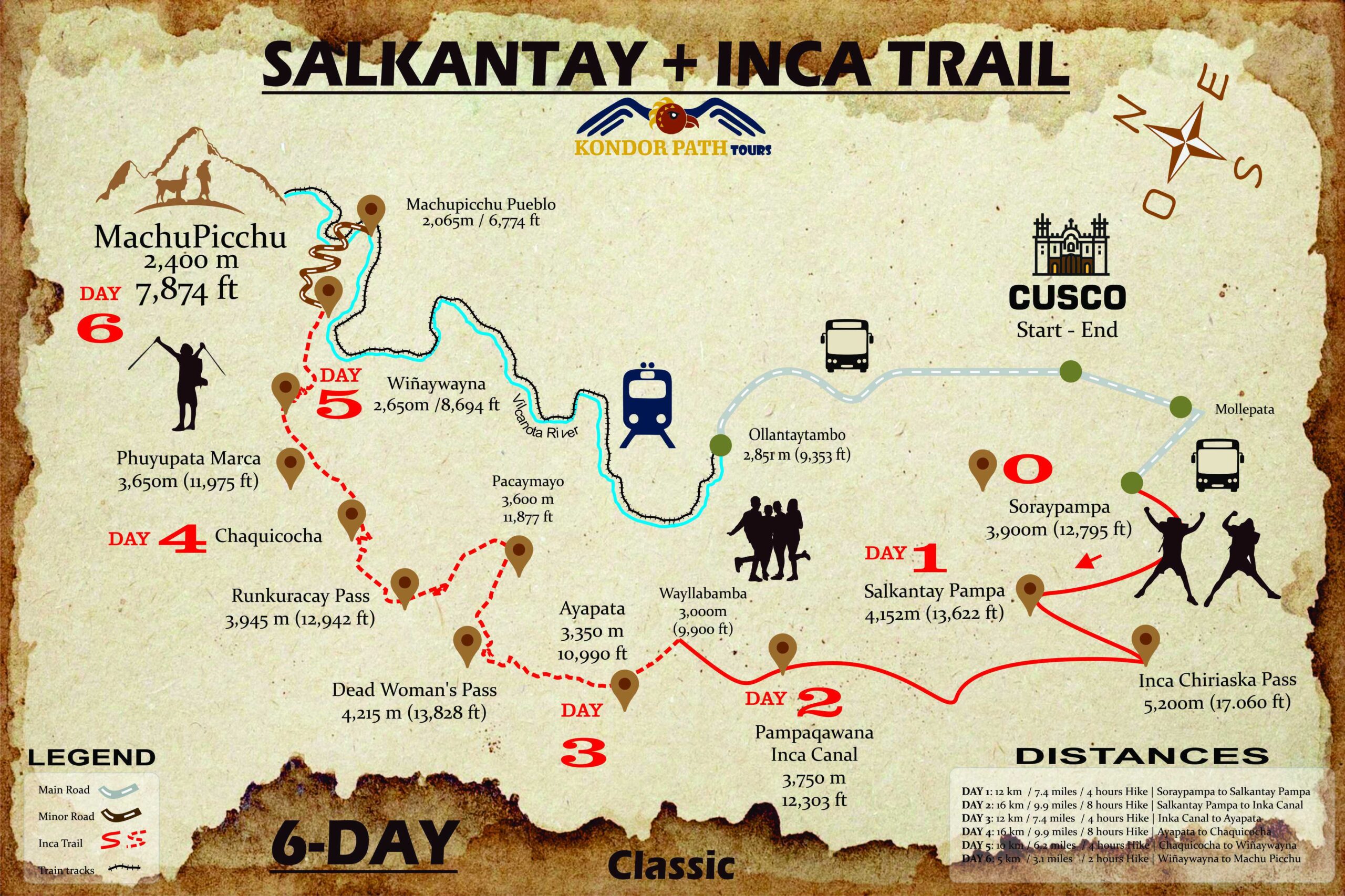
Total elevation gain across trek: significant — Cusco 3,350m → Salkantay Pampa 4,152m → Inca Chiriaska 5,200m → Pampaqawana 3,750m → Ayapata 3,350m → Dead Woman’s 4,215m → MP 2,400m.
Complete archaeological experience across 6 days:
ALL 7 archaeological sites — most comprehensive in a cluster.
Unique to this combined expedition:
Days 1-2 (Salkantay portion):
Days 3-6 (Classic Inca Trail portion):
Transition point: Wayllabamba Day 3 — meeting porters at Inca Trail entrance.
BRIEFING: 6:00 PM at the hotel reception the day before departure.


Pre-tour essentials:
Scenic drive via Sacred Valley bypass + Mollepata.
Salkantay portion pack system:
Landscape progression:
Camp at the base of Salkantay Glacier Peak — spectacular location.
Overnight: Salkantay Pampa Camp, 4,152 m.
Total Day 1: 12 km / 3.5 h — Demanding (altitude).

1B, 1D.

Demanding

12km (7.4 miles)

3.5 Hrs.

Soraypampa: 3,923m (12,870 ft)
Salkantaypampa: 4,152m (13,622 ft)
Salkantaypampa: 4,152m (13,622 ft)


Peak altitude day — HIGHEST altitude of the entire trek.
Traditional Andean altitude preparation.
Peak challenge Day 2 — HIGH INCA TRAIL variant crossing.
Landscape progression:
Peak moment:
Descent through beautiful landscapes:
Overnight: Pampaqawana Camp, 3,750 m.
Total Day 2: 16 km / 7- 8 h — Challenging (peak physical + altitude day).
1B, 1L, 1D.
Challenging
16km (9.9 miles)
7-8 Hrs.
Salkantaypampa: 4,152m (13,622 ft)
Pampaqawana: 3,750m (12,303 ft)
Inca Chiriaska Pass: 5,200m (17.060 ft)
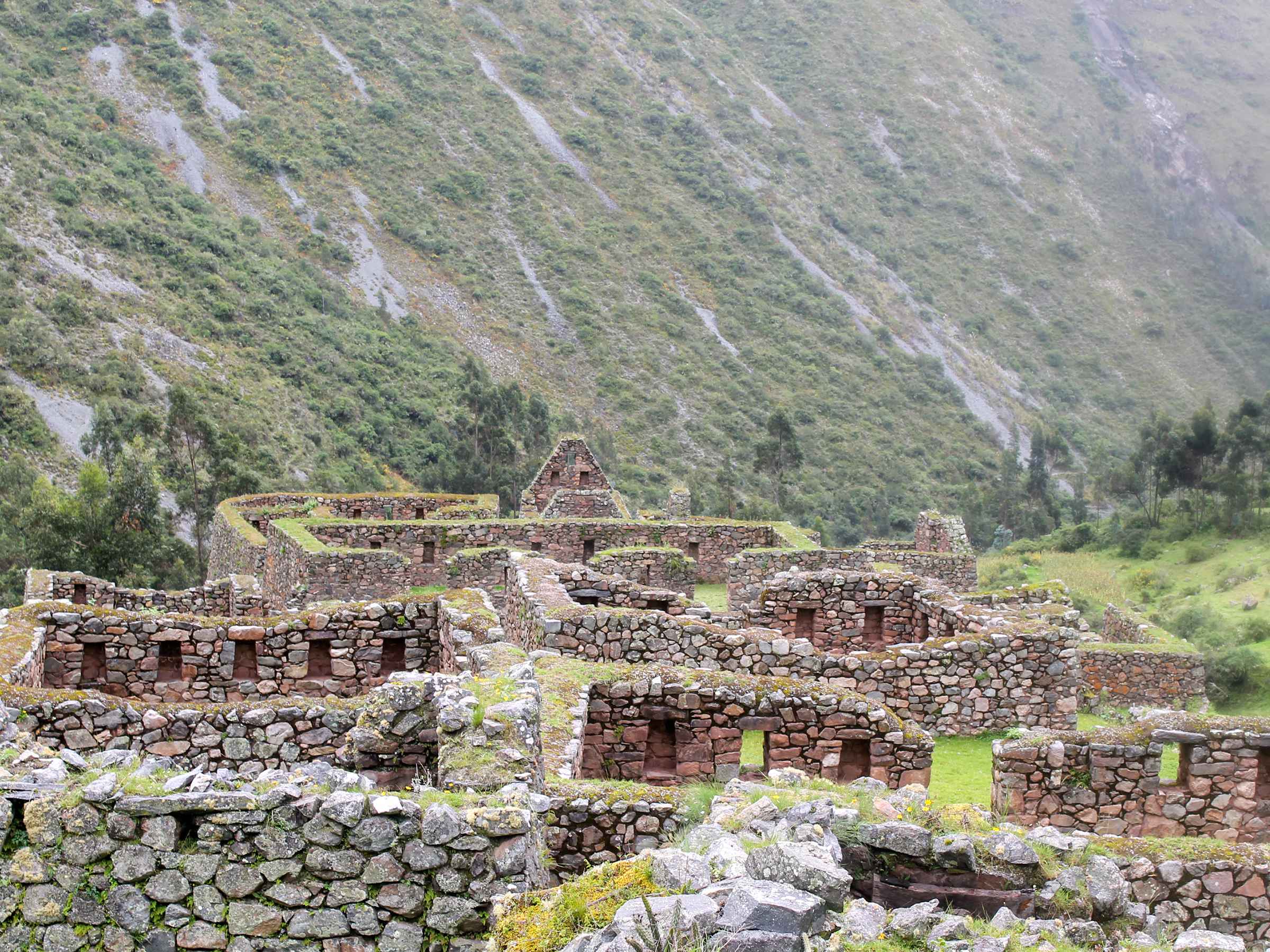


Transition day — Salkantay to Classic Inca Trail.
Landscape:
“The Happy Place” exploration:
Transition to Inca Trail pack system:
Official Inca Trail begins.
Overnight: Ayapata Camp, 3,350 m.
Total Day 3: 12 km / 4h — Intense (transition day).
1B, 1L, 1D.
Intense
12km (7.4 miles)
4 Hrs.
Pampaqawana: 3,750m (12,303 ft)
Wayllabamba: 3,000m (9,900 ft)
Ayapata: 3,350m (10,990 ft)


Peak physical Classic IT day — SECOND iconic high pass.
Landscape transitions:
SECOND iconic pass conquered:
Multiple archaeological sites:
Strategic camp — spectacular viewpoint, less crowded than standard Pacaymayo.
Overnight: Chaquicocha Camp, 3,570 m.
Total Day 4: 16 km / 7- 8 h — Challenging (dual passes complete!).
1B, 1L, 1D.
Challenging
16km (9.9 miles)
7-8 Hrs.
Ayapata: 3,350m (10,990 ft)
Pacaymayo: 3,600m (11,877 ft)
Warmiwañuska Pass: 4,215m (13,828 ft)


Peak archaeological day — cloud forest + iconic ruins.
Landscape:
“City Above the Clouds”:
Sun-facing agricultural terraces.
“Forever Young” spectacular exploration:
Recovery time for final Machu Picchu day.
Overnight: Wiñay Wayna Camp, 2,650 m.
Total Day 5: 10 km / 3.5 h — Intense (archaeologically rich day).
1B, 1L, 1D.
Intense
10km (6.2 miles)
3.5-hour
Chaquicocha: 3,570m (11,712 ft)
Wiñaywayna: 2,650m (8,694 ft)
Phuyupatamarca Pass: 3,665m (12,024 ft)


Peak emotional day — Sun Gate + MP + return.
Early morning to reach Sun Gate for an iconic view.
Landscape:
Peak emotional moment — first spectacular Machu Picchu view after 6 days of trekking.
Iconic experience:
Progressive descent to the citadel.
MP Circuit 3B (Inca Trail permit route):
Circuit 3B exploration (2 hours guided):
Cultural context:
25-min bus descent.
Expedition class train:
Private vehicle — no group waiting.
End of 6-Day ULTIMATE HIGH INCA TRAIL Expedition.
Total Day 6: 5 km / 2h — Moderate (celebratory day).
1B
Moderate
5km (3 miles)
2-hour
Wiñaywayna: 2,650m (8,694 ft)
Machu Picchu Ruins: 2,400m (7,874 ft)
Inti Pinku: 2,720m (8,920 ft)
Pre-Trek
Transport
Entrance Fees — All Included
Guides
Dual Pack System ⭐
Accommodation
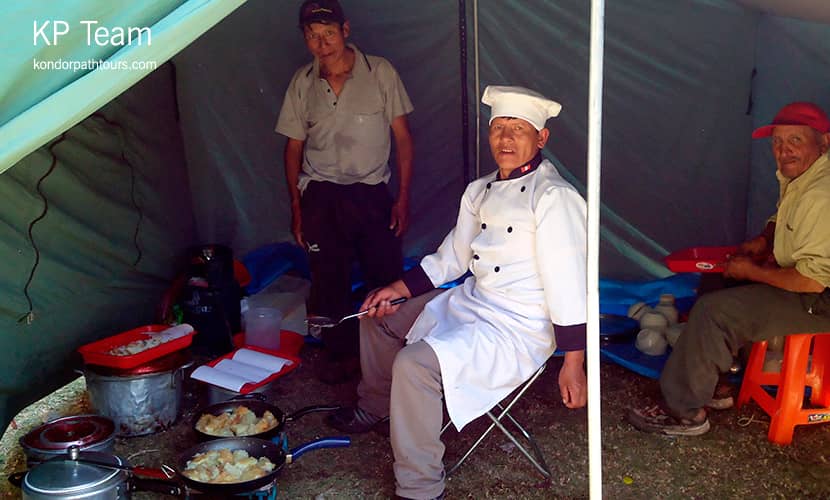
Chef Team
Meals — 15 Included
Comfort ⭐
Safety ⭐
Other
Water:
Meals NOT included:
Equipment:
Personal:
Train upgrades PeruRail:
Extra tickets Day 6:
Discounts:
Essentials:
6-Day HIGH INCA TRAIL is MOST DEMANDING in the catalog (Level 4):
Physical preparation (2-3 months before):
Altitude preparation:
Suitable for:
NOT suitable for:
Everything you need to know about our Salkantay + Inca Trail 6 Days Combined Trek — the ultimate hybrid expedition that fuses the two most famous treks in Peru into a single epic 6-day journey ending at Machu Picchu.
The Salkantay + Classic Inca Trail 6 Days — known as the HIGH INCA TRAIL — is the MOST comprehensive Peru trek combining:
Total: ~74 km / 6 days — most complete Peru trekking expedition.
Because they complement each other perfectly:
Done separately: each is complete. Done together: reveals BOTH natural majesty AND cultural genius of the Andean world. The ultimate accomplishment for serious trekkers.
The HIGH INCA TRAIL is a variant of the Salkantay route that crosses Inca Chiriaska Pass at 5,200m (Day 2) instead of the standard Salkantay Pass at 4,650m. 550m higher — Peru’s highest recreational trekking pass. Features:
Peru’s two most iconic mountain passes in ONE trek:
| Pass | Altitude | Day | Location |
|---|---|---|---|
| Inca Chiriaska Pass | 5,200m | Day 2 | Salkantay (HIGH IT variant) ⭐ |
| Dead Woman’s Pass (Warmiwañusca) | 4,215m | Day 4 | Classic Inca Trail |
Completing both is a rare accomplishment — most trekkers do only one.
Paucarcancha (“The Happy Place” in Quechua) — Inca ruins accessed via the Salkantay route on Day 3. UNIQUE inclusion in Kondor Path catalog — not on the standard Classic Inca Trail. Features Inca architecture with deep cultural significance.
Wiñay Wayna (“Forever Young”) — spectacular Inca archaeological site at Day 5 camp, 2,650 m:
Sun Gate (Inti Punku) — ceremonial entrance to Machu Picchu at 2,720m. Arriving at MP via Sun Gate is the single most iconic moment on any Inca Trail trek. After 6 days of trekking through both passes, cresting the ridge at dawn and seeing the citadel appear below is unforgettable.
| Aspect | Classic IT 4-Day ($722) | 6-Day HIGH IT (this) ($925) |
|---|---|---|
| Duration | 4 days | 6 days ⭐ +2 days |
| Salkantay portion | ❌ No | ✅ Days 1-2 HIGH IT variant ⭐ |
| Highest pass | 4,215m | 5,200m ⭐ +985m |
| Both iconic passes | ❌ | ✅ YES ⭐ |
| Archaeological sites | 5-6 | 7 (adds Paucarcancha) ⭐ |
| Total distance | 43 km | ~74 km ⭐ |
| Price | $722 | $925 (+$203) |
Choose 6-Day HIGH IT for an ULTIMATE Peru trekking experience.
| Aspect | Salkantay 4D + Short IT ($511) | 6-Day HIGH IT (this) ($925) |
|---|---|---|
| Salkantay portion | Standard Salkantay Pass 4,650m | Inca Chiriaska Pass 5,200m ⭐ |
| Inca Trail portion | Short IT permit only | FULL CLASSIC IT Days 3-6 ⭐ |
| Dead Woman’s Pass | ❌ | ✅ Day 4 ⭐ |
| Archaeological sites | Limited | 7 sites ⭐ |
| Duration | 4 days | 6 days ⭐ |
Yes — same permits as the standard Inca Trail because Days 3- 6 use the official Inca Trail. The Peruvian government limits permits to 500/day (~200 trekker permits). Book 6-10 months ahead for high season.
Every February — Inca Trail annual maintenance. Reopens March 1st. The Salkantay portion is technically operable in February, but the combined trek isn’t offered during the closure.
Demanding Level 4 — MOST demanding in catalog:
Recommended for experienced trekkers with prior multi-day experience + at least 4 days Cusco acclimatization.
AT LEAST 4 FULL DAYS in Cusco (3,350m) before starting — significantly more than Classic IT requires. Two high passes + multi-day exertion demand thorough acclimatization.
Recommended pre-trek schedule:
Yes — sleeping bag NOT INCLUDED. Available rentals in Cusco:
Dual system:
Days 1-2 (Salkantay portion):
Days 3-6 (Classic Inca Trail portion):
Transition: Day 3 at Wayllabamba — meeting porters at Inca Trail entrance.
Kondor Path Tours follows strict porter welfare standards:
Tipping: suggested $30-40 USD per trekker for porter, horseman, guide, and cook teams.
15 chef meals (5B + 5L + 5D). A professional chef and assistant cook prepare fresh meals. We accommodate vegetarian, vegan, and gluten-free requests with 48h advance notice. Coca tea wake-up every day. Hot water buckets for washing daily.
Complete altitude profile:
Sleeping altitudes: 4,152m → 3,750m → 3,350m → 3,570m → 2,650m (progressive descent aids acclimatization).
Age 12+ with a guardian minimum (recommended 12-65). For 12+ children in excellent fitness with prior multi-day trekking experience. Not suitable for children under 12 (Peruvian regulations + physical demand).
Only for exceptionally fit + well-acclimatized seniors. Recommended 12-65 age range. Seniors over 65 should consult a doctor and consider the 5-Day Inca Trail RELAXED as a gentler alternative.
March-December (closed February). Dry season May-September — best weather + views. April + October — arguably ideal (fewer crowds + moderate temperatures). Rainy season Nov-Jan + March — vibrant green landscapes but occasional pass closures.
Fernando confirmed: PeruRail Expedition 74P + private transfer Ollantaytambo → Cusco Day 6. Optional upgrades:
Stricter than non-permit tours due to the non-refundable Inca Trail permit:
Travel insurance with trek coverage ESSENTIAL — many policies cover non-refundable permits for medical emergencies.
PRIVATE by default — daily on-demand PRIVATE format. Just your group with a dedicated guide. Minimum 1 client for departure. Pricing scales from $3,253 solo to $925 per person at 10 travelers.
Standard: English + Spanish. On request (60+ days in advance): French, German, Italian, Portuguese, Japanese, Mandarin, Russian, Hebrew.
8-12 months ahead for high season (May-September). 10-12 months for peak July-August. Combined trek has additional logistical complexity — maximum lead time appreciated.
Choose 6-Day HIGH IT if any apply:
Choose alternatives if any constraint above applies.

PRIVATE ULTIMATE TREK pricing — scalable by group size:
| Persons | Price (p/p) | |
| 1 | $ 3 253.00 USD | |
| 2 | $ 1 920.00 USD | |
| 3 | $ 1 525.00 USD | |
| 4 | $ 1 307.00 USD | |
| 5 | $ 1 165.00 USD | |
| 6 | $ 1 055.00 USD | |
| 7 | $ 990.00 USD | |
| 8 | $ 960.00 USD | |
| 9 | $ 959.00 USD | |
| 10 | $ 925.00 USD |
Salkantay Inca Trail 6 Days

Salkantay Inca Trail 6 Days

Salkantay Inca Trail Trek