Accessible Machu Picchu Tour 4 Day


A dedicated, wheelchair-friendly 4-day journey to Machu Picchu with specialized support throughout.
The Accessible Machu Picchu Tour 4 Days is one of the very few wheelchair-accessible Machu Picchu programs operating in Cusco with the operational depth that genuine accessibility requires. We’ve designed this tour over years of operations with travelers with mobility limitations — and we’ve made the seemingly impossible possible for hundreds of clients.
Six features that make this tour genuinely accessible (not “accessible-marketing”):
1. Foldable wheelchairs available for rent at $8 USD/day — if you don’t bring your own. Our rental wheelchairs are aluminum, 45 cm seat width, up to 100 kg weight capacity, with fixed footrests — designed specifically to fold compactly for train and vehicle transport on the irregular terrain of the Andes.
2. Two dedicated bilingual guides travel with you from Day 1 to Day 4 — same train carriage, same vehicle, continuous assistance. This is the most appreciated feature by our accessible clients. Most operators hand wheelchair travelers off to the train staff at stations, creating vulnerable moments without familiar support. Our 2 guides board the same train carriage with you, available continuously throughout the entire 4-day journey.
3. A third or fourth guide is added at Machu Picchu specifically to help carry the wheelchair on Inca steps, depending on traveler weight (under 70 kg = 3 guides total; over 70 kg = 4 guides). This is field-tested operational reality, not theoretical accessibility.
4. Standard vehicles, expertly handled — we use comfortable standard vehicles (not specialized accessibility vans, which don’t reliably exist in Peru’s accessibility infrastructure). Our experienced team has refined wheelchair transfer techniques over years of operations. The reality is that standard vehicles with experienced staff are more reliable than specialized vehicles that may not arrive.
5. Expedition train coordinated with the railway company — we contact PeruRail or Inca Rail in advance for wheelchair authorization. Vistadome upgrade available for travelers who want a premium train experience.
6. Itinerary engineered for accessibility — replaces Rainbow Mountain (impossible in a wheelchair due to 5,100 m altitude and rough terrain) with Moray and Chinchero on Day 4 — both more wheelchair-friendly than Vinicunca, with accessible viewpoints and shorter walking sections.
This is a field-tested tour, not theoretical accessibility marketing. We have successfully completed this itinerary with travelers using wheelchairs, walkers, crutches; travelers post-knee/hip surgery; travelers with multiple sclerosis; travelers post-stroke recovery; and travelers with advanced arthritis. Fernando, the tour operator, personally describes this as “a tour we’ve already worked many times and succeeds.”
| 🗓️ Duration | 4 days / 3 nights |
| ♿ Accessibility | Foldable wheelchair rental + 2 dedicated guides |
| 👨👨👦 At Machu Picchu | 3rd or 4th guide added for wheelchair carrying |
| 🚂 Train | Expedition (PeruRail or Inca Rail accessible coordination) |
| 🚐 Vehicles | Standard private vehicles (experienced wheelchair logistics) |
| 🏨 Hotels | You choose — accessible recommendations available |
| 📍 Pickup | Your Cusco hotel or Cusco airport |
| ⛰️ Max altitude | 3,800 m (Chinchero) |
| 💪 Difficulty | Adapted to travelers’ specific limitations |
| 🩺 Safety | First-aid kit + 24h support throughout |
| 👥 Group size | 1–10 (with caregivers/companions included) |
| 💲 From | $530 USD per person (group of 10) |
| 💲 Wheelchair rental | $8 USD per day (foldable, optional) |





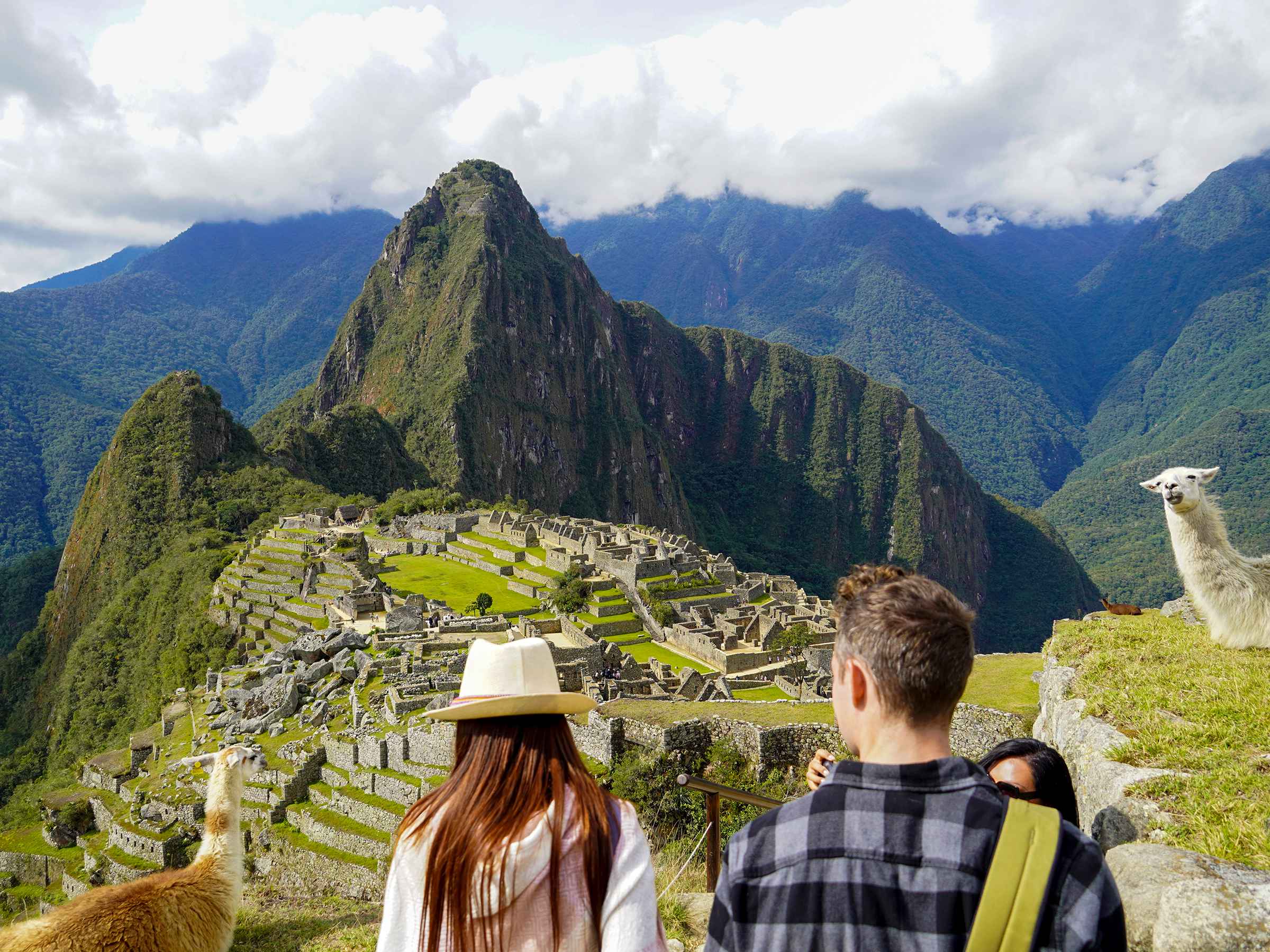
The Accessible Machu Picchu Tour 4 Days turns 4 days into a genuinely unforgettable trip – 2 dedicated bilingual guides travel with you from Day 1 to Day 4 (same train carriage) – 3rd/4th guide added at Machu Picchu based on traveler weight (lifting assistance) – Foldable wheelchair rental ($8 USD/day) if you don’t bring your own. – Cusco Accessible City Tour — Cathedral, Coricancha (main floor), Sacsayhuaman (lower esplanade). The Accessible Machu Picchu Tour 4 Days — genuine Andean history, start to finish.
The Accessible Machu Picchu Tour 4 Days is the result of years of refinement working with travelers with mobility limitations in the Andes. Every operational detail has been developed through actual field experience — not theoretical accessibility design.
The pacing reflects accessibility realities. Most standard tours pack 5-6 days into a tight schedule that assumes ambulatory mobility. Accessible travel requires more buffer time at every transfer point — train boarding, vehicle transfers, restroom breaks, archaeological site navigation. Our 4-day structure provides this buffer naturally without compromising the iconic Machu Picchu experience.
The itinerary substitutes intelligently. Rainbow Mountain (Vinicunca, 5,100 m) is genuinely impossible for wheelchair users — both the altitude and the rough terrain create unmanageable safety risks. Rather than promise inappropriate access, we replace Rainbow Mountain on Day 4 with Moray and Chinchero — sites where wheelchair-accessible viewpoints and shorter walking sections provide meaningful Andean experiences.
Two guides are the operational core. This isn’t a marketing claim — it’s the practical foundation of why this tour succeeds. One guide handles the cultural narration, the logistics coordination with hotels and restaurants, and the language interpretation. The second guide focuses entirely on the traveler’s physical mobility — pushing the wheelchair on flat surfaces, providing lifting assistance at non-accessible sections, coordinating restroom accessibility, and ensuring continuous safety. Together they form a team that’s hard to replicate independently.
At Machu Picchu, the operational complexity multiplies. The Inca citadel has 600-year-old stone steps and uneven surfaces throughout. Even on Circuit 1 (the most accessible circuit), wheelchair users need physical lifting assistance at multiple points. This is why we add a 3rd or 4th guide at Machu Picchu specifically — based on traveler weight, we ensure adequate lifting capacity for safe wheelchair carrying.
Hotels are not included for one important reason: accessible hotel needs vary widely by traveler (roll-in shower needs, ground-floor access, grab bars in specific bathrooms, oxygen-enriched rooms if cardiovascular conditions). We provide curated accessible hotel recommendations based on your specific requirements rather than bundling a single hotel choice that may not match your needs.
We believe in radical honesty about what is and isn’t accessible:
| Site | Accessibility Level | Notes |
|---|---|---|
| Cusco Cathedral | ✅ Mostly accessible | Ramp entrance, mostly flat interior |
| Coricancha | ✅ Mostly accessible | Main floor accessible; some upper Spanish levels with stairs |
| Sacsayhuaman | ⚠️ Partially accessible | Lower esplanade accessible; upper walls require lifting |
| Plaza de Armas (Cusco) | ✅ Fully accessible | Large flat plaza |
| San Cristóbal viewpoint | ✅ Accessible by vehicle | Photo stop with valley views |
| Awanacancha (camelid farm) | ✅ Mostly accessible | Flat paths, alpaca feeding accessible |
| Pisac valley viewpoint | ✅ Accessible by vehicle | Panoramic stop with no walking required |
| Pisac archaeological site | ❌ Not accessible | Steep mountain terraces with stairs |
| Pisac market | ⚠️ Partially accessible | Main plaza accessible; some stalls on cobblestones |
| Ollantaytambo lower terraces | ⚠️ Partially accessible | Lower platforms with lifting assistance; upper Sun Temple not accessible |
| Machu Picchu Pueblo (Aguas Calientes) | ⚠️ Partially accessible | Main streets accessible; some neighborhoods on cobblestones |
| Machu Picchu – Circuit 1 | ⚠️ Partially accessible | Lower terraces and main viewpoints reachable with lifting assistance; upper structures not accessible |
| Moray | ⚠️ Partially accessible | Upper viewpoint accessible; descending into terraces requires lifting |
| Chinchero town | ✅ Mostly accessible | Plaza and church accessible |
| Chinchero Textile Center | ✅ Mostly accessible | Demonstration accessible from seated position |
This honest assessment is what makes our tour succeed — we know exactly which paths work, where lifting is needed, and where to spend time vs. skip.
Built specifically for travelers with mobility limitations, this 4-day itinerary follows an accessible version of the classic Cusco-Sacred Valley-Machu Picchu sequence: an accessible city tour, a Sacred Valley day with train connection, a guided Machu Picchu visit with dedicated support staff, and a return journey via Moray and the Chinchero textile center.
Day 1’s accessible Cusco city tour takes place at the city’s own 3,800 m elevation, establishing the trip’s acclimatization baseline in a format adapted for mobility needs. Day 2’s Sacred Valley excursion and train connection maintain a similarly moderate pace, and Day 3’s Machu Picchu visit drops to a comfortable 2,400 m — with dedicated guides assisting throughout. Day 4’s return through Moray and Chinchero revisits the Sacred Valley’s moderate elevation before departure, keeping the trip’s overall altitude demands gentle throughout.


Pickup at 08:00 from your chosen accessible hotel in Cusco or directly from Cusco airport if your flight arrives that morning. Your two dedicated bilingual guides meet you from this first moment — not a separate transfer driver who hands you off later. They will accompany you for the entire 4-day journey.
The half-day Cusco City Tour focuses on the most wheelchair-accessible Cusco landmarks. Your guides have refined the exact path that works for wheelchair users:
End of guided tour at approximately 13:30. Drop-off at your chosen accessible Cusco hotel. Afternoon free for independent exploration of Plaza de Armas (fully wheelchair-accessible), rest at the hotel, or accessible restaurants in the historic center. Your guides remain available for the rest of the day if you need recommendations or assistance.
Day 1 quick stats

None

Moderate

Cusco: 3,350m (10,990 ft)
Cusco: 3,350m (10,990 ft)
Sacsayhuaman: 3,500m (11,482 ft)


Pickup at 07:30 from your Cusco hotel. Your two guides accompany you in the standard private vehicle. The Sacred Valley day combines accessible cultural experiences with the train journey to Machu Picchu Pueblo.
Afternoon Expedition train Ollantaytambo → Aguas Calientes:
Critical accessibility detail: your two guides board the same train carriage with you. They have coordinated with Inca Rail in advance for wheelchair authorization, photographed your wheelchair if required to confirm dimensions, and arranged accessible seating near the entrance. Train boarding requires a few steps assisted by station staff + your guides. The 1 hour 33 minute journey features panoramic side windows, comfortable seating, and an accessible bathroom on the train.
Aguas Calientes (Machu Picchu Pueblo) — accessibility level is partial. Some streets are on cobblestones. Your guides assist with the walk from the train station to your chosen accessible hotel. Most central hotels are within 200-400 meters of the train station on relatively flat or gently sloping streets.
Day 2 quick stats
BL
Moderate
Pisac Ruins: 3,650m (11,650 ft)
Machu Picchu Pueblo: 2,065m (6,774 ft)
Pisac Ruins: 3,650m (11,650 ft)


Early breakfast at your Aguas Calientes hotel. Your two guides meet you at the lobby for the day’s most important accessibility logistics.
Shuttle bus to Machu Picchu sanctuary — operated by Consettur, the only authorized bus company. The 25-minute switchback ride up the 8-kilometer road to the citadel entrance at 2,400 m. Bus boarding requires lifting assistance from your two guides — the buses are standard, not specialized accessible vehicles.
Machu Picchu entrance — your scheduled entry time is 09:00 AM, when the morning crowds are typically lighter. CRITICAL: A 3rd or 4th guide joins your team at the entrance specifically to assist with wheelchair carrying on the Inca steps. The number depends on your weight:
2.5-hour guided tour of Machu Picchu on Circuit 1 (the most accessible circuit):
Circuit 1 — the central sector of the citadel — provides the most wheelchair-accessible Machu Picchu experience available. We have refined the exact path through years of operations. The 2.5-hour guided tour covers:
Important regulation: free time within Machu Picchu is no longer permitted under 2025+ rules. The group exits together once the guided visit ends. If you want more time inside, a re-entry ticket can be purchased (+$75 USD).
Lifting realities: at several points during the tour, your guides physically lift the wheelchair over short stone step sections (typically 2-4 step sections, lifting required 6-10 times during the 2.5 hours). This is why having 3-4 guides matters — they share the lifting load and prevent any single guide from fatigue. Your safety is a continuous priority.
After the guided tour, return shuttle bus to Aguas Calientes with lifting assistance. Lunch in Aguas Calientes (own expense — your guides will recommend accessible restaurants with ramp entrance and accessible bathroom).
Afternoon at leisure in Aguas Calientes — your guides remain available for additional walks (limited by accessibility), spa visits (Inkaterra has accessible amenities), or rest at your hotel.
Overnight in Aguas Calientes — second night at your chosen accessible hotel.
Day 3 quick stats
Moderate
Machu Picchu Pueblo: 2,065m (6,774 ft)
Machu Picchu Ruins: 2,400m (7,874 ft)
Machu Picchu Ruins: 2,400m (7,874 ft)


Leisurely breakfast at your Aguas Calientes hotel. Your two guides meet you at the lobby for the return journey to Cusco.
Morning Expedition train Aguas Calientes → Ollantaytambo:
Your guides board the same carriage with you. The morning train is typically less crowded than afternoon services, providing more comfortable boarding and seating arrangements.
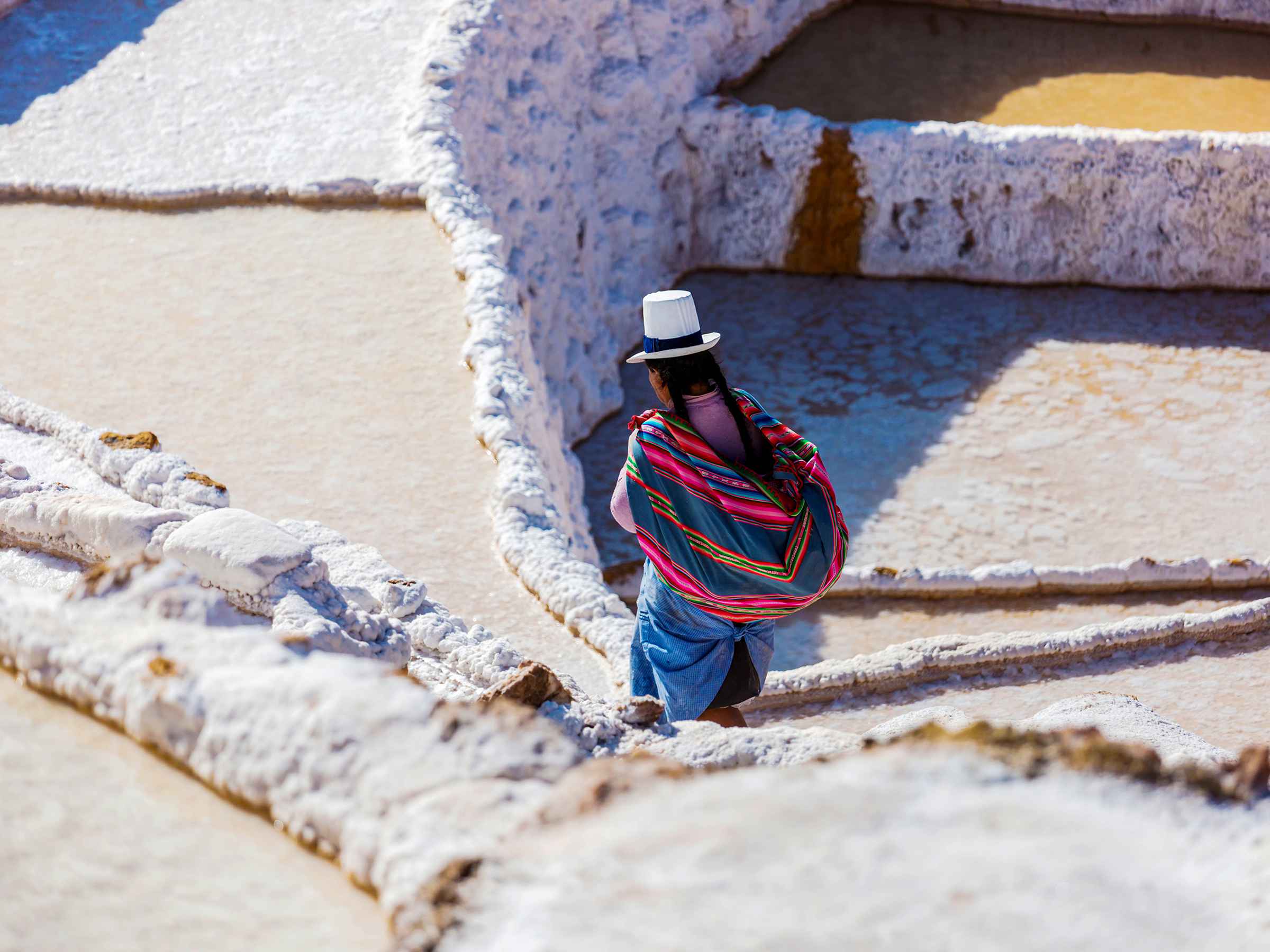
Private vehicle transfer Ollantaytambo → Moray → Chinchero → Cusco in your standard private vehicle. The drive covers approximately 1 hour 40 minutes total with two intentional accessible stops:
Continue the vehicle journey back to Cusco. Arrival in Cusco approximately 18:20. Drop-off at the end goes to your Cusco hotel or straight to the airport, depending on your flight.
Day 4 quick stats
Moderate
Machu Picchu Pueblo: 2,065m (6,774 ft)
Moray Ruins: 3,500m (11,482 ft)
Chinchero Ruins: 3,800m (12,467 ft)
Transport
Guides (the operational core)
Entrances
Meals
Safety & taxes
For most Kondor tours, we don’t include hotels for transparency reasons (no hidden markups). For the Accessible tour specifically, the reason is even more important: accessible hotel needs vary dramatically by traveler:
Bundling a single hotel choice would force compromises that may not match your specific needs. Instead, we provide curated accessible hotel recommendations based on your specific requirements when you book.
Sample accessible hotel recommendations:
| Tier | Cusco (2 nights) | Aguas Calientes (2 nights) |
|---|---|---|
| Mid-range ($90-180) | Casa Andina Standard (accessible rooms), Sonesta Cusco (accessible rooms), Hilton Garden Inn Cusco (full accessibility) | El MaPi by Inkaterra (partial), Casa Andina Standard Machu Picchu |
| Premium ($250-450) | JW Marriott El Convento Cusco (ADA-compliant rooms), Palacio del Inka, Aranwa Cusco Boutique | Sumaq Machu Picchu Hotel (1 accessible room), Inkaterra Machu Picchu Pueblo Hotel |
We help coordinate booking the specific room type that matches your accessibility needs.
Travel insurance is more important for accessible travel than standard travel. Specific risks for wheelchair travelers in Peru:
Recommended insurance providers for disabled travelers:
Coverage requirements:
Purchase timing: within 14-21 days of booking the tour to qualify for pre-existing condition waivers.
Based on years of successful operations, this tour works well for:
We believe in honest disclosure about who shouldn’t book:
For complex disability combinations or specific accommodation needs, request a custom consultation. We’ve designed custom tours for travelers with multiple sclerosis flare schedules, post-stroke recovery, advanced arthritis with specific medication timing, and other specialized needs.
| Feature | Accessible 4 Day ✓ | Senior 5 Day | Family 5 Day | Women-Only 5 Day |
|---|---|---|---|---|
| Audience | Mobility-limited travelers | Travelers 60+ ambulatory | Families with kids 8+ | Women only |
| Wheelchair adaptations | ✅ Full (2-4 guides, equipment rental) | ❌ | ❌ | ❌ |
| Hotels included | ❌ (free choice) | ✅ 5-star | ❌ (free choice) | ❌ (free choice) |
| Train class | Expedition | Vistadome | Expedition | Expedition |
| Guide team | 2 dedicated + 1-2 at MP | 1 guide | 1 guide | 1 guide |
| Rainbow Mountain | ❌ Replaced with Moray/Chinchero | ❌ Excluded | ✅ Horse | ✅ Horse |
| Machu Picchu Circuit | Circuit 1 (most accessible) | Circuit 1 or 2 | Circuit 2 | Circuit 3b (Inca Trail) |
| Duration | 4 days | 5 days | 5 days | 5 days |
| Best for | Mobility limitations | Comfort + altitude care | Active families | Female sisterhood |
 Wheelchair Accessible Machu Picchu Tour 4 Days
Everything you need to know about traveling to Peru and Machu Picchu with mobility limitations, wheelchairs, or other accessibility needs. Our Accessible Machu Picchu Tour 4 Days has been designed specifically for travelers who require additional mobility support while exploring Peru’s most iconic destinations.
The Accessible Machu Picchu Tour 4 Days is our 4-day wheelchair-accessible Peru vacation specifically designed for travelers with mobility limitations.
It covers the most accessible portions of the Cusco region: Cusco City Tour (Cathedral, Coricancha main floor, Sacsayhuaman lower esplanade, San Cristóbal viewpoint), Sacred Valley (Awanacancha camelid farm, Pisac valley viewpoint, Ollantaytambo lower terraces), **Machu Picchu guided tour
on Circuit 1** (the most accessible circuit), and Moray and Chinchero on Day 4.
The package includes private transport in standard vehicles with experienced wheelchair logistics, 2 dedicated bilingual guides who travel with you from Day 1 to Day 4 (including the same train carriages), 3rd or 4th guide added at Machu Picchu for wheelchair lifting based on traveler
weight, Expedition class train tickets with railway wheelchair coordination, all government entrance fees, Day 2 box lunch, first-aid kit throughout, and optional foldable wheelchair rental at $8/day.
Hotels are NOT included — you choose your own accessible accommodation (we provide curated recommendations on request).
Honest answer: partially. Machu Picchu is a 600-year-old archaeological site with original Inca stone construction, so it cannot be made fully ADA-compliant. However, significant portions ARE accessible with the right team and approach:
Accessible at Machu Picchu: the entrance pavilion area, the lower agricultural terraces with assistance, the Guardian’s House viewpoint (the iconic postcard photo), the lower portions of Circuit 1, and several key panoramic stops within the citadel.
NOT accessible at Machu Picchu: the upper terraces and structures, the Royal Tomb, Temple of the Sun interior, Sacred Plaza upper sections, Inca Bridge, Sun Gate (requires 1+ hour walk), Wayna Picchu and Machu Picchu Mountain (vertical climbs).
Our 2.5-hour guided tour on Circuit 1 covers the accessible portions and provides what travelers consistently describe as 80% of the visual and emotional impact of a full Machu Picchu visit. We have refined this exact route through years of operations.
This is the single most important operational feature of our accessible tour. Two guides aren’t a luxury — they’re an operational necessity for accessible travel in Peru:
sections, coordinating restroom accessibility, ensuring continuous safety, and providing respite when one guide needs a break
Why this matters: most accessibility tour operators provide one guide who is forced to choose between cultural narration and physical assistance.
The result is degraded experience on both fronts. Our two-guide system means you get full cultural depth AND full physical support simultaneously.
Same train carriage too: most operators hand wheelchair travelers off to train staff at stations. Our guides board the same train carriage with you, available continuously throughout the 1.5-hour journeys to and from Machu Picchu.
At Machu Picchu, the physical demands multiply. The Inca citadel has 600-year-old stone steps and uneven surfaces throughout.
Even on Circuit 1 (the most accessible circuit), wheelchair users need physical lifting assistance at multiple points (typically 6-10 lifting moments during the 2.5-hour tour).
Lifting realities:
The math is honest: lifting 50-150 kg over a single step requires 2 people minimum for safety.
Lifting it repeatedly throughout a 2.5-hour tour requires 3-4 people to share the load and prevent fatigue (which leads to dropped wheelchairs and injuries).
Our protocol:
This is field-tested operational reality based on years of successful tours.
Honest answer: no, we use comfortable standard vehicles with an experienced wheelchair logistics team. Here’s why this approach actually works better than “specialized accessible vehicles”:
The reality of accessibility infrastructure in Peru:
and leave travelers stranded
Our approach:
fleet
This works because: the 2 guides + driver provide safe, practiced wheelchair transfers at each stop.
The vehicle itself doesn’t need a hydraulic lift when 3 trained people are handling logistics together.
For travelers who specifically require a hydraulic-lift vehicle (heavy power wheelchairs, severe transfer limitations), we can attempt to coordinate specialized vehicle booking with significant advance notice — but availability is not guaranteed.
Yes — we offer foldable wheelchair rental at $8 USD per day. Specifications:
transport
Limitations of our rental wheelchair:
If you have specific wheelchair needs (custom cushioning, larger seat width, weight over 100 kg, lateral support, headrest, etc.), we strongly recommend bringing your own foldable manual wheelchair.
Electric wheelchairs and rigid-frame wheelchairs are not recommended due to train and shuttle bus limitations.
For the Accessible tour specifically, accessible hotel needs vary dramatically by traveler:
equipment
Bundling a single hotel choice would force compromises that may not match your specific needs.
Instead:
Sample accessible hotel recommendations:
| Tier | Cusco (2 nights) | Aguas Calientes (2 nights) |
|---|---|---|
| Mid-range ($90-180) | Casa Andina Standard, Sonesta Cusco, Hilton Garden Inn | El MaPi by Inkaterra, Casa Andina Standard |
| Premium ($250-450) | JW Marriott El Convento, Palacio del Inka, Aranwa Cusco | Sumaq Machu Picchu |
Hotel, Inkaterra Machu Picchu Pueblo |
Partially, with coordination. PeruRail and Inca Rail allow foldable manual wheelchairs on board with advance coordination.
Key details:
on train**: not wheelchair-accessible — restroom breaks happen at stations before/after
Our coordination:
you for continuous support
Partially accessible. Aguas Calientes (Machu Picchu Pueblo) is a small town built on a steep narrow valley, with the train tracks running through the center. Accessibility realities:
Accessible:
Less accessible:
Our planning: your guides identify accessible restaurants, navigate the most accessible paths, and assist with any necessary lifting (e.g., over a few steps to enter a restaurant).
The 2 nights in Aguas Calientes work because the distances are short — your hotel, the train station, restaurants, and the shuttle bus stop are all within walking/wheelchair distance.
Honest update: while there have been reports of a dedicated accessible Consettur bus, the standard buses are what’s available reliably. Our approach:
switchback road from Aguas Calientes (2,065 m) to Machu Picchu (2,400 m)
This is the operational reality — not a marketing claim.
The shuttle bus to Machu Picchu requires guide assistance for wheelchair travelers. We coordinate the timing and provide the team to make it work safely.
Honest answer: Rainbow Mountain is genuinely not accessible in a wheelchair. Reasons:
ground)
Marketing claims of “accessible Rainbow Mountain” are misleading and we refuse to make them.
Instead, we replace Day 4 with Moray and Chinchero — sites where genuine accessibility is possible and the cultural value is meaningful.
If you absolutely want a Rainbow Mountain experience: we can discuss Palccoyo Rainbow Mountain (4,900 m, 20-25 minute walk) as a Day 5 extension.
With doctor’s clearance and proper team coordination, Palccoyo may be possible — but this is case-by-case.
Honest answer: we can accommodate with advance coordination. Key considerations:
For travelers on the autism spectrum:
travelers)
For travelers with cognitive disabilities:
Discuss specific needs at booking — we customize the itinerary based on the traveler’s profile.
We don’t have specialized autism therapists on staff, but we have patient guides experienced in supporting neurodivergent travelers, and we coordinate with the traveler’s existing support team.
Critical considerations specific to disability + altitude:
(1) Altitude affects everyone, but combined with disability-specific conditions, requires careful management:
altitude-related dehydration
(2) Acclimatization protocol:
(3) Pre-tour preparation:
catheters/supplies if applicable
(4) During the tour:
Our protocol:
Mild flare (manageable with rest):
Moderate flare (requires medical attention):
Severe flare (requires evacuation):
Pre-tour preparation that helps:
Cancellations 30 or more days before tour start: 80% refund (20% retained for non-refundable Machu Picchu entrance, train tickets, and accessibility coordination already locked in).
Cancellations 15-29 days before: 50% refund.
Cancellations less than 14 days before: non-refundable, but rescheduling within 12 months is possible, subject to availability.
Medical emergency cancellation: with proper documentation from your physician, we offer up to 90% refund or free rescheduling.
Disability-related medical changes have extra protection — we understand that disability conditions are unpredictable.
If we cancel due to force majeure (strikes, road closures, train suspensions, weather emergencies that affect accessible coordination): full refund or free reschedule.
Travel insurance with cancellation coverage and disability-specific protection is strongly recommended. Purchase within 14-21 days of initial booking to qualify for pre-existing condition waivers.
Senior Travel Peru 5 Day targets travelers 60+ with oxygen-enriched rooms, slower pace, doctor on-call, and senior-experienced guides — but assumes ambulatory mobility (can walk and climb stairs with support).
Accessible Peru Tours 4 Day specifically accommodates wheelchair users and significant mobility limitations with: 2 dedicated guides + 3-4 at Machu Picchu, foldable wheelchair rental, accessible Machu Picchu Circuit 1, accessible itinerary substitution (Moray/Chinchero replaces Rainbow
Mountain), and detailed accessibility-aware route selection.
For seniors who also use wheelchairs: we can combine elements of both packages with custom pricing. The Senior tour’s 5-star hotels + Vistadome train + the Accessible tour’s 2-guide team and wheelchair logistics. Request a custom multi-need quote.
Yes, and it’s increasingly common. Common configurations:
caregivers** for medical reasons
Group dynamics:
Custom multi-generational adjustments:
multiple medical conditions
Request a custom quote at booking with the full family configuration.
We’ve been operating wheelchair-accessible Machu Picchu tours for over 8 years.
The 4-day itinerary you see today is the result of continuous refinement — what works at Machu Picchu, which restaurants have ramps, which hotels have genuinely accessible bathrooms, which train staff are most helpful, how to time the shuttle bus with crowd patterns, when Inca Rail accepts
wheelchairs without questions vs. requiring photos in advance.
Kondor Path Tours, the tour operator, describes the Accessible tour as “a tour we’ve already worked many times and succeeds” — this is operational truth, not marketing language.
We’ve successfully completed this itinerary with travelers using manual wheelchairs, walkers, crutches, post-knee/hip surgery patients, multiple sclerosis travelers, post-stroke recovery travelers, and travelers with advanced arthritis.
The honest assessment: we don’t promise full accessibility because Machu Picchu cannot be made fully ADA-compliant.
We promise a meaningful Machu Picchu experience within real constraints, with a team that knows exactly which paths work, where lifting is needed, and how to make the impossible possible.
Eight concrete reasons:
(1) Verified accessibility — we know which “accessible” rooms actually work, not just marketing claims from hotel websites.
(2) Reserved accessibility logistics — Inca Rail wheelchair coordination, hotel accessible room booking, Machu Picchu Circuit 1 timing all handled.
(3) Trained guide team — 2 dedicated bilingual guides + 1-2 at Machu Picchu, with field-tested wheelchair lifting techniques.
(4) Accessibility-trained guides — know every accessible path at every site through years of operations.
(5) Equipment availability — foldable wheelchair rental on-site at $8/day if needed.
(6) Local emergency response — coordinated medical care with English-speaking physicians.
(7) Honest expectations — we tell you exactly what to expect at every site (positive and negative).
(8) Companion coordination — caregivers integrated into the package, supported throughout.
Self-planning an accessible Peru trip is extraordinarily difficult. The amount of coordination required (railway authorizations, accessible hotel booking, finding accessibility-trained guides, identifying which restaurants have ramps, coordinating wheelchair lifting at Machu Picchu) takes 40+
hours of research and may still fail due to lack of local relationships.
We handle the complex coordination because we’ve been doing it for 8+ years.
| Persons | Price (p/p) | |
| 1 | $ 1 914.00 USD | |
| 2 | $ 1 157.00 USD | |
| 3 | $ 894.00 USD | |
| 4 | $ 763.00 USD | |
| 5 | $ 691.00 USD | |
| 6 | $ 637.00 USD | |
| 7 | $ 599.00 USD | |
| 8 | $ 570.00 USD | |
| 9 | $ 548.00 USD | |
| 10 | $ 530.00 USD |