Archaeology Tour Peru 5 Days — Hidden Inca Sites


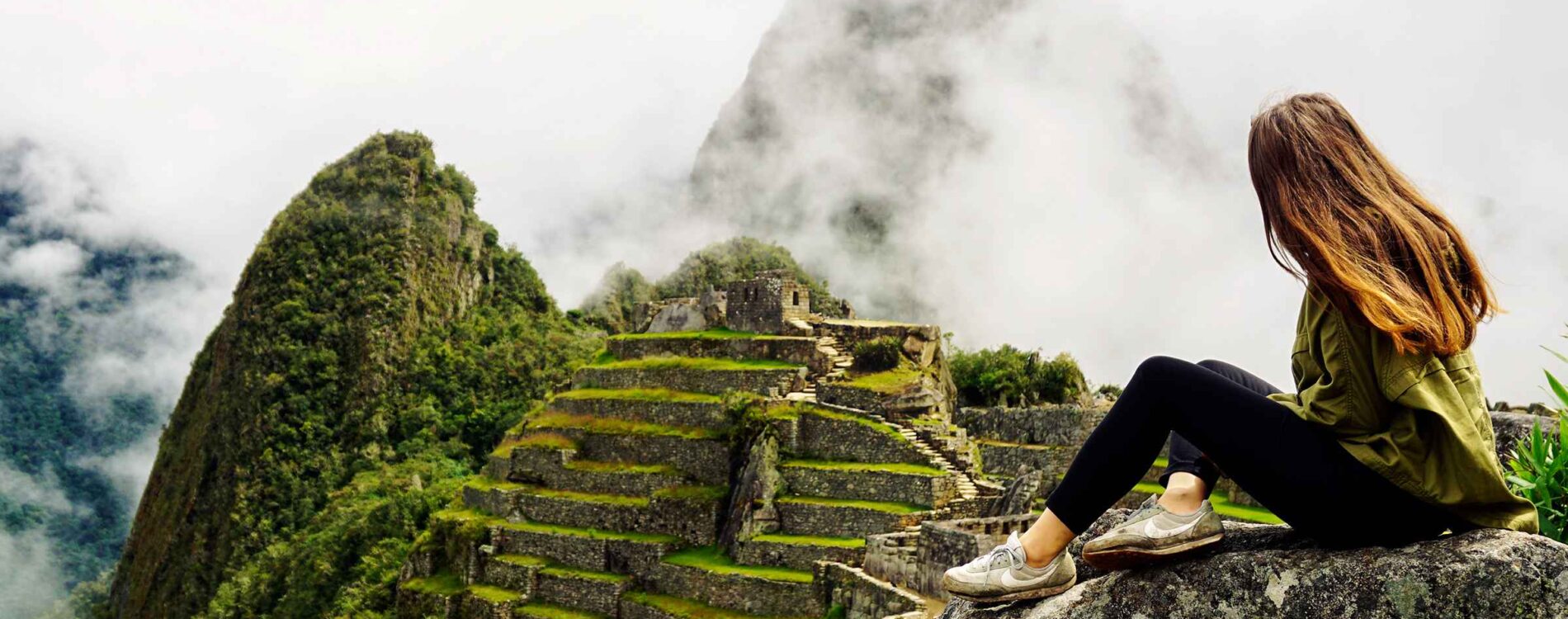
For serious history lovers: 5 days of lesser-known Inca and pre-Inca sites, plus a deep Machu Picchu dive.
The Archaeology Tour Peru 5 Days is the most depth-focused program in our catalog. Unlike standard Machu Picchu tours that recycle the same 6-8 sites everyone has seen on Instagram, this 5-day program deliberately includes the pre-Inca and esoteric Inca sites that most tour operators skip — combined with a 4-hour Machu Picchu guided tour (double the standard 2 hours) on 2 complementary circuits.
Five reasons serious history travelers choose this tour:
1. The South Valley day reveals Peru’s pre-Inca history (Day 1). Tipón’s hydraulic engineering masterpiece (still flowing after 600 years). Pikillacta — a pre-Inca Wari citadel with over 700 structures that flourished 500 years BEFORE the Inca empire. Rumicolca — a massive Wari aqueduct gate later repurposed by the Incas. Andahuaylillas — the “Sistine Chapel of the Americas” with 400-year-old indigenous Christian frescoes. None of these sites appear in our other Machu Picchu tours — they’re exclusive to this program.
2. Esoteric Inca sites near Cusco (Day 2). The Temple of the Moon with its serpent and puma carvings. Cusilluchayoc (Temple of the Monkey) with the three carved pumas representing Andean cosmology. These sites just minutes from Cusco are visited by less than 2% of Machu Picchu travelers — yet they reveal Inca religious complexity that the standard Sacsayhuaman tour cannot.
3. Ñaupa Iglesia — the Inca cave temple (Day 3). A naturally formed cave converted into an Inca ritual site, with a stunning altar carved into living rock, perfectly squared windows for solar alignment, and an Andean cross fountain. Not on any standard itinerary in Cusco. Your guide explains the energy-meditation practices that some archaeologists believe were performed here.
4. 4-hour Machu Picchu archaeological deep-dive (Day 4). Standard Machu Picchu tours give you 2 hours of guided exploration. You get DOUBLE — 4 hours across 2 complementary circuits. This means you visit the agricultural sector AND the urban sector AND the religious sector AND the residential sector with archaeological depth — not just the postcard photo viewpoint.
5. Huchuy Qosqo (Day 5) — the royal residence of the 8th Inca ruler. Wiracocha Inca’s personal palace at 3,660 m, accessed via a 45-minute walk through traditional Quechua highlands. Few visitors reach this site because it requires the hike. You see Inca architecture used by actual Inca royalty, including the three-story Royal House, the sundial, the Inca trail connecting to Pucamarca, and panoramic Sacred Valley views.
This is the tour for travelers who say “I’ve already seen Machu Picchu in photos. I want to understand it.” Anthropology students, architecture enthusiasts, history professors, retired academics, archaeology buffs, and any traveler who values depth over breadth.
What you WON’T find on this tour: Rainbow Mountain. Sacred Valley markets. Photo-op stops. Standard tourist activities. We replaced all of these with archaeological substance.
| 🗓️ Duration | 5 days / 4 nights |
| 🏛️ Unique focus | Sites OTHER Machu Picchu tours skip |
| ⏱️ Machu Picchu time | 4 hours, 2 circuits (double the standard) |
| 🚂 Train | Expedition (Vistadome upgrade +$95) |
| 🥾 Day 5 hike | Huchuy Qosqo 90 min total (45 up + 30 down) |
| 🏨 Hotels | You choose — academic-friendly recommendations available |
| 📍 Pickup | Your Cusco hotel or Cusco airport |
| ⛰️ Max altitude | 3,800 m (Chinchero) |
| 💪 Difficulty | Moderate |
| 📅 Departures | Daily year-round |
| 👥 Group size | 1–10 travelers |
| 💲 From | $557 USD per person (group of 10) |
| 🎓 Ideal for | Academic travelers, history enthusiasts, archaeology students |





The Archaeology Tour Peru 5 Days begins with a promise: 5 days of genuine discovery. – Tipón — pre-Inca hydraulic engineering masterpiece (Day 1). – Pikillacta — pre-Inca Wari citadel (Day 1) — over 700 structures, 500 years older than the Inca Empire. – Rumicolca — Wari aqueduct gate later repurposed by Incas (Day 1). – Andahuaylillas — “Sistine Chapel of the Americas” with indigenous Christian frescoes (Day 1). This is what the Archaeology Tour Peru 5 Days is really about.
The Archaeology Tour Peru 5 Days is the result of over 12 years observing one consistent feedback from our travelers: “I wish we had spent more time understanding the sites instead of rushing for photos.”
This program responds directly. The 5-day sequence is engineered for maximum archaeological depth:
Day 1 — South Valley archaeology. Most Machu Picchu tours ignore the South Valley entirely because it doesn’t fit the “Machu Picchu + Rainbow Mountain” formula. We start here deliberately. Tipón demonstrates pre-Inca Wari hydraulic engineering. Pikillacta is one of the most important pre-Inca urban sites in the Americas. Rumicolca shows how Inca civilization absorbed and repurposed earlier infrastructure. Andahuaylillas reveals colonial syncretism with indigenous Christian art. These four sites tell the 5,000-year story of Andean civilization in one day.
Day 2 — Esoteric Inca sites + the standard 4 ruins. Morning at the Temple of the Moon and Cusilluchayoc — esoteric Inca temples just minutes from Cusco that less than 2% of visitors see. Afternoon explores the standard 4 ruins (Sacsayhuaman, Q’enqo, Puca Pucara, Tambomachay) with archaeological depth that the half-day City Tour cannot provide. Your guide explains symbolism, astronomical alignments, and ritual functions that surface-level tours skip.
Day 3 — Sacred Valley archaeological substance. Chinchero’s symbolic altars (condor’s half-wing, mystical female altar, stone gear). Moray’s circular agricultural terraces with their actual function explained (Inca experimental crop laboratory with 15°C temperature variation between rings). Ñaupa Iglesia — the Inca cave temple with the Andean cross fountain, closed windows for meditation, and altar carved into living rock. Ollantaytambo’s six pink granite monoliths with the actual transport theory explained. Evening Expedition train to Machu Picchu Pueblo.
Day 4 — Machu Picchu deep-dive (the unique selling point). 4 hours of guided exploration, 2 complementary circuits. Standard tours give you 2 hours — enough for the postcard viewpoint and a quick walk through. You get double — enough to actually understand the agricultural sector, the urban sector, the religious complex with the Intihuatana stone, the residential area, the Temple of the Condor, and the Temple of the Three Windows in depth. Afternoon return train to Cusco.
Day 5 — Huchuy Qosqo royal residence. A 45-minute walk from Lamay (Sacred Valley) reaches the personal palace of Wiracocha Inca (the 8th Inca ruler) at 3,660 m. Three-story Royal House, sundial for astronomical calculation, ceremonial fountains, Inca trail connecting to Pucamarca. Spectacular Sacred Valley panoramic views. The site is barely visited by tourists because of the required hike — but for the same reason, it’s perfectly preserved and lets you experience Inca royalty’s architectural standards undisturbed.
Critical for travelers comparing options. This is NOT a duplicate of our other 5-day tours — it’s deliberately complementary, designed for a different traveler profile:
| Feature | Archaeology 5 Day ✓ | Family 5 Day | Senior 5 Day | Women-Only 5 Day | Premiere 5 Day |
|---|---|---|---|---|---|
| Target traveler | Archaeology/history enthusiasts | Families w/ kids | Travelers 60+ | Female sisterhood | All adult travelers |
| Day 1 | South Valley (Tipón, Pikillacta, Rumicolca, Andahuaylillas) | Cusco City Tour | Welcome dinner | Cusco City Tour | Cusco City Tour |
| Day 2 | Temple of the Moon + Cusilluchayoc + Sacsayhuaman 4 ruins | Sacred Valley | Sacred Valley + train | Sacred Valley | Sacred Valley |
| Day 3 | Chinchero + Moray + Ñaupa Iglesia + Ollantaytambo + train | MP + return | Machu Picchu | Short Inca Trail | MP + return |
| Day 4 | Machu Picchu 4 HOURS, 2 circuits | Rainbow Mountain | Sacred Valley + Cusco | MP Circuit 3b | Rainbow Mountain |
| Day 5 | Huchuy Qosqo (royal palace) | Maras Moray + airport | Cusco City Tour + Coricancha | Rainbow Mountain | Maras Moray + airport |
| Machu Picchu time | 4 hours | 2 hours | 2 hours | 2 hours | 2 hours |
| Rainbow Mountain | ❌ Replaced with archaeology | ✅ Horse | ❌ | ✅ Horse | ✅ Horse |
| Sacred Valley markets | ❌ Replaced with archaeology | ✅ | ✅ | ✅ | ✅ |
| Pre-Inca sites (Pikillacta) | ✅ EXCLUSIVE | ❌ | ❌ | ❌ | ❌ |
| Temple of the Moon | ✅ EXCLUSIVE | ❌ | ❌ | ❌ | ❌ |
| Huchuy Qosqo | ✅ EXCLUSIVE day hike | ❌ | ❌ | ❌ | ❌ |
| Ñaupa Iglesia | ✅ EXCLUSIVE | ❌ | ❌ | ❌ | ❌ |
| Hotels included | ❌ (free choice) | ❌ | ✅ 5-star | ❌ | ❌ |
Translation: if you have already booked one of our other 5-day tours and want a SECOND Cusco experience focused on archaeology, this is the natural complement. If this is your FIRST and only Cusco trip and you’re an archaeology enthusiast, this is the right starting program.
This 5-day tour is built for travelers specifically interested in archaeology, going well beyond the standard circuit to include the South Valley’s Tipón and Pikillacta, lesser-known Cusco sites like the Temple of the Moon, the Sacred Valley’s Ñaupa Iglesia, an extended four-hour deep-dive at Machu Picchu itself, and a closing hike to Huchuy Qosqo.
The itinerary’s altitude curve rises and falls across the week as it moves between sites of archaeological rather than purely scenic interest. Days 1 through 3 stay largely at or below Cusco’s elevation, exploring South Valley and Sacred Valley ruins, before Day 4’s Machu Picchu visit drops to 2,400 m for its extended exploration. Day 5’s Huchuy Qosqo hike, crossing terrain above 3,800 m, comes last — after four days of accumulated acclimatization, making it a manageable close to an archaeologically dense week.


🏛️ THE DAY OTHER TOURS SKIP
Pickup at 09:00 AM from your Cusco hotel or directly from Cusco airport if your flight arrived that morning. The South Valley sits south of Cusco — geographically and historically distinct from the Sacred Valley most travelers visit.
Why we start in the South Valley: standard Machu Picchu tours skip the South Valley entirely because it doesn’t fit the “Machu Picchu + Rainbow Mountain + Sacred Valley” formula. But the South Valley contains pre-Inca and early colonial sites that reveal the full 5,000-year story of Andean civilization — far more than the Inca period alone.
Tipón (3,316 m) — visit at approximately 09:30 AM The Inca hydraulic engineering masterpiece. A complex system of channels, fountains, and aqueducts that capture spring water from the surrounding mountains and distribute it through ceremonial pools and agricultural terraces. Still functional after 600 years, with crystalline water flowing through perfectly cut stone channels. Some archaeologists consider Tipón the most sophisticated water management system the Incas built. Your guide explains:
Pikillacta (3,125 m) — visit at approximately 11:30 AM The pre-Inca Wari citadel — one of the most important pre-Inca urban sites in the Americas. Built between 600-1100 AD, Pikillacta flourished 500 years BEFORE the Inca empire. The site has:
This single visit transforms your understanding of Andean civilization — most Machu Picchu travelers leave Peru believing the Incas built everything. Pikillacta proves civilization here predates the Inca empire by half a millennium.
Rumicolca (3,200 m) — quick stop after Pikillacta The Wari aqueduct gate — a massive stone gateway with double-arched windows, originally built by the Wari and later repurposed by the Incas as an imperial checkpoint. The site demonstrates cultural continuity and adaptation in pre-Columbian Peru — civilizations didn’t replace each other entirely; they absorbed and modified existing infrastructure.
Andahuaylillas Church (3,122 m) — visit at approximately 13:30 PM The “Sistine Chapel of the Americas.” A small colonial Jesuit church (1580s) on the outside, but inside contains some of the most spectacular indigenous Christian frescoes in South America. 400-year-old paintings by indigenous Andean artists depicting biblical scenes with subtle Andean symbolism:
This is religious syncretism in its visual prime — Christianity adapted to and partially absorbed by Andean spirituality.
End of tour at approximately 16:00 PM. Drop-off at your Cusco hotel. Evening free — early bedtime recommended.
Day 1 quick stats

Easy

A light walks

10 to 30 min. per ruins

Tipon 3,316m (10,879 ft)
Andahuaylillas: 3,122m (10,242 ft)
Pikillacta: 3,125m (10,252 ft)


Pickup at 08:00 AM from your Cusco hotel. Day 2 combines two esoteric Inca sites barely visited by tourists with the standard 4 Cusco ruins explained at archaeological depth (not the surface-level half-day City Tour version).
Temple of the Moon — first morning visit A genuine Inca esoteric site carved into a massive natural rock formation north of Cusco. Less than 2% of Machu Picchu visitors ever come here. The site features:
Your guide explains the Inca religious complexity that surface-level tours skip: the parallels between Andean cosmology and other ancient civilizations, the role of geometry and astronomy in Inca religion, and why this site was largely hidden from the Spanish colonization.
Cusilluchayoc (Temple of the Monkey) — adjacent to Temple of the Moon A small but extraordinary Inca site with:
The carved animal motifs reveal Inca iconographic standardization — the same symbols (puma, serpent, condor) appear across dozens of Inca sites with consistent meaning, demonstrating organized religious doctrine across the empire.
After lunch (own expense at Cusco), pickup at 13:30 PM for the afternoon visit to the 4 ruins surrounding Cusco. Important note for travelers comparing tours: most operators visit these same 4 ruins in a 2-3 hour rushed tour. You get 4-5 hours with archaeological-level guide narration.
Sacsayhuaman (3,500 m) — deep archaeological visit The cyclopean megalithic fortress with stones up to 150 tons. Your guide explains:
Q’enqo (3,580 m) — extended exploration Beyond the surface visit, you explore:
Puca Pucara (3,650 m) — military archaeology
Tambomachay (3,765 m) — water archaeology
End of tour at approximately 17:30 PM. Drop-off at your Cusco hotel.
Day 2 quick stats
Moderate
A light walks
15 to 35 minutes
Cusco: 3,350m (10,990 ft)
Sacsayhuaman: 3,500m (11,482 ft)
Tambomachay: 3,765m (12,352 ft)


Pickup at 07:00 AM from your Cusco hotel. Day 3 covers the Sacred Valley with archaeological depth that surface tours cannot provide — plus Ñaupa Iglesia, the Inca cave temple that’s not on any standard Cusco itinerary.
Chinchero (3,800 m) — first morning visit The traditional Andean town with colonial church built atop Inca foundations. Beyond the standard “textile demonstration” tour stop, you explore the archaeological depth of the complex:
Moray (3,500 m) — archaeological function explained Beyond the standard “Inca agricultural laboratory” surface explanation, your guide explains:
Box lunch at scenic Sacred Valley location.
Ñaupa Iglesia — the Inca cave temple. Not on any standard tourist itinerary in Cusco. A naturally formed cave that the Incas converted into a ritual ceremonial site. Features:
Your guide explains the Andean concept of sacred geography — specific landscape features were considered spiritually charged and used for meditation and ritual.
Ollantaytambo Sun Temple fortress — afternoon archaeological visit Beyond the standard “six pink granite monoliths” surface visit, your guide explains:
Afternoon Expedition train to Machu Picchu Pueblo:
Drop-off at your chosen Aguas Calientes hotel. Evening free for dinner and early bedtime.
Day 3 quick stats
Easy
A light walks
15 to 35 minutes
Chinchero Ruins: 3,800m (12,467 ft)
Machu Picchu Pueblo: 2,065m (6,774 ft)
Chinchero Ruins: 3,800m (12,467 ft)


🏛️ THE CORE DIFFERENTIATOR OF THIS TOUR
Early breakfast at your Aguas Calientes hotel. Your guide meets you at the lobby at 05:30 AM for an early start — the goal is to enter Machu Picchu at opening time (06:00 AM) for the best light and fewest crowds.
Shuttle bus to Machu Picchu sanctuary — 25-minute switchback ride to the citadel entrance.
Standard Machu Picchu tours give you 2 hours total. You get 2 hours just for Circuit 1. The upper circuit covers:
After Circuit 1, exit through the standard gate, return to Aguas Calientes by shuttle bus for lunch and rest (approximately 1 hour). Re-entry permit is included for Circuit 2 in the afternoon.
Re-enter Machu Picchu in early afternoon for the second guided circuit:
By the time you exit at the end of Circuit 2 (approximately 14:00), you’ve spent 4 full hours inside Machu Picchu with continuous archaeological narration. No standard tour offers this.
Afternoon Expedition train to Ollantaytambo:
Private transfer Ollantaytambo → Cusco in private vehicle (1 hour 40 minutes). Arrival in Cusco approximately 17:50.
Drop-off at your chosen Cusco hotel. Evening free.
Day 4 quick stats
Moderate
A light walks
2-hour guided tour
Machu Picchu Pueblo: 2,065m (6,774 ft)
Machu Picchu Ruins: 2,400m (7,874 ft)
Cusco: 3,350m (10,990 ft)


🏛️ THE INCA ROYAL PALACE MOST TRAVELERS NEVER SEE
Pickup at 07:00 AM from your Cusco hotel. Private vehicle to Lamay (Sacred Valley, 2,920 m / 9,580 ft) — approximately 1-hour drive.
Why Huchuy Qosqo is special: this was the personal palace of Wiracocha Inca, the 8th Inca ruler (reigned approximately 1380-1438 AD). Few travelers reach this site because it requires a hike — but for the same reason, the site is remarkably well preserved, and you’ll likely see it without other tourists.
Trail starts at Lamay (2,920 m / 9,580 ft):
Ascent (45 minutes):
Arrival at Huchuy Qosqo (3,660 m / 12,007 ft)
The site sits on a mountain shoulder with spectacular Sacred Valley panoramic views — Vilcanota mountains, Pisac valley, snow-capped Sahuasiray and Pitusiray glaciers in the distance.
Site exploration (60-90 minutes guided):
Your guide explains:
Box lunch at the site with panoramic Sacred Valley views.
Descent (30 minutes) — gravity-assisted, easier than the ascent.
Return to Lamay by 13:00 PM. Private vehicle return to Cusco — arrival at your hotel approximately 14:30 PM.
Once the tour wraps up, we’ll drop you at your Cusco hotel or straight at the airport, depending on your flight time.
Day 5 quick stats

Box Lunch
Moderate
2.4 miles (3.86 km)
90-minutes
Lamay: 3,320m (10,829 ft)
Lamay: 3,320m (10,829 ft)
Huchuy Qosqo Ruins: 3,660m (12,003 ft)
Transport
Guides & entrances
Meals
Safety & taxes
As a direct local operator, we don’t bundle hotels because it hides 25-40% markups in the tour price. You book your own hotel at the actual public rate, save money, and we coordinate pickup from wherever you stay.
Academic-friendly hotels (for visiting professors, university groups, or budget-conscious researchers):
| Tier | Cusco (Days 1-2, 4-5) | Aguas Calientes (Day 3) |
|---|---|---|
| Budget ($60-130) | Tikawasi Valley, Casa Andina Standard, Hotel Anden Inca | Tierra Viva Machu Picchu, Susanna Inn |
| Mid-range ($150-280) | Tierra Viva Cusco Centro, Casa Andina Premium, Sonesta Cusco | El MaPi by Inkaterra, Hatun Inti Boutique |
| Premium ($350-600) | Belmond Hotel Monasterio, JW Marriott El Convento, Palacio del Inka | Sumaq Machu Picchu Hotel, Inkaterra Machu Picchu Pueblo |
For academic groups (10+ travelers): we coordinate group rate negotiations with mid-range hotels. Request a custom academic group quote.
This tour attracts a distinct traveler profile from our other Machu Picchu tours:
Primary audience:
Secondary audience:
Programs we operate for academic groups:
Honest disclosure:
Everything you need to know about our 5 Day Expert-Led Machu Picchu Archaeological Tours — designed for travelers who want academic depth beyond standard tourist explanations. Below are the most up-to-date answers for 2026, including which pre-Inca civilizations we cover (Killke, Wari, Marcavalle), which off-the-beaten-path archaeological sites are included (Pikillaqta, Tipón), how our archaeologist guides differ from standard tour guides, current archaeological theories about Machu Picchu, museum components, and how this tour delivers genuine intellectual rigor for serious history and archaeology enthusiasts.
The Archaeology Tour Peru 5 Days is our most depth-focused program, specifically designed for archaeology enthusiasts and history travelers.
It covers sites that other Machu Picchu tours skip: the South Valley (Tipón, Pikillacta, Rumicolca, Andahuaylillas) on Day 1; Temple of the Moon and Cusilluchayoc (esoteric Inca sites) plus standard 4 Cusco ruins with archaeological depth on Day 2; Chinchero, Moray, **Ñaupa Iglesia cave
temple**, and Ollantaytambo on Day 3; 4-hour Machu Picchu deep-dive across 2 circuits (double the industry standard) on Day 4; and Huchuy Qosqo day hike (Wiracocha Inca’s royal palace) on Day 5.
The package includes private transport, archaeology-specialty trained bilingual guide, all entrance fees, Expedition train round-trip, box lunches on Days 3 and 5, and Machu Picchu re-entry permit for Circuit 2. Hotels NOT included — free choice with academic-friendly recommendations.
Completely different tour, designed for a different traveler. Compare:
Women-Only 5 Day = female sisterhood + Short Inca Trail
If you’ve already done a standard Machu Picchu tour, this is what you didn’t see.
If this is your first Cusco visit and you’re an archaeology enthusiast, this is the right starting program.
Because 2 hours is genuinely not enough for archaeological depth. Standard 2-hour Machu Picchu tours cover:
That’s it. You don’t have time for the Temple of the Three Windows interior, the Intihuatana stone with proper astronomical explanation, the Sacred Rock geography, the residential sector, the industrial sector, or the Temple of the Condor.
You see the photos and leave.
With 4 hours across 2 circuits, you can:
This is the only Machu Picchu tour in our catalog that gives you 4 hours. It’s also the most expensive Machu Picchu ticket configuration we offer (re-entry permits cost extra).
Pikillacta is one of the most important pre-Inca urban sites in the Americas. Built by the Wari civilization between 600-1100 AD (500 years before the Inca empire), Pikillacta contains over 700 structures arranged in perfectly geometric urban planning, two-story buildings, and massive
defensive walls.
Why this matters for travelers: most Machu Picchu visitors leave Peru believing the Incas built everything. They didn’t. The Wari and Tiwanaku civilizations preceded the Incas by hundreds of years, with their own sophisticated urban planning, religious systems, and political organization.
Visiting Pikillacta:
We include it on Day 1 to set the historical stage for the rest of the week.
The Temple of the Moon is an authentic Inca esoteric site carved into a massive natural rock formation north of Cusco. It’s a 15-minute drive from the city — closer than Sacsayhuaman — yet less than 2% of Machu Picchu visitors ever see it.
Why it’s not famous:
What you see:
Visiting requires a guide who understands Inca religious philosophy. Surface-level tour guides don’t engage with this site because the explanation is too complex for their script.
| Persons | Price (p/p) | |
| 1 | $ 1 582.00 USD | |
| 2 | $ 1 060.00 USD | |
| 3 | $ 868.00 USD | |
| 4 | $ 756.00 USD | |
| 5 | $ 697.00 USD | |
| 6 | $ 651.00 USD | |
| 7 | $ 617.00 USD | |
| 8 | $ 592.00 USD | |
| 9 | $ 573.00 USD | |
| 10 | $ 557.00 USD |
Visit the stunning ancient ruins of Peru on an archaeological adventure led by knowledgeable guides

Machu Picchu Archaeological Tours 5 Days

5 Days Peru Archaeology Tours

5 Days Cusco Archaeology Tours