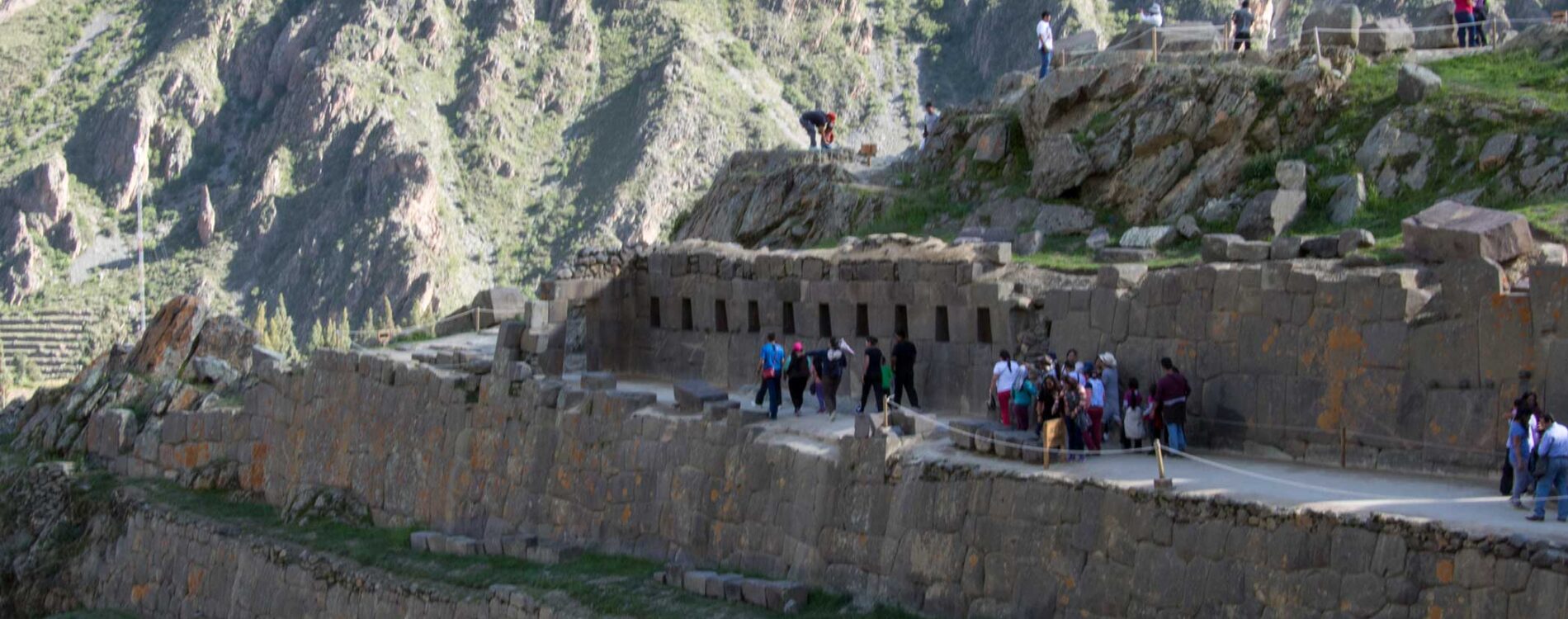
This archaeological complex is a national park located in the Ollantaytambo province of Urubamba. The town is approximately 76 km (47.2 miles) from Cusco via the Chinchero-Urubamba road and about 68 km (42.2 miles) by railway at an altitude of 2700 meters (8856 feet).
Ollantaytambo is situated in the central part of the Sacred Valley. Traveling from Cusco to Pachar, visitors will encounter numerous agricultural terraces that are integral to the complex. Downstream lies the Choqana fortress on the left side of the Urubamba River and Inkapintay, both part of the Inca protectionist system.
The bases of the Inca bridges are impressively constructed from large stone blocks. Before reaching the central base, two massive chunks were laid to effectively protect the structure, resembling a mole breaking into the river’s waters. Additionally, the bridge has two solid lateral bases on both riverbanks. This suspension bridge was initially made with braided ichu fibers (wild grass) or maguey, both of which require annual renewal. A Guide to Visit Ollantaytambo provides insights into the engineering techniques used by the Incas.
Following the road for half a kilometer, visitors arrive at the old main door of Ollantaytambo. This entrance was part of a surrounding wall and is today known as “Llaqta-Punku” (People’s Fence).
Ollantaytambo is a compound Quechua word derived from “Ollanta,” a personal name, and “Tambo,” the Spanish form of “Tanpu,” meaning a city that offers lodging, food, and comfort for travelers. “Ollanta” refers to Captain Inka, whose history has been preserved through oral and written traditions and dramatized in a play by Antonio Valdez, a priest of Urubamba, in the mid-18th century. The play, adapted for the stage and premiered in 1780, is considered a classic of Quechua literature.
The drama tells the story of Captain Ollanta, an outsider to the Cusco nobility who served in the army of Inca Pachacutec. Known for his courage and skill, Ollanta fell in love with the monarch’s daughter, Kusi Qoyllur. Their forbidden marriage, due to social status differences, led Ollanta to incite a rebellion against the imperial army, resulting in a decade-long war.
Ollanta was eventually captured through the treachery of Captain Rumiñawi. Despite seeking asylum after being expelled from Cusco, Rumiñawi allowed the Cusco army to enter overnight and seize Ollanta, who was then taken to Cusco after Inca Pachakuteq had already died. Ollanta’s son, the new sovereign, recounted the story of Ollanta and his sister. With compassion, their marriage was allowed, resulting in a relationship that produced a girl named Ima Sumaq.

Ima Sumaq
This story, with its happy ending, is popular in Peruvian schools and often performed in dramas. Ollantaytambo was a significant fortified city, built as a “tanpu” to facilitate roads to Antisuyo (La Selva). Highlights the importance of understanding these historical developments.
Despite its name, “fortress,” Ollantaytambo did not primarily serve a military or protectionist purpose. It was a complex city with a broad urban sector and religious temples. The town featured protective elements, including a surrounding wall with numerous pukaras (fortresses) and strategically located watchtowers.
A sizeable urban sector was enclosed by important buildings designated for the noble population of Inca society. To the south of the village stands an impressive “Kallanka,” a colossal stone building that served as both a residence and barracks for regional armies. The town occupies the exact location of the urban sector during Inca times.
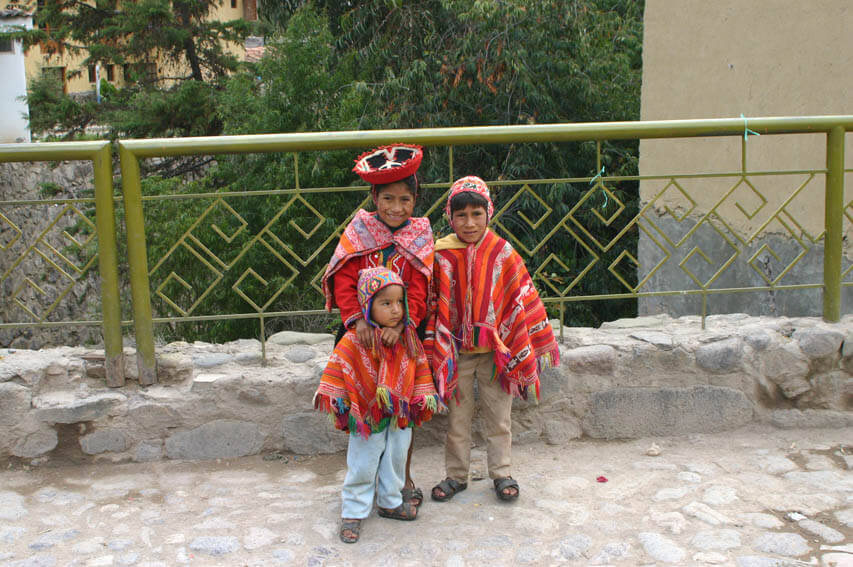
Ollantaytambo
Ollantaytambo is unique as it is the only place where people still live in the same buildings that once housed the nobility of Inca society. Some of its narrow streets continue to have clean water flowing through the middle of the square.
The streets retain their Inca names, and the village is divided into rectangular blocks with a well-planned geometric scheme, reflecting a town design by modern architects. Each block comprises two “kanchas” (apartments). The royal palaces feature wooden doors and multiple rooms surrounding a central courtyard. The lower parts of the buildings are original, constructed with “pirka” walls covered with clay and paintings.
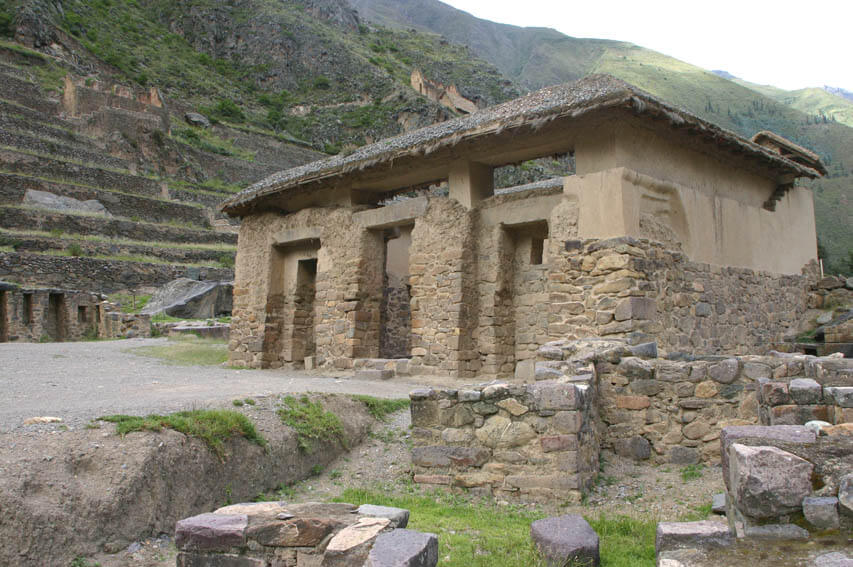
Ollantaytambo
Today, the straw roofs have been replaced with tiles, and modern air conditioning is available. Despite these changes—the town now has electricity and water—it retains an Inca flavor. A decade ago, Ollantaytambo was declared the “World Capital of the Indians” at a global meeting attended by Indian representatives.

Guide to Visit Ollantaytambo
Efforts were made to conserve the original structures. To the east of the village is Pinkuylluna Hill (Pinkuyllo = a musical instrument of the wind similar to the “quena” or Andean flute), where a large, imposing building stands out amidst many myths.
Some imaginative scholars speculate that the structures on Pinkuylluna Hill served as a school, hospital, prison, or cliff. According to Inca archeology and architecture, it was a “Qollqa” or “Pirwa,” a barn or storehouse for food, clothing, and weapons for the local army.
Kondor Path Tours has earned an outstanding reputation on TripAdvisor, consistently receiving high ratings and glowing reviews from travelers. Guests frequently highlight the agency’s exceptional organization, knowledgeable guides, and attention to detail, ensuring every journey is seamless and memorable.
From expertly planned itineraries to personalized customer service, Kondor Path Tours stands out as a trusted name for exploring Peru’s wonders.
Curious about what others are saying? Check out the TripAdvisor reviews here to see why Kondor Path Tours is a top choice for unforgettable adventures in Peru!

Machu Picchu and Hiram Bingham’s Legacy: Rediscovery, Debate, and Historical Impact Machu Picchu, a marvel of Inca engineering,…
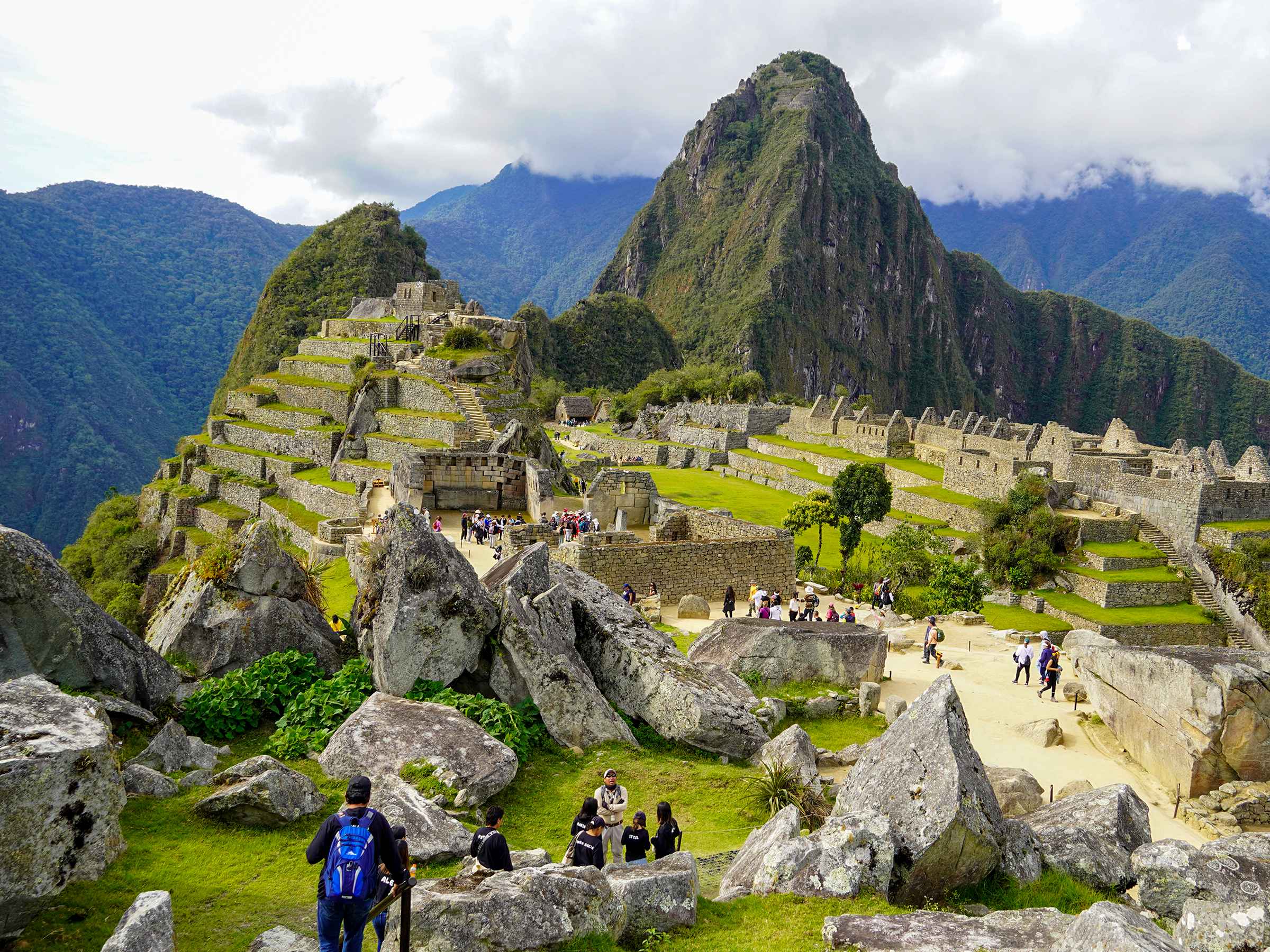
Machu Picchu Seismic Design: How Inca Engineering Defied Earthquakes Machu Picchu stands as a marvel of ancient engineering.…

Machu Picchu Terrace Engineering: How the Incas Mastered Mountain Agriculture Machu Picchu stands as a marvel of ancient…

Machu Picchu Quarry Sources: Where the Incas Obtained Their Building Stone Machu Picchu stands as a marvel of…

Machu Picchu Sacred Mountains Guide: Spiritual Meaning of the Andean Landscape Machu Picchu, the renowned 15th-century Incan citadel,…
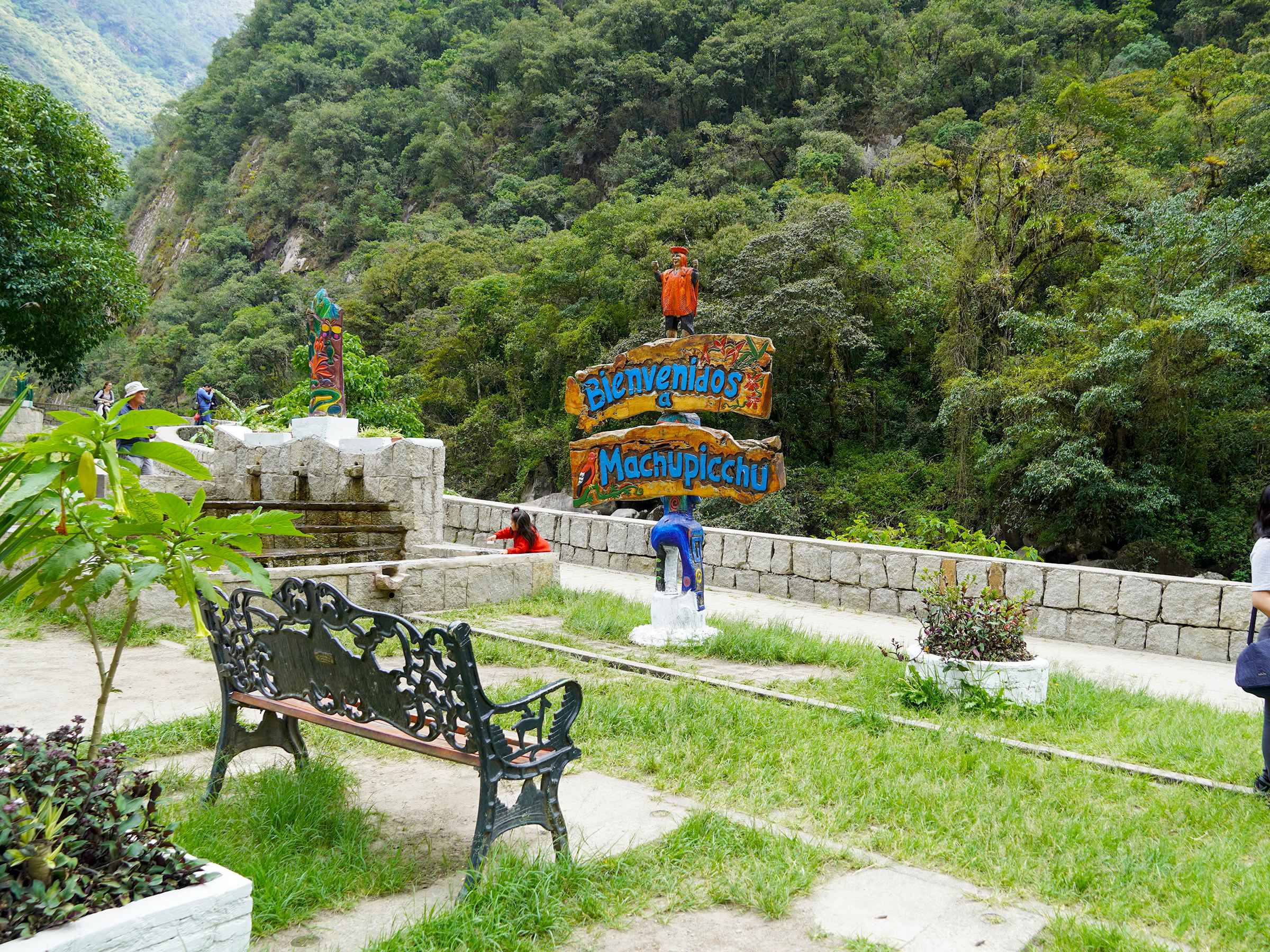
Aguas Calientes Town: The Charming Gateway to Machu Picchu Nestled in the heart of the Andes, Aguas Calientes…

Peru Altitude Guide Peru is a land of breathtaking landscapes and rich cultural heritage. Its diverse geography includes…

Machu Picchu Climb Machu Picchu is a dream destination for many travelers. Nestled high in the Andes, it…

Discover the Amazing Sacred Valley Cusco Nestled in the heart of the Andes, the Sacred Valley of Cusco…

Best time to go to Machu Picchu Machu Picchu is a dream destination for many travelers. Nestled in…

Cusco Altitude Cusco, a city nestled in the Andes, is renowned for its breathtaking altitude. At 11,152 feet…
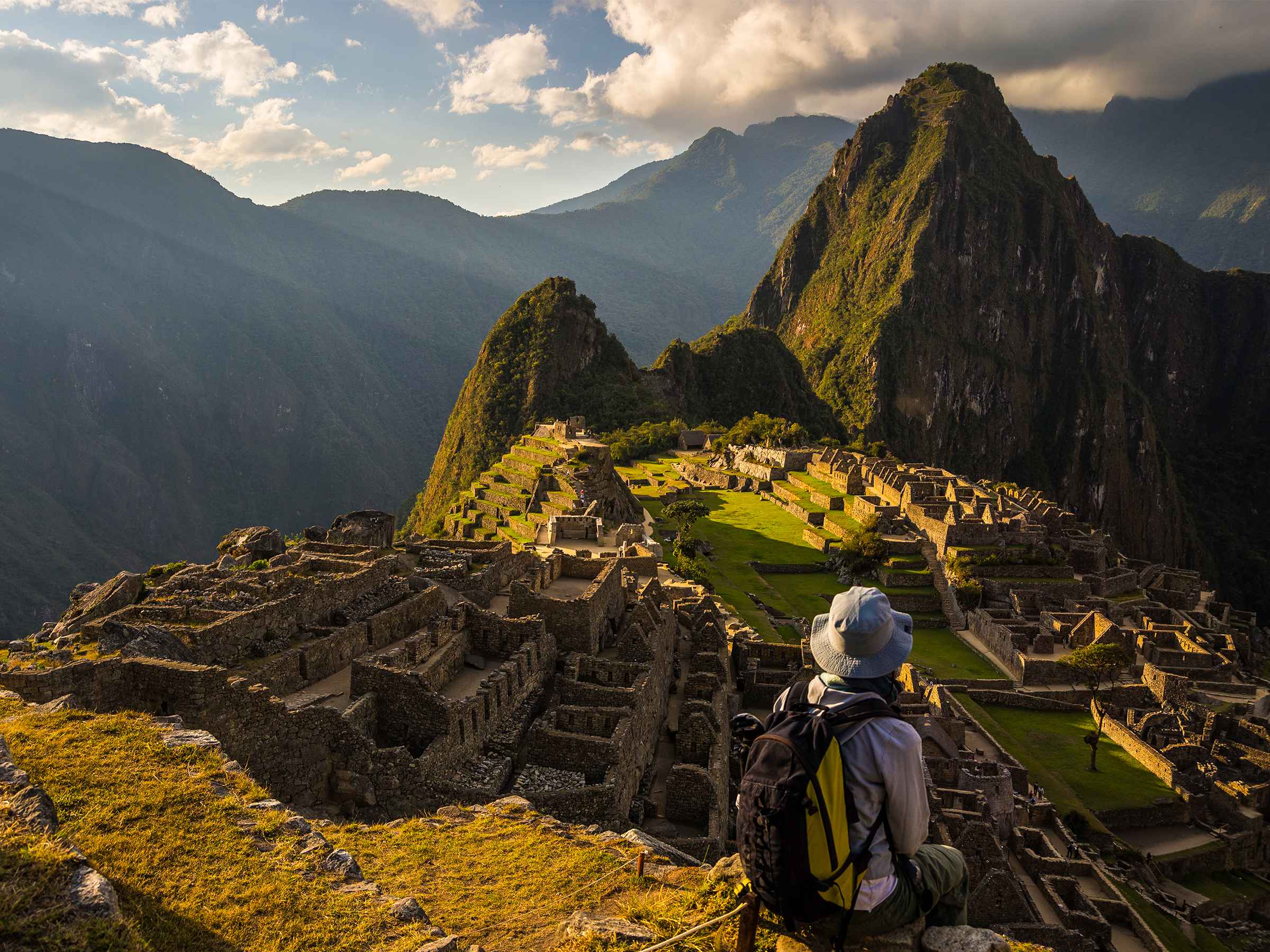
Where is Machu Machu Picchu is a name that sparks curiosity and wonder. Nestled high in the Andes…