Nestled in the majestic Bolivian Andes, the Tiwanaku ruins stand as a breathtaking testament to the architectural prowess and cultural depth of ancient Andean civilizations. Revered as one of the most significant archaeological sites in South America, these ruins offer an intriguing glimpse into the prehistoric cultures of Bolivia, telling tales of a bygone era through their silent yet eloquent stone structures. This comprehensive guide will take you through the rich history, profound significance, and enduring legacy of the Tiwanaku civilization, a culture that has captivated the imagination of historians, archaeologists, and travelers alike.
The Tiwanaku Ruins, located near the southern shore of Lake Titicaca in Bolivia, are one of South America’s most significant archaeological sites. This ancient city was the center of the Tiwanaku civilization, which thrived between 300 AD and 1000 AD. Today, the ruins offer a fascinating glimpse into this pre-Columbian civilization’s culture, architecture, and achievements.

A visual guide to the Tiwanaku ruins tour from Puno, showcasing its ceremonial complexes, monolithic structures, and the scenic journey across the Altiplano.
The Tiwanaku ruins, strategically located near the southern shore of the stunning Lake Titicaca, provide an unparalleled window into the past. This sprawling archaeological site spans approximately 4 square kilometers and is filled with temples, palaces, and monolithic structures that showcase the advanced engineering and architectural skills of the Tiwanaku people.
The Tiwanaku site is strategically located near Lake Titicaca, a site likely chosen for its environmental advantages and spiritual significance. The proximity to the lake not only provided essential resources such as water and fish but also facilitated trade and interaction with other Andean cultures. The site’s layout reflects well-planned urban design, with ceremonial spaces, residential areas, and agricultural zones meticulously organized to support a thriving civilization.
The architectural style of Tiwanaku is defined by its precise stonework and monumental structures, which have withstood the test of time. The Kalasasaya Temple, a prominent feature of the site, is a large rectangular courtyard surrounded by high stone walls that showcase the Tiwanaku’s mastery of construction techniques. Aligned with the cardinal points, this temple is believed to have been used for astronomical observations, highlighting the civilization’s advanced understanding of the cosmos.
The Akapana Pyramid stands as another testament to their architectural ingenuity. This terraced platform mound demonstrates the Tiwanaku’s mastery of earthworks and drainage systems, with its design reflecting their deep understanding of hydrology and water management. The pyramid enabled efficient water distribution within the structure, demonstrating its practical and innovative engineering.

The Ultimate Guide to The Tiwanaku Ruins
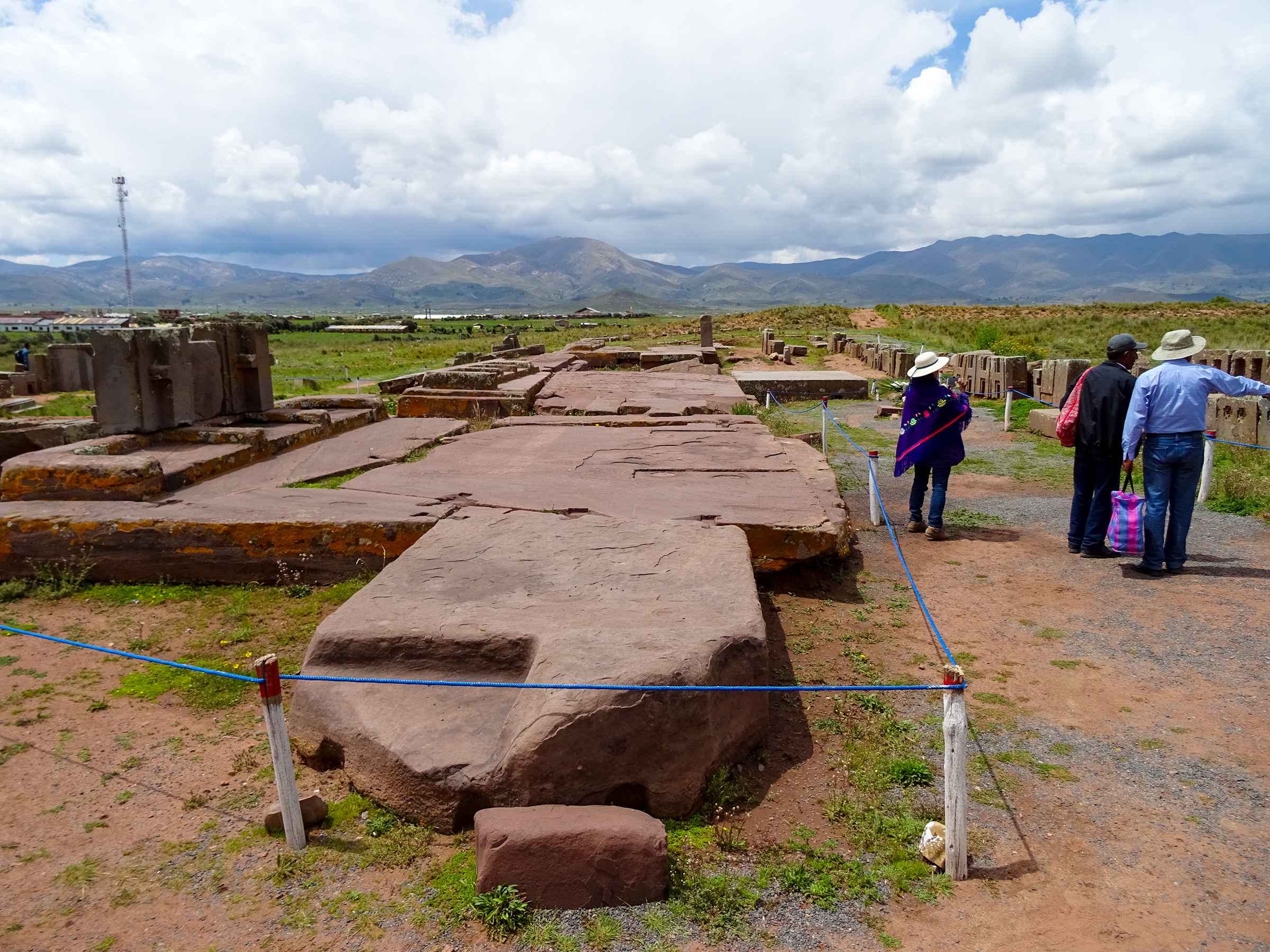
The Pumapunku complex is renowned for its precisely cut stone blocks, some weighing several tons, which fit together with remarkable precision. This site exemplifies the advanced engineering techniques of the Tiwanaku people, who employed innovative methods to transport and assemble these massive stones. The intricate stonework seen here, with precisely drilled holes and smooth surfaces, continues to intrigue researchers and visitors, offering a glimpse into the technical capabilities of this ancient civilization.

The Tiwanaku civilization placed great importance on cosmology and symbolism, which is vividly reflected in their art and architecture. Their intricate carvings and symbolic representations offer profound insights into their spiritual beliefs and cultural practices.
The Gateway of the Sun is an iconic monolithic archway adorned with intricate carvings that depict celestial beings and mythological creatures. These carvings are thought to represent the Tiwanaku’s beliefs about the cosmos and their deities. The gateway stands as a symbolic portal, linking the earthly realm with the celestial, and is believed to have played a central role in their religious and ceremonial practices.
The use of symbolism extended beyond architecture to their pottery and textiles, where motifs of animals, plants, and geometric patterns conveyed religious and cultural narratives. These artifacts provide insight into the spiritual world of the Tiwanaku people and their connection to the natural environment. The recurring themes found in these items reflect their reverence for nature and their belief in the interconnectedness of all living things.
Astronomy played a crucial role in the religious and ceremonial life of the Tiwanaku civilization. Alignments of structures with celestial bodies suggest that astronomical observations were integral to their cosmology. Religious ceremonies were likely timed according to astronomical events, illustrating the deep connection between their spiritual practices and the movements of the heavens. This profound relationship between astronomy and religion underscores the Tiwanaku’s sophisticated understanding of the universe.
The Tiwanaku civilization flourished between 300 and 1000 AD, marking a period of remarkable cultural and technological advancements. It emerged as a hub of political and economic power in the southern Andes, influencing neighboring cultures through trade and cultural exchange. The civilization’s strategic location near Lake Titicaca facilitated its growth and interaction with other Andean highland civilizations.
The rise of the Tiwanaku civilization can be attributed to its strategic location and innovative agricultural practices. The civilization developed sophisticated irrigation and terracing techniques that allowed them to cultivate crops at high altitudes, ensuring food security and supporting a growing population. As the civilization flourished, it became a center of cultural and religious activities, attracting people from across the Andes.
Tiwanaku’s economic power was bolstered by extensive trade networks that connected it to other Andean cultures. The civilization traded goods such as textiles, pottery, and metalwork, establishing itself as a major economic force in the region. These trade networks facilitated cultural exchange, allowing the Tiwanaku to influence and be influenced by neighboring cultures, resulting in a rich tapestry of cultural diversity.
The decline of the Tiwanaku civilization remains a subject of scholarly debate, with theories ranging from climate change to social upheaval. Despite its decline, the legacy of the Tiwanaku civilization endures. Its architectural styles, agricultural techniques, and religious practices were adopted by later Andean cultures, including the Inca. The Tiwanaku’s influence is evident in the region’s continued use of terracing and irrigation systems, which remain in practice today.

The Tiwanaku ruins are not only of historical and archaeological significance but also hold cultural and spiritual importance for the indigenous peoples of the Andes. The site is a symbol of their ancestral heritage and a testament to their ancestors’ ingenuity.
Preserving the Tiwanaku ruins is crucial for understanding the prehistoric cultures of Bolivia and the broader Andean region. The site’s inclusion in the UNESCO World Heritage List highlights its universal value and the need for ongoing conservation efforts. Preservation initiatives aim to protect the site from environmental degradation and human impact, ensuring that future generations can continue to learn from and appreciate this remarkable heritage.
Archaeologists and researchers continue to study the ruins to uncover new insights into the Tiwanaku civilization. These studies contribute to our understanding of ancient engineering, social organization, and cultural practices. Each new discovery adds to the growing body of knowledge about this ancient civilization, offering fresh perspectives on its achievements and innovations.
For the people of Bolivia, the Tiwanaku ruins are a source of national pride. They serve as a reminder of the region’s rich history and cultural diversity. The ruins also attract tourists from around the world, boosting the local economy and promoting cultural exchange. Furthermore, the Tiwanaku ruins are featured in contemporary cultural events and celebrations. They are the site of the annual Aymara New Year festival, where indigenous communities gather to honor their ancestors and celebrate their cultural heritage.

If you’re planning a visit to the Tiwanaku ruins, there are several key sites to explore. In addition to the Kalasasaya Temple and Akapana Pyramid, the Pumapunku complex is a must-see. Known for its precisely cut stone blocks, Pumapunku showcases the advanced engineering techniques of the Tiwanaku people.
When visiting the Tiwanaku ruins, it’s essential to plan your trip carefully to make the most of your experience. The site is accessible from La Paz, Bolivia’s capital, and can be reached by car or bus. Visitors should prepare for the high altitude by staying hydrated and taking it slow to acclimate. Comfortable walking shoes and sun protection are recommended, as you will spend several hours exploring the site.
Respecting the site’s cultural and spiritual significance is paramount. The Tiwanaku ruins hold deep meaning for the indigenous communities, and visitors are encouraged to approach the site with reverence. Guided tours provide context and enhance your understanding of the ruins, offering insights into the history and spirituality of the Tiwanaku civilization.
To enhance your visit, consider stopping by the nearby Tiwanaku Museum, which offers exhibits on the history and archaeology of the region. The museum provides a deeper understanding of the artifacts and ruins, enriching your experience of the site. Additionally, engaging with the local culture, such as trying traditional Andean cuisine or participating in cultural events, can provide a more holistic experience of the region’s heritage.

Tiwanaku was once a thriving urban center, with a population estimated at 30,000-70,000 at its peak. The city was strategically located in a fertile basin, which allowed the Tiwanaku people to develop advanced agricultural techniques, including raised-field farming. This innovation, along with a complex trade system and a highly organized society, enabled Tiwanaku to become one of the most influential civilizations in the Andean region.
Visiting the Tiwanaku Ruins is a journey through time, offering insights into this ancient civilization’s architectural prowess and cultural practices. Fundamental structures and artifacts within the site include
This seven-tiered platform pyramid was likely used for ceremonial purposes. Excavations have revealed a sophisticated drainage system, indicating the Tiwanaku people’s advanced engineering skills.
This large, open-air temple is believed to be used for astronomical observations. It is surrounded by impressive stone walls, and the Gateway of the Sun, a monolithic gateway, stands at its western edge.
This area is known for its remarkable stone masonry, with precisely cut stones that fit together without mortar. The precision of the cuts suggests a high level of technological skill.
The site is home to several significant stone figures, including the Bennett and Ponce Monoliths. These statues are intricately carved and believed to represent deities or essential figures in Tiwanaku society.
The Tiwanaku Ruins are not only an archaeological treasure but also a testament to the ingenuity and resilience of the Tiwanaku civilization.
The site provides valuable insights into this ancient culture’s social, economic, and religious aspects. Moreover, Tiwanaku’s influence extended beyond its immediate region, impacting the development of later Andean civilizations, including the Inca.
Best Time to Visit: The dry season, from May to October, is ideal for exploring the Tiwanaku Ruins, as the weather is more favorable.
Getting There: Tiwanaku is 72 kilometers west of La Paz, Bolivia’s capital. The site can be reached by bus or guided tour from La Paz.
Bring Essentials: The high altitude and intense sun can be challenging for visitors. Bring sunscreen, sunglasses, a hat, and plenty of water.
Hire a Guide: Consider hiring a local guide to enhance your understanding of the site’s history and significance.
The Tiwanaku ruins are a remarkable testament to the ingenuity and cultural richness of the Tiwanaku civilization. From their architectural achievements to their cosmological beliefs, the ruins offer valuable insights into the prehistoric cultures of Bolivia and the broader Andean region. As we continue to study and preserve this archaeological heritage, the Tiwanaku ruins remain a vital link to the past, enriching our understanding of ancient civilizations and their enduring impact on the world today.
The Tiwanaku Ruins offer a unique opportunity to explore the remnants of an ancient civilization that once thrived in the Andean highlands. The site’s impressive architecture, intricate carvings, and advanced agricultural practices are a testament to the ingenuity of the Tiwanaku people. For history enthusiasts and curious travelers alike, visiting the Tiwanaku Ruins is an unforgettable journey into the heart of Bolivia’s ancient past.

Machu Picchu and Hiram Bingham’s Legacy: Rediscovery, Debate, and Historical Impact Machu Picchu, a marvel of Inca engineering,…
Machu Picchu Seismic Design: How Inca Engineering Defied Earthquakes Machu Picchu stands as a marvel of ancient engineering.…

Machu Picchu Terrace Engineering: How the Incas Mastered Mountain Agriculture Machu Picchu stands as a marvel of ancient…

Machu Picchu Quarry Sources: Where the Incas Obtained Their Building Stone Machu Picchu stands as a marvel of…

Machu Picchu Sacred Mountains Guide: Spiritual Meaning of the Andean Landscape Machu Picchu, the renowned 15th-century Incan citadel,…
Aguas Calientes Town: The Charming Gateway to Machu Picchu Nestled in the heart of the Andes, Aguas Calientes…

Peru Altitude Guide Peru is a land of breathtaking landscapes and rich cultural heritage. Its diverse geography includes…

Machu Picchu Climb Machu Picchu is a dream destination for many travelers. Nestled high in the Andes, it…

Discover the Amazing Sacred Valley Cusco Nestled in the heart of the Andes, the Sacred Valley of Cusco…

Best time to go to Machu Picchu Machu Picchu is a dream destination for many travelers. Nestled in…

Cusco Altitude Cusco, a city nestled in the Andes, is renowned for its breathtaking altitude. At 11,152 feet…
Where is Machu Machu Picchu is a name that sparks curiosity and wonder. Nestled high in the Andes…