Cutimbo and Sillustani Ruins


Full-day tour from Puno to the Cutimbo and Sillustani burial towers, two striking pre-Inca chullpa sites.
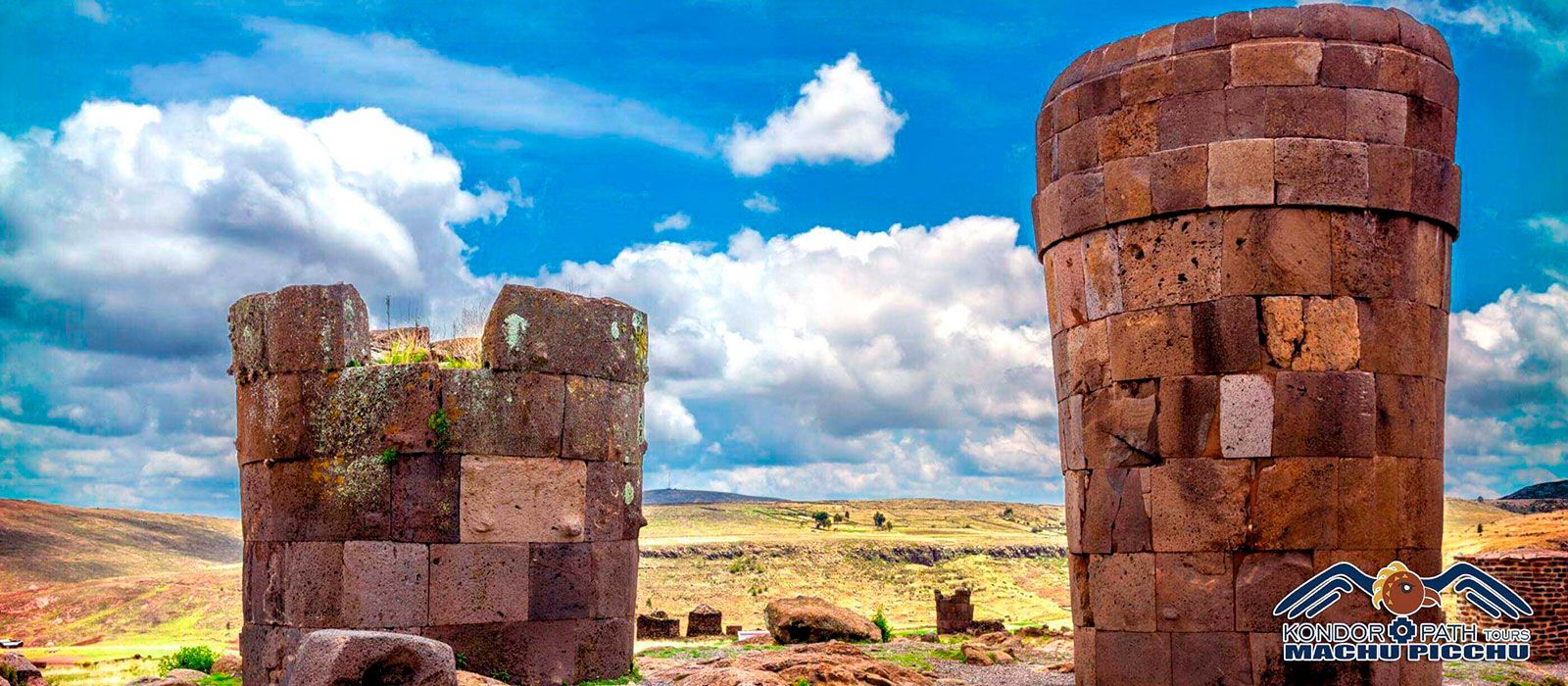
Sillustani gets the crowds. Cutimbo, twenty-some kilometers away on the same high plateau, gets almost no one — which is exactly why this Cutimbo and Sillustani tour pairs them. Both sites are covered in chullpas, the cylindrical stone burial towers built by the Colla and Lupaca peoples for their elite dead, some reaching well over ten meters tall. But where Sillustani’s towers stand dramatically over Lake Umayo, drawing steady tour traffic from Puno, Cutimbo sits quieter, higher, and considerably less visited — the same tradition of funerary architecture, without the crowd.
Seeing both in one day gives you a genuine sense of how widespread this burial tradition was across the Altiplano, not just a single postcard site. Your guide covers the real history at each — the Colla and Lupaca kingdoms that built them, and the later Inca period that absorbed and continued the tradition — without collapsing either site into a simplified, single-paragraph story.
| 💰 Price from | $83 USD per person (private, 9 travelers) |
| ⏱️ Duration | Full day (approx. 6–7 hours) |
| 👥 Group type | Private, 1–10 travelers (11+ groups: contact us directly) |
| 🥾 Physical level | Moderate |
| ⛰️ Max. altitude reached | 4,023 m / 13,198 ft (Cutimbo) |
| 📍 Starts from | Puno (9:00 a.m.) |
| 🏁 Ends in | Puno |
| 📅 Best season | April to November (dry season) |
| 🍽️ Meals | Box lunch included |
| 🏛️ Sites visited | Cutimbo and Sillustani chullpa burial towers |





The Cutimbo and Sillustani Ruins Tour is a private full-day excursion from Puno that visits two of the Altiplano’s most significant chullpa burial sites. Sillustani, on a peninsula overlooking Lake Umayo, is the more visited of the two, with towers reaching up to 12 meters and carved with Andean symbols. Cutimbo, a quieter and higher-altitude site associated with the Lupaca kingdom, was formally declared a National Cultural Heritage site of Peru.
The tour includes a box lunch and covers the real history of the Colla and Lupaca cultures that built these funerary towers, later absorbed into the Inca administrative system. It’s a fully private tour, capped at 10 travelers, ideal for travelers interested in pre-Inca archaeology beyond the more commonly visited sites near Puno.
This full-day tour combines two archaeological sites on the Puno Altiplano, both defined by chullpas — the cylindrical and square stone burial towers built by the Colla and Lupaca peoples between roughly the 11th and 16th centuries, later absorbed into the Inca administrative system without losing their original funerary function.
Sillustani, about 34 km from Puno, is the more famous of the two: a peninsula jutting into Lake Umayo, lined with towers up to 12 meters tall, some carved with figures of pumas, lizards, and snakes. Cutimbo, roughly 22 km from Puno in a different direction, sits at a higher, quieter plateau and is associated more specifically with the Lupaca kingdom — a site that gets a fraction of Sillustani’s visitor numbers despite comparable architectural interest, and was formally declared a National Cultural Heritage site by Peru’s National Institute of Culture.
Because the two sites sit in different directions from Puno, this is a genuine full day rather than a quick add-on — box lunch is included to cover the time between stops.
Tour Departure Time: 9:00 a.m.
| Time | Stop |
|---|---|
| 09:00 | Hotel pickup, depart Puno |
| ~09:30–09:45 | Arrival and guided visit at Cutimbo |
| Midday | Box lunch |
| Afternoon | Travel to and guided visit at Sillustani |
| Late afternoon | Return to Puno |
Times are approximate — this is a private tour, and the balance of time at each site can be adjusted around your interest.
This is a genuine full day covering two separate archaeological sites in different directions from Puno, with a box lunch built in to bridge the time between them.
Hotel pickup (9:00 a.m.) Your guide and driver collect you from your hotel for the drive toward Cutimbo, along the road toward Moquegua, roughly 22 km from Puno.
Guided visit to Cutimbo. The site sits on a high plateau, reached after a short walk from the vehicle. Your guide covers Cutimbo’s association with the Lupaca kingdom, the construction techniques behind its circular and square chullpas, and its formal recognition as a National Cultural Heritage site by Peru’s National Institute of Culture. Because Cutimbo receives far fewer visitors than Sillustani, there’s a genuinely quiet, unhurried quality to exploring it.
Box lunch: A packed lunch is provided partway through the day, timed around the transfer between sites.
Travel to Sillustani: The route continues to Sillustani, about 34 km from Puno on a different stretch of the Altiplano, overlooking Lake Umayo.
Guided visit to Sillustani: Sillustani’s chullpas are considerably taller and more architecturally elaborate than Cutimbo’s — some reach 12 meters, with carved reliefs of pumas, lizards, and snakes on select towers. Your guide explains the Colla origins of the site, its continued use into the Inca period, and the dramatic setting overlooking Lake Umayo that makes it one of the most photographed archaeological sites near Puno.
Return to Puno: The group returns to Puno in the late afternoon, closing out a full day covering two distinct chapters of the same funerary tradition.
| 🍽️ Food | Box lunch included |
| 🥾 Physical level | Moderate |
| 🚶 Walking distance | Light walking at both sites |
| ⏱️ Walking time | 15–35 minutes total |
| 📍 Starting altitude | Puno: 3,827 m (12,555 ft) |
| 🗼 Sillustani altitude | ~3,900 m (12,795 ft) |
| ⛰️ Highest altitude reached | Cutimbo: 4,023 m (13,198 ft) |
| 🚗 Travel distance | Puno–Cutimbo: 22 km (13.6 mi) · Puno–Sillustani: 34 km (21.1 mi) |

Box Lunch

Moderate

A light walks

15 to 35 minutes

Puno City: 3,827m (12,555 ft)
Sillustani: 3,840m (12,598 ft)
Cutimbo: 4,023m (13,198 ft)
Despite the page name, this is a combined full-day tour covering both sites — Cutimbo and Sillustani. If you’re specifically looking for a shorter, Sillustani-only option, ask us about that separate half-day tour instead.
Approximately 6 to 7 hours total, covering the drive and guided visit at both sites plus the box lunch. Visiting either site alone would take less time, but this tour is built around seeing both in one day.
Sillustani is the more visited and more architecturally dramatic of the two, with taller towers over Lake Umayo carved with animal reliefs. Cutimbo is quieter, sits at a higher altitude, and is more specifically tied to the Lupaca kingdom — genuinely one of the best Cutimbo ruins tour Puno has to offer for travelers wanting a contrast in atmosphere despite the shared chullpa tradition.
Not originally. The chullpa tradition at both sites predates the Inca Empire, built by the Colla and Lupaca peoples. The Incas later absorbed the region and continued using similar funerary architecture, but the towers are fundamentally a pre-Inca Andean tradition.
We can accommodate most common dietary needs if you let us know in advance when booking — just mention any restrictions in your reservation details.
It’s rated Moderate, mainly due to the altitude at Cutimbo (over 4,000 meters) rather than the walking itself, which is light at both sites.
This tour is private for 1 to 10 travelers, with per-person pricing for groups of 1 to 9. For a larger group, reach out directly for a custom vehicle and quote.
This specific tour is built around visiting both, but ask us about custom arrangements if you’d prefer to focus on just one site with more time there instead.
Yes, noticeably. Any Cutimbo chullpas tour will feel different from a Sillustani visit — Sillustani is the standard stop on most Puno itineraries, while Cutimbo remains a genuinely quiet site even during peak season.
Both sites are treated as cultural heritage and cemeteries, not just scenic ruins — your guide will brief you on respectful conduct, and climbing on or touching the towers isn’t appropriate.
Children age 8 and up can join, provided a guardian 21 or older travels with them. The full day and the altitude at both sites are the main factors to weigh for younger kids.
April through November, during the dry season, for clearer skies and easier road conditions across the Altiplano.
Basic facilities exist at Sillustani given its higher visitor traffic; Cutimbo has more limited infrastructure given how few visitors it receives.
Yes — this tour pairs well on a separate day with Chucuito, Aramu Muru, or the Uros islands, since none of them overlap in location or content.
| Persons | Price (p/p) | |
| 1 | $ 244.00 USD | |
| 2 | $ 165.00 USD | |
| 3 | $ 126.00 USD | |
| 4 | $ 117.00 USD | |
| 5 | $ 110.00 USD | |
| 6 | $ 96.00 USD | |
| 7 | $ 92.00 USD | |
| 8 | $ 90.00 USD | |
| 9 | $ 83.00 USD |