Ñaupa Iglesia Tour: The Sacred Valley’s Enigmatic Shrine


Visit Ñaupa Iglesia, a mysterious Inca cave shrine wrapped in local legend near Ollantaytambo.
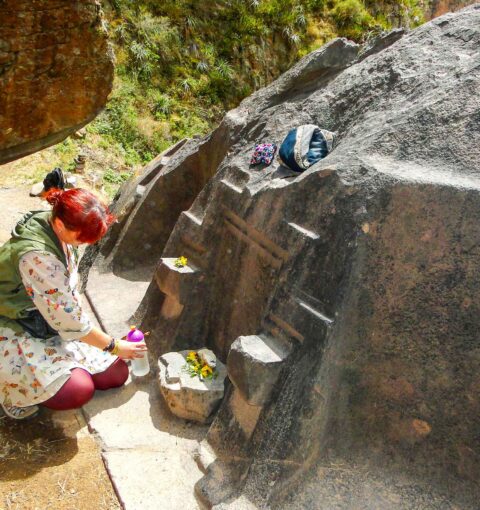
Ñaupa Iglesia — also known as Choquequilla, “Temple of Gold” — is a cave shrine carved directly into the rock above the village of Pachar, genuinely different from the Sacred Valley’s more famous ruins. Local legend holds it as a portal to another dimension, a place where ancestral spirits (naupa) are said to pass through; archaeologists, meanwhile, describe it more conservatively as an Inca huaca, a sacred shrine possibly tied to lunar observation, since moonlight is said to illuminate the site’s interior at night.
This tour treats that mystery as the day’s centerpiece, continuing on to the Quellorakay terraces, the fortress of Ollantaytambo, and the ruins of Chinchero — a genuinely varied day, from a site most visitors never hear about to two of the Sacred Valley’s most recognized landmarks.
| 💰 From | $39 USD per person (group of 10) |
| ⏱️ Duration | Full day, ~8:00 AM–evening |
| ⛰️ Altitude range | Ñaupa Iglesia 2,800 m up to Chinchero 3,800 m |
| 🚶 Physical level | Easy |
| 📅 Season | April–December |
| 👥 Group size | Private, 1-10 travelers (10+, contact us) |
| 🎂 Minimum age | 5+ with a guardian over 21 (18+ if traveling unaccompanied) |





A day built around one of the Sacred Valley’s most enigmatic — and least visited — sites. – Climb to Ñaupa Iglesia, a cave shrine wrapped in local legend and lunar folklore. – See the Quellorakay terraces, with houses built directly into the cliffside. – Explore the fortress of Ollantaytambo, one of the Inca’s most significant strongholds. – Close the day at Chinchero, with its ruins and living textile tradition. This is the Sacred Valley Tour Enigma, from start to finish.
Most Sacred Valley itineraries follow the same well-worn path — Pisac, Ollantaytambo, Chinchero, in some order. This tour adds a stop most visitors never hear about: Ñaupa Iglesia, a cave shrine carved into the rock above Pachar, reached by a roughly 20-minute walk up the hillside. Inside, a trapezoidal chamber holds a carved stone altar and a set of rocky window-like openings, with a double-jamb doorway motif and an Inca cross worked into the stone — architectural details that mark it as a genuinely significant ceremonial site, whatever its exact original purpose.
The site’s real appeal is its mystery. Local legend holds it as a portal to another dimension, a passage for ancestral spirits; some New Age visitors and researchers have proposed more elaborate theories involving astronomical alignments and even links to other ancient sites entirely. What’s better documented is its likely connection to lunar observation — some accounts describe moonlight illuminating the cave’s interior at night, which may explain its “Temple of Gold” (Choquequilla) name. Whatever the truth, it’s a genuinely quiet, uncrowded stop, still visited today by Pachamamistas practicing Andean cosmovision alongside curious travelers.
From there, the day continues to Quellorakay, where structures are built directly into the cliffs of Cerro Pinkuylluna, before the fortress of Ollantaytambo and the ruins of Chinchero — closing with two of the Sacred Valley’s most recognized sites after opening with one of its least known.
Both visit Chinchero, but the rest of the route — and the reason to book each — is genuinely different.
| Feature | Sacred Valley Tour Enigma | Chinchero Sacred Valley Tour |
|---|---|---|
| Opening site | Ñaupa Iglesia (mystery, cave shrine) | Chinchero (ruins, textiles) |
| Other stops | Quellorakay, Ollantaytambo, Chinchero | Moray, Maras Salt Mines |
| Theme | Legend, mystery, lesser-known sites | Classic Inca agriculture and craft |
| Crowd levels | Genuinely quiet, especially at Ñaupa Iglesia | Moderate — Moray and Maras see steady visitor traffic |
| Best for | Travelers drawn to mystery and off-the-circuit sites | Travelers wanting the valley’s agricultural and textile highlights |
If Moray’s terraces and the Maras Salt Mines are what you’re after, the Chinchero tour covers those directly. If you’d rather start with a site almost nobody talks about, this is the one.
This tour follows a gradual altitude climb, from Ñaupa Iglesia at 2,800 m — the day’s lowest and starting point — up to Chinchero at 3,800 m, the highest point, reached toward the end of the day. Unlike the Chinchero Sacred Valley Tour, which opens at Chinchero and works through Moray and Maras, this route deliberately opens with the valley’s most obscure site before building toward its two most recognized landmarks.

The drive heads northwest of Cusco, descending through inter-Andean valleys toward the Pomatales Valley and the small village of Pachar, roughly 1 hour 20 minutes from the city. Along the way, your guide introduces the day’s central theme: a Sacred Valley route built around one of its least-documented sites, before closing with two of its most iconic.
A roughly 20-minute walk up the hillside above Pachar, following a mostly flat dirt trail along the valley wall, leads to the cave shrine known as Ñaupa Iglesia — or Choquequilla, “Temple of Gold.” The climb is gradual enough that most travelers manage it comfortably, with the reward being a site genuinely few visitors to Peru ever see.
What you’ll see:
The legend and the archaeology: your guide walks through both sides of the site’s story here — the local legend of a dimensional portal and ancestral spirits, alongside the more measured archaeological view of a huaca (sacred shrine) possibly tied to lunar observation, given accounts of moonlight illuminating the cave’s interior at night.
A short stop to view the Quellorakay terraces, where Inca structures were built directly into the cliffs of Cerro Pinkuylluna — visible from the valley floor without requiring a climb of your own. These structures are believed to have served as storage facilities (qullqas), their elevated position helping preserve stored grain through natural ventilation and cooler temperatures.
A guided walk through the archaeological park of Ollantaytambo — one of the few sites where the Inca successfully repelled Spanish forces, in a battle led by Manco Inca in 1536-37.
What you’ll see:
For travelers wanting more time here, our Pumamarca Ruins Hike also ends in Ollantaytambo, approaching from a different, less-visited angle.
The return route passes through Chinchero, with time to explore its ruins and, where available, a stop to see traditional Andean weaving techniques demonstrated by local artisans.
What you’ll see:
If Chinchero’s textile tradition and ruins are your main interest, our dedicated Chinchero Sacred Valley Tour spends considerably more time there, alongside Moray and the Maras Salt Mines.
Day 1 stats

None

Easy

A light walks

5 to 35 minutes
Ñaupa Iglesia 2,800m (9,186 ft)
Ollantaytambo: 2,851m (9,353 ft)
Chinchero Ruins: 3,800m (12,467 ft)
Transport
Guide
Other
On entrance tickets — for your reference, if arranging other Sacred Valley days separately:
| Ticket | Cost in Soles | USD equivalent | What it covers |
|---|---|---|---|
| Boleto Turístico General | S/130 | ~$45 USD | Cusco/Sacred Valley/South Valley/Moray circuit, valid for 10 days |
| Partial Ticket | S/70 | ~$25 USD | Fewer sites, valid for 1 day |
Ñaupa Iglesia itself is free to visit and requires no ticket. Whichever ticket type fits your itinerary best, it’s already included in this tour’s price.
For the climb to Ñaupa Iglesia
For the cave itself
For Ollantaytambo and Chinchero
General
Embark on a journey to the Inca Temple of Ñaupa Iglesia, a sacred site with rich history and cultural significance. Explore the ancient ruins to uncover the secrets of the Inca civilization and learn about the temple’s spiritual energy.
An Inca cave shrine (huaca) carved into the rock near Pachar, in the Sacred Valley between Urubamba and Ollantaytambo — also known as Choquequilla, “Temple of Gold.”
That’s a genuine local legend, held by some Andean spiritual practitioners and New Age visitors — archaeologists take a more conservative view, describing it as a ceremonial huaca with a likely connection to lunar observation.
No — it doesn’t carry UNESCO status; it’s a lesser-known Inca huaca, not part of any UNESCO-designated site.
Moderate — about 20 minutes uphill on a hillside path, manageable for most reasonably fit travelers.
Quellorakay, the fortress of Ollantaytambo, and the ruins of Chinchero, in addition to Ñaupa Iglesia itself.
Yes, you can visit independently by public transport and a mostly flat walk, and entry is free — though a guide adds historical and cultural context you’d otherwise miss.
No — it’s genuinely one of the least-visited sites in the Sacred Valley, offering a quieter experience than Pisac or the main Ollantaytambo circuit.
Roughly “Temple of Gold” or “Golden Moon” in Quechua — a name tied to accounts of moonlight illuminating the cave’s interior at night.
Ñaupa Iglesia itself is free, but Ollantaytambo and Chinchero require either the full Boleto Turístico General or a Partial Ticket — see the pricing table in the Inclusions section.
Yes, the recommended minimum age is 5, accompanied by a guardian over 21; unaccompanied minors must be 18 or older.
Visitors often describe a distinct, quiet atmosphere inside—whether that’s attributed to the site’s history, its acoustics, or its legend is up to interpretation.
Yes — the cave’s carved stonework, the valley views from Quellorakay, and Ollantaytambo’s terracing all offer strong photo opportunities throughout the day.
Yes — let us know if you’d like to adjust the order or add stops; we can tailor the route to fit your broader Sacred Valley plans.
Season 2026
| Persons | Price (p/p) | |
| 1 | $ 269.00 USD | |
| 2 | $ 149.00 USD | |
| 3 | $ 107.00 USD | |
| 4 | $ 83.00 USD | |
| 5 | $ 70.00 USD | |
| 6 | $ 60.00 USD | |
| 7 | $ 53.00 USD | |
| 8 | $ 48.00 USD | |
| 9 | $ 44.00 USD | |
| 10 | $ 39.00 USD |