Student Travel Program Peru — 7 Days


A 7-day educational program combining Peru’s landmarks with team-building for student groups.
The Student Travel Program Peru 7 Days is our only educational tour structured specifically for school groups, university programs, gap year travelers, and study abroad coordinators. Built around measurable learning outcomes — not just tourist photography — the 7-day sequence balances classic Peru highlights with community-based educational experiences that no other tour in our catalog includes.
Five reasons educators choose this program for their student groups:
1. Potato Park (Parque de la Papa) on Day 6 is unique. A community-managed indigenous biodiversity center in the Andes, the Potato Park is home to over 2,000 documented native potato varieties preserved by Quechua farmers for future generations. Students participate in community-based activities alongside Quechua families, learning about indigenous knowledge systems, sustainable agriculture, food sovereignty, and the UN-recognized agricultural heritage these communities steward. This experience appears in no other tour we offer — it’s our exclusive educational partnership with the Paru-Paru community.
2. The 7-day duration provides academic processing time. Most Peru tours rush travelers through 4-5 days with minimal reflection time. Educational groups need pacing for academic learning: discussion sessions, journal writing, peer interaction, language practice with local communities. The 7-day program builds in rest days for cognitive integration of cultural learning — essential for high school and university students who are expected to deliver academic deliverables (papers, presentations, reflections) after returning home.
3. Short Inca Trail on Day 3 is the team-building moment. Five hours hiking together through cloud forest, ancient Inca stone steps, and the dramatic arrival at the Sun Gate (Inti Punku) creates peer bonding moments that classroom settings cannot replicate. Educators consistently report this as the trip’s transformative day for group cohesion.
4. Spanish language immersion built into the itinerary. Days 2, 5, and 6 include extended interaction with Quechua-Spanish speaking communities (Chinchero weavers, Rainbow Mountain horsemen, Potato Park families). Students practice real Spanish in authentic conversational contexts — not classroom drills. Bilingual guide supports translation as needed.
5. ISIC student discount + structured group pricing. Valid ISIC card holders get $40 off the Machu Picchu entrance fee. Group sizes scale 1-10 travelers with transparent pricing tiers — predictable budgeting for schools and universities organizing programs.
For educators: this program operates with safety protocols designed for student responsibility — coordinated transportation, professional bilingual guides, first-aid kits, portable oxygen on Day 5, and continuous on-site support from our Cusco operations team. Educators can focus on student engagement while we manage logistics.
| 🗓️ Duration | 7 days / 6 nights |
| 🎓 Designed for | Schools, universities, study abroad, gap year |
| 🥔 Exclusive experience | Potato Park community visit (Day 6) |
| 🥾 Short Inca Trail | Day 3 — 11 km / 5 hours |
| 🚂 Train | Expedition (Vistadome upgrade +$85) |
| 🐴 Rainbow Mountain | Horseback ascent (one-way uphill) Day 5 |
| 🏨 Hotels | You choose — academic-friendly recommendations |
| 📍 Pickup | Cusco airport (group transfer arranged) |
| ⛰️ Max altitude | 5,100 m / 16,732 ft (Rainbow Mountain) |
| 💪 Difficulty | Challenging (Day 3 + Day 5 demanding) |
| 📅 Departures | Daily year-round (advance booking required for Inca Trail) |
| 👥 Group size | 1-10 travelers (largest in our cluster) |
| 💲 From | $692 USD per student (group of 10) |
| 🎒 ISIC discount | $40 off the Machu Picchu fee with a valid card |




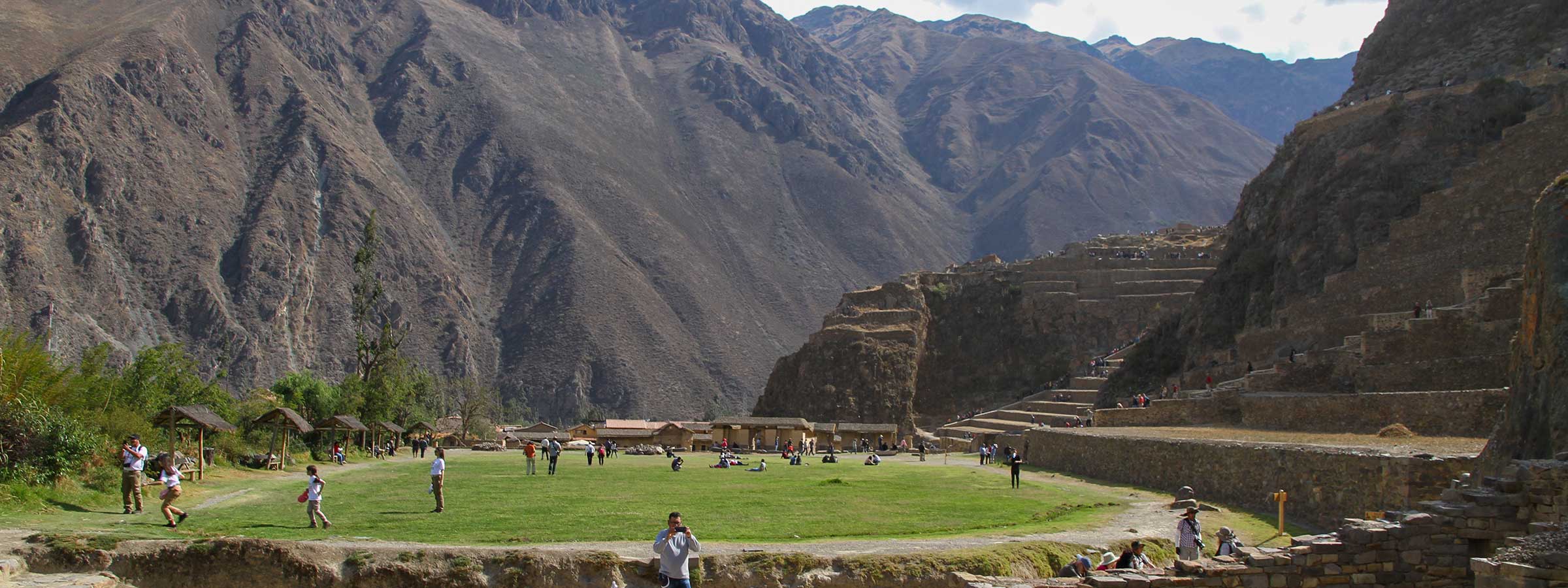


The Student Travel Program Peru: 7 days through some of Peru’s most memorable landscapes. – Potato Park (Parque de la Papa) community visit (Day 6) — exclusive educational experience with Quechua. – Short Inca Trail trek to Sun Gate (Day 3) — 11 km through cloud forest, the original Inca pilgrim path. – Machu Picchu Circuit 3b guided tour (Day 4) — Inca Trail walker’s exclusive circuit. – Inti Punku (Sun Gate) dramatic first view of Machu Picchu — the trip’s peer-bonding moment. Every detail here defines the Student Travel Program Peru.
The Student Travel Program Peru 7 Days is the only structured educational program in our catalog designed specifically for schools, universities, and student travel coordinators. With 12+ years operating Cusco tours, we developed this program in response to consistent requests from educators who needed something more academically rigorous than the standard tourist itinerary and more cohesive than fragmented independent travel.
The 7-day sequence is engineered for educational outcomes:
Day 1 — Cusco arrival + cultural acclimatization. Morning arrival at Cusco airport with group transfer service. Afternoon Cusco City Tour visiting the four Inca archaeological sites surrounding the imperial capital. The half-day pacing allows students to begin altitude adjustment while engaging with their first cultural learning content.
Day 2 — Sacred Valley cultural immersion. Chinchero textile cooperative (live demonstration of Inca weaving techniques using natural dyes), Maras Salt Mines (pre-Inca salt evaporation pools still managed by Quechua families), Moray circular agricultural terraces (Inca experimental crop laboratory), and Ollantaytambo Sun Temple fortress. Box lunch in the Sacred Valley with vegetarian options accommodated.
Day 3 — Short Inca Trail (the team-building day). Early train to Km 104, then the 5-hour guided hike through cloud forest with archaeological stops at Chachabamba and Wiñay Wayna, ending at the dramatic Sun Gate (Inti Punku) for the first view of Machu Picchu. Overnight in Aguas Calientes (Machu Picchu Pueblo).
Day 4 — Machu Picchu guided tour. 2-hour guided exploration of the citadel on Circuit 3b (the Inca Trail walker’s exclusive circuit), with archaeological context, UNESCO World Heritage discussion, and group photo opportunities. Afternoon return train to Cusco.
Day 5 — Rainbow Mountain expedition. 3-hour drive to the Llactoc trailhead, then the symbolic horseback ascent (one-way uphill) to the Vinicunca summit at 5,100 m. Geography and environmental conservation discussion opportunities at altitude.
Day 6 — Potato Park + Pisac (the educational deep-dive day). The exclusive Potato Park (Parque de la Papa) community visit — students participate in daily activities of the Paru-Paru community alongside Quechua farmers, learning about indigenous biodiversity preservation, sustainable agriculture, and food sovereignty. Organic potato-based lunch prepared by community members. Afternoon stop at Pisac ruins before returning to Cusco.
Day 7 — Departure. Morning transfer to Cusco airport timed to your group’s flight. Optional add-ons for groups extending the trip: bike tour of Maras, zip line at Raqchi, white water rafting in southern Cusco.
| Feature | Student 7 Day ✓ | Family 5 Day | Premiere 5 Day | Women-Only 5 Day |
|---|---|---|---|---|
| Target traveler | Student groups + educators | Families w/ kids | All adult travelers | Female sisterhood |
| Duration | 7 days | 5 days | 5 days | 5 days |
| Group size max | 22 travelers | 10 | 10 | 10 |
| Short Inca Trail | ✅ Day 3 | ❌ | ❌ | ✅ Day 3 |
| Machu Picchu Circuit | 3b | 2 | 2 | 3b |
| Rainbow Mountain | ✅ Horse | ✅ Horse | ✅ Horse | ✅ Horse |
| Potato Park | ✅ EXCLUSIVE Day 6 | ❌ | ❌ | ❌ |
| Maras Salt Mines | ✅ Day 2 | ✅ Day 5 only | ✅ Day 5 only | ❌ |
| Spanish language immersion | ✅ Built-in | ❌ | ❌ | ❌ |
| ISIC discount | ✅ $40 off MP | ❌ | ❌ | ❌ |
| Holiday-themed | ❌ | ❌ | ❌ | ❌ |
| Best for | School/university programs | Families | All adults | Female travelers |
This 7-day educational program combines Peru’s essential cultural landmarks with team-building elements suited to student groups: a Cusco city tour, a Sacred Valley educational day covering Chinchero, Maras, and Moray, a Short Inca Trail trek, Machu Picchu, Rainbow Mountain by horse, and a deep-dive day at Potato Park and the Pisac ruins.
The itinerary builds altitude exposure gradually across the week to suit student groups of varying fitness levels. Day 1’s Cusco city tour and Day 2’s Sacred Valley day stay at moderate elevation, Day 3’s Short Inca Trail hike introduces some elevation gain, and Day 4’s Machu Picchu visit drops to 2,400 m. Day 5’s Rainbow Mountain excursion, at 5,100 m, comes only after four full days of acclimatization, and Day 6’s visit to Potato Park (itself at over 4,000 m) benefits from that same accumulated adjustment before the group’s Day 7 departure.


Cusco Airport → Hotel → Tambomachay → Puca Pucara → Q’enqo → Sacsayhuaman
Morning arrival at Cusco airport with group transfer service. Our team meets your group at the airport waiting area with a Kondor Path Tours identification sign. Private vehicle transfer to your chosen Cusco hotel (transfer time ~20 minutes).
Group hotel check-in and brief rest. Cusco sits at 3,350 m (10,990 ft) — most students experience mild altitude effects within the first few hours (slight headache, breathlessness on stairs, light fatigue). The afternoon Cusco City Tour is paced gently to support acclimatization.
Pickup at 13:30 from your group hotel. The half-day Cusco City Tour visits the four iconic Inca archaeological sites surrounding the imperial city — in this educational program presented with focus on cultural learning and student engagement:
Tambomachay (3,765 m) — the highest altitude site of Day 1. The Incas built this water shrine to honor Mama Cocha (Water Mother), with three ceremonial fountains where water still flows after 600 years. Educational focus: students discuss Inca hydraulic engineering as a window into pre-Columbian scientific knowledge. Spanish language practice opportunity: vocabulary around water (agua, fuente, río) with bilingual guide encouragement.
Puca Pucara (3,650 m) — the “Red Fortress,” a small Inca military checkpoint controlling the Inca road network from the Sacred Valley to Cusco. Educational focus: students examine how the Inca empire organized infrastructure — comparable to modern transportation systems. Quick 10-15 minute stop with panoramic photography.
Q’enqo (3,580 m) — a ceremonial site with semicircular plazas, an underground passage, and carved sacrificial altars used for offerings to Pachamama (Mother Earth). Educational focus: students reflect on how religious practices integrate with daily life in indigenous Andean cultures — a theme that returns at the Potato Park on Day 6. Optional descent into the underground passage (bring small flashlights for atmosphere).
Sacsayhuaman (3,500 m) — the iconic megalithic fortress overlooking Cusco with stones weighing up to 150 tons fitted with millimeter precision. Educational focus for student groups: discussion of engineering achievement, the 1536 battle that almost defeated the Spanish conquest, and the parallels with other ancient civilizations students have studied (Egyptian pyramids, Stonehenge). Excellent group photo opportunity with the panoramic city view as backdrop. The annual Inti Raymi festival every June 24 is the modern continuation of Inca solstice celebration — useful context for cultural anthropology students.
End of tour approximately 17:30. Drop-off at your group hotel. Evening recommendations for educators: keep the group dinner light, encourage students to hydrate, and aim for early bedtime — Day 2 starts at 9:00 AM with a full Sacred Valley day.
Day 1 quick stats

Moderate

A light walks

15 to 25 minutes

Cusco: 3,350m (10,990 ft)
Sacsayhuaman: 3,500m (11,482 ft)
Tambomachay: 3,765m (12,352 ft)


Indigenous Weaving Demonstration · Pre-Inca Salt Mines · Inca Agricultural Laboratory · Spanish Resistance Fortress
Pickup at 9:00 AM from your group hotel. The Sacred Valley day combines cultural learning, Spanish language practice, and dramatic landscape exposure — designed to give students a 360-degree introduction to Andean cultural geography.
Chinchero (3,800 m) — first morning stop The traditional Andean town hosts a textile cooperative demonstration where Quechua women weavers show:
Student educational opportunity: women weavers speak Spanish (and Quechua) — perfect for students to practice basic Spanish conversational vocabulary about colors, materials, family, and daily activities. Bilingual guide supports translation as needed.
After the textile demonstration, brief visit to the Chinchero church (built atop Inca foundations) and the surrounding archaeological complex with esplanade and ceremonial walls.
Maras Salt Mines (3,300 m) — pre-Inca site still in active use Over 5,000 individual salt evaporation pools carved into a mountainside, fed by a single underground saltwater spring. Used since pre-Inca times (Wari civilization, 600-1100 AD), the salt mines are still managed by Quechua families who each “own” pools in a community-based cooperative system.
Student educational focus: discussion of cooperative economic systems, indigenous resource management, and the contrast between communal and capitalist economic models. Photography opportunity: the brilliant white salt pools against the brown mountainside create dramatic visual contrasts.
Box lunch by Kondor Path Tours with vegetarian, vegan, and gluten-free options for any student dietary needs.
Moray (3,500 m) — Inca experimental agricultural laboratory Three concentric circular terraces descending into a natural depression. The Incas used Moray to test crop varieties at different microclimates — temperature varies up to 15°C between the top and bottom rings, simulating different ecological zones across the empire.
Student educational focus: Moray represents pre-Columbian scientific methodology — systematic experimentation to develop the 4,000+ potato varieties that Andean farmers still maintain today (theme that returns at the Potato Park on Day 6). Discussion: how indigenous science differs from Western scientific tradition.
Ollantaytambo Sun Temple fortress (2,851 m) — afternoon visit The only Inca battle where Inca forces successfully defeated Spanish conquistadors (1536). The fortress features six pink granite monoliths at the summit (each 50+ tons, transported from a quarry 6 km across the valley). The continuously inhabited Inca town below has the only living Inca street grid in Peru.
Student educational focus: discussion of colonial resistance, indigenous military strategy, and the larger context of Inca-Spanish conflict from 1532-1572. Climb the terraced stairs to the upper Sun Temple (optional — students with energy can complete this; those preferring rest can remain at the lower platforms).
Return to Cusco. Arrival at your group hotel approximately 18:00.
Critical for tomorrow: pack tonight for the Short Inca Trail (day pack with rain jacket, water bottle, sunscreen, hiking boots, layered clothing). Day 3 pickup is 6:50 AM — lights out by 22:00.
Day 2 quick stats

BL
Moderate
A light walks
15 to 35 minutes
Pisac Ruins: 3,650m (11,650 ft)
Ollantaytambo: 2,851m (9,353 ft)
Pisac Ruins: 3,650m (11,650 ft)


Expedition Train to Km 104 · Chachabamba · Wiñay Wayna · Inti Punku → Aguas Calientes
🥾 THE TRIP’S TEAM-BUILDING DAY
Pre-dawn pickup at 06:50 AM from your group hotel. Private vehicle to Ollantaytambo train station — be at the station by 07:15 AM for security and boarding.
Expedition train to Km 104:
At Km 104 (railway control point), your guide leads the group through the Ministry of Culture passport control. Permits verified. You enter the Inca Trail network — only 250 hikers per day permitted on this route.
The 5-hour trek through cloud forest is the trip’s peer-bonding moment. Educators consistently report that the shared physical challenge — climbing together, encouraging slower students, celebrating shared milestones — creates group cohesion that classroom settings cannot replicate. Many returning student groups maintain friendships years after the trip, rooted in this specific day.
Section 1: Km 104 → Chachabamba (15 min) Cross the Urubamba river via footbridge. Visit Chachabamba — a small Inca ceremonial site marking the beginning of the pilgrim’s path to Machu Picchu.
Section 2: Chachabamba → first switchbacks (90 min ascending) The trail climbs steeply through cloud forest — the most demanding section with 350 m elevation gain. Bilingual guide manages group pacing for slower hikers; faster students can wait at scenic stops. Group dynamics moment: students who arrive first encourage those still climbing.
Section 3: Mid-trail traverse (60 min) Path levels at approximately 2,500 m as it traverses the mountainside. Sweeping views into the Urubamba canyon. Group photography stops.
Section 4: Wiñay Wayna ruins + box lunch (40 min) Spectacular intermediate Inca site with multiple cascading terraces and ceremonial baths. Box lunch with views of the Urubamba canyon below. Educators use this break for brief reflection discussions about what students have observed.
Section 5: Wiñay Wayna → Inti Punku (Sun Gate) (90 min) Final climb to Inti Punku (Sun Gate) at 2,720 m / 8,920 ft. The dramatic stone gateway where the Incas first saw Machu Picchu spread out below.
Your group’s first view of Machu Picchu comes here — the iconic panorama after 5 hours of trail. Group photo time. Many students describe this as the most memorable moment of their entire trip — emotionally meaningful because they earned it through physical effort with their classmates.
Section 6: Inti Punku → Machu Picchu citadel + shuttle to Aguas Calientes (45 min walking + 30 min shuttle) Descend along the Inca-built path into the citadel. Brief 15-minute group photography session at the upper viewpoints (the full guided Machu Picchu tour happens tomorrow). Shuttle bus down to Aguas Calientes (Machu Picchu Pueblo, 2,065 m).
Drop-off at your group hotel in Aguas Calientes. Group dinner at any of the many restaurants in town (own expense). Educators can suggest group reflection time after dinner before bed.
Day 3 quick stats
Box Lunch
Demanding
11km (6.1 miles)
5 Hrs.
KM 104: 2,250 m / 7,381.89 ft
Machu Picchu Ruins: 2,400m (7,874 ft)
2,720 m / 8,920 ft (Inti Punku)


Machu Picchu Guided Tour, Return to Cusco
Explore the Inca citadel of Machu Picchu with our exclusive guide, visiting the most outstanding sites of Circuit No. 3b for two hours.
In Machu Picchu, there are five tourist circuits. For Inca Trail hikers, Circuit 5 is included. We will gladly provide a quote for alternative Machu Picchu circuits if requested.
Train Service Information (Return Journey)
1B.
Easy
A light walk
2-hour guided tour
Machu Picchu Pueblo: 2,065m (6,774 ft)
Machu Picchu Ruins: 2,400m (7,874 ft)
Cusco: 3,350m (10,990 ft)


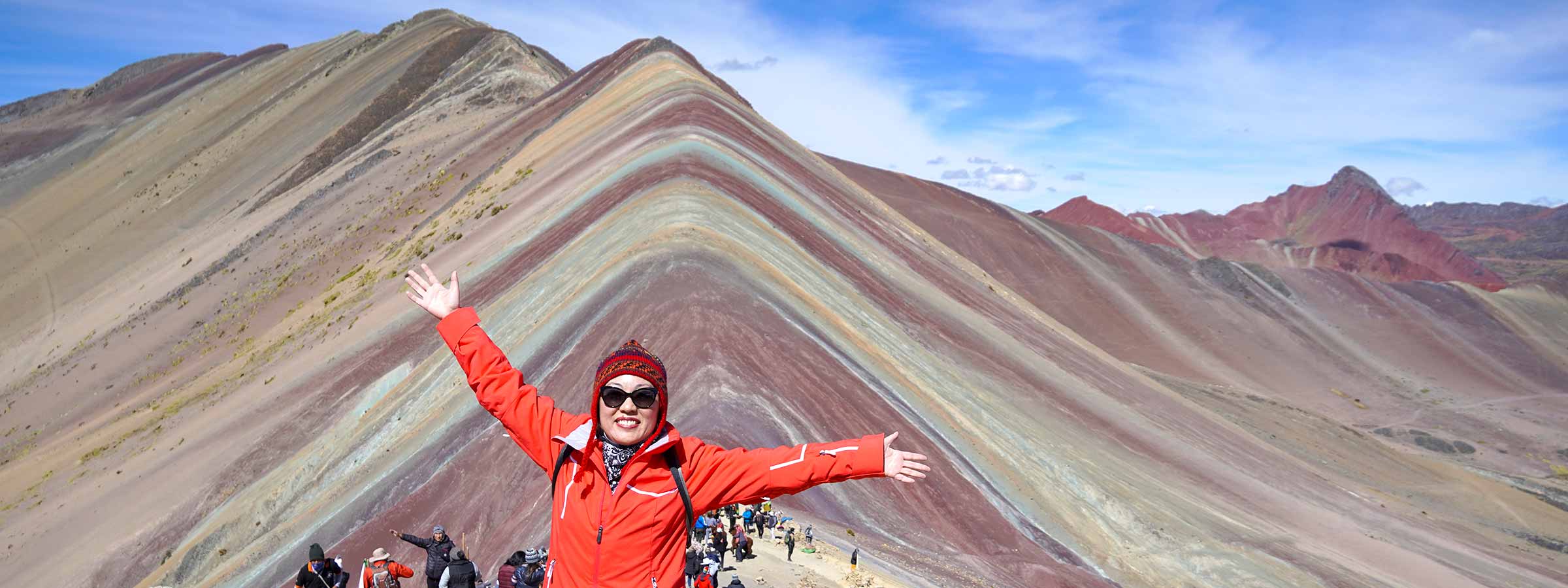
Cusco → Llactoc Trailhead → Vinicunca Summit → Cusco
Pre-dawn pickup at 05:00 AM from your group hotel. The Rainbow Mountain day is strategically placed at Day 5 — by this point, your students have had 4 nights to acclimatize, the safest sequencing for 5,100 m exposure.
Drive south through the high Andes toward the Ausangate range (~3 hours):
At Llactoc trailhead (4,900 m) your students meet their personal horsemen (arrieros) and horses — one horseman per student. The horsemen are local Quechua men whose families have raised horses in this valley for generations. Spanish language practice opportunity: students can chat with horsemen in basic Spanish about horses, weather, and local life.
Horseback ascent (55 minutes):
Dismount point → Rainbow Mountain summit (18 minutes walking):
Educational focus for student groups:
Walking descent (35 minutes downhill):
Buffet lunch at the Quiquijana area after the descent.
Return drive to Cusco (~3 hours). Arrival between 14:30 and 15:30.
Day 5 quick stats
Buffet
Challenging
7km (4.3 miles)
45-minutes
Llactoq: 4,900m (16,076 ft)
Llactoq: 4,900m (16,076 ft)
Rainbow Pass: 5,100m (16,732 ft)


Quechua Community Visit · 2,000+ Native Potato Varieties · Indigenous Knowledge Systems · Pisac Ruins
🥔 THE EXCLUSIVE DAY THAT NO OTHER TOUR IN OUR CATALOG INCLUDES
Pickup at 08:00 AM from your group hotel. Private vehicle to the Potato Park (Parque de la Papa) near Pisac (~1.5 hours drive).
The Potato Park (Parque de la Papa) is a community-managed indigenous biodiversity center at 4,070 m in the Andes near Pisac. Established and managed by six Quechua communities (Pampallacta, Paru-Paru, Sacaca, Amaru, Chawaytire, Cuyo Grande), the Park preserves:
The Park is part of a collaboration with the International Potato Center (CIP, Lima) and was recognized by the FAO as a Globally Important Agricultural Heritage System.
Morning at Paru-Paru community (~3 hours):
Organic potato-based lunch (~1 hour): Prepared by community members using 5-7 different native potato varieties, with traditional Andean accompaniments:
Spanish language immersion opportunity: students practice Spanish with community members in conversational contexts — vocabulary around food, family, agriculture, weather. The community members speak Spanish as their second language (Quechua is their first), creating a unique cultural exchange.
After the Potato Park lunch, drive to nearby Pisac archaeological complex:
Educational connection: the Inca terraces at Pisac are the same engineering tradition that the modern Potato Park communities continue to use — students see the historical continuity from pre-Columbian to contemporary indigenous farming.
Return to Cusco. Arrival at your group hotel approximately 18:30.
Educator note: Day 6 is consistently rated by students as the most memorable day of the trip — even more meaningful than Machu Picchu. The combination of indigenous community engagement, real food sovereignty learning, and historical-contemporary continuity creates lasting educational impact.
Day 6 quick stats
Potato lunch
Easy
A light walk
5 to 15 minutes
Potato Park: 4,070m (13,556 ft)
Potato Park: 4,070m (13,556 ft)
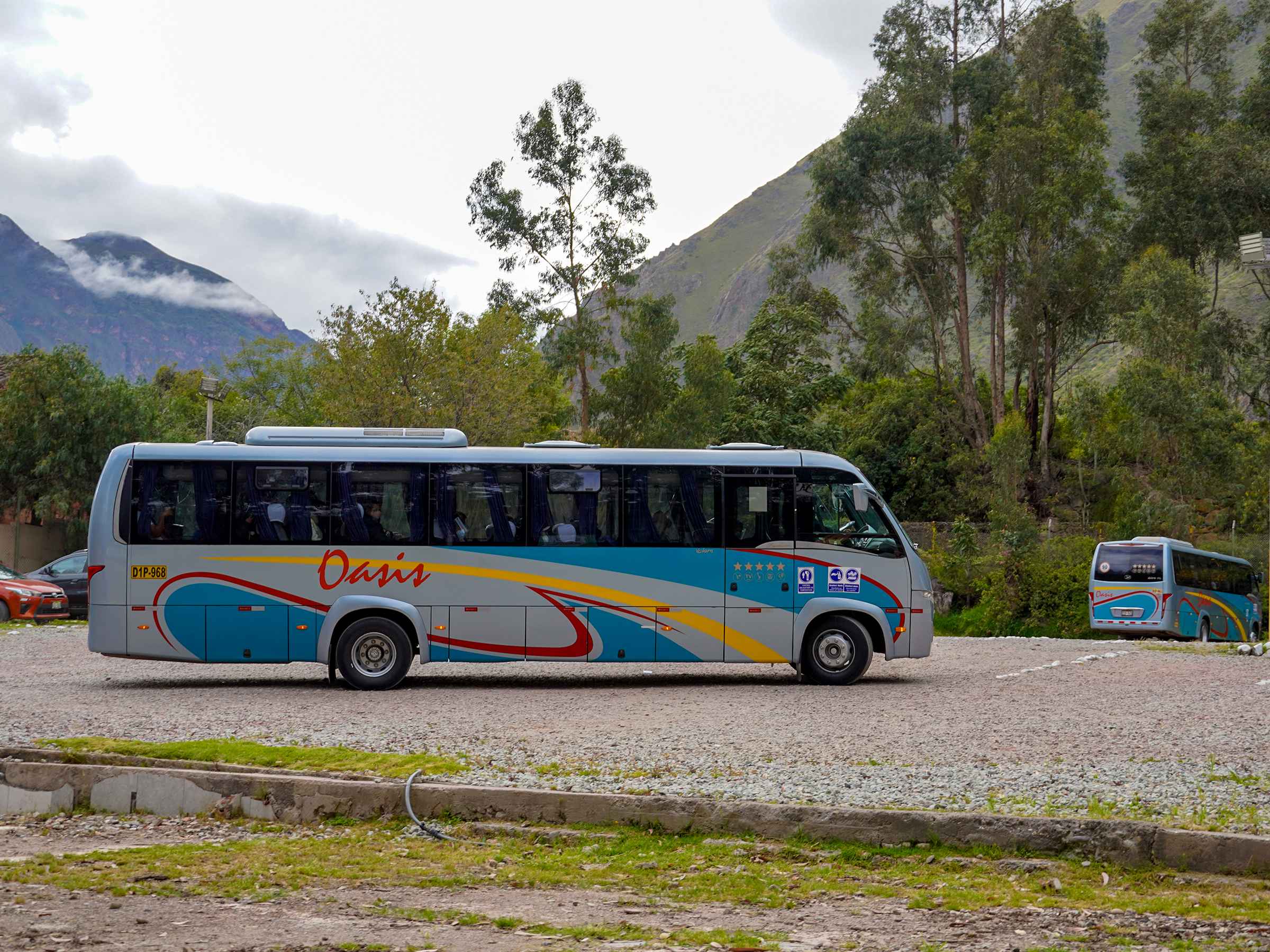
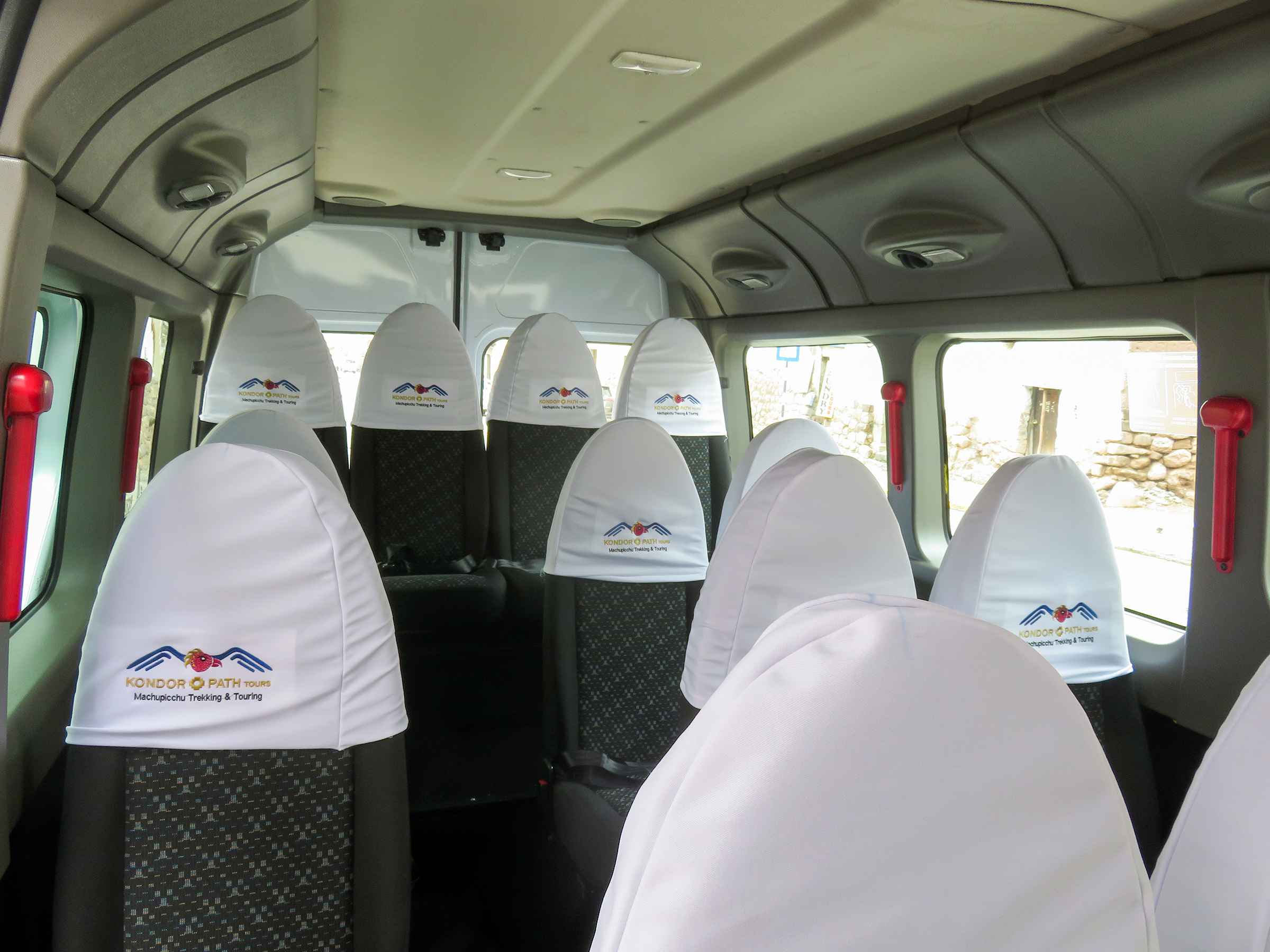
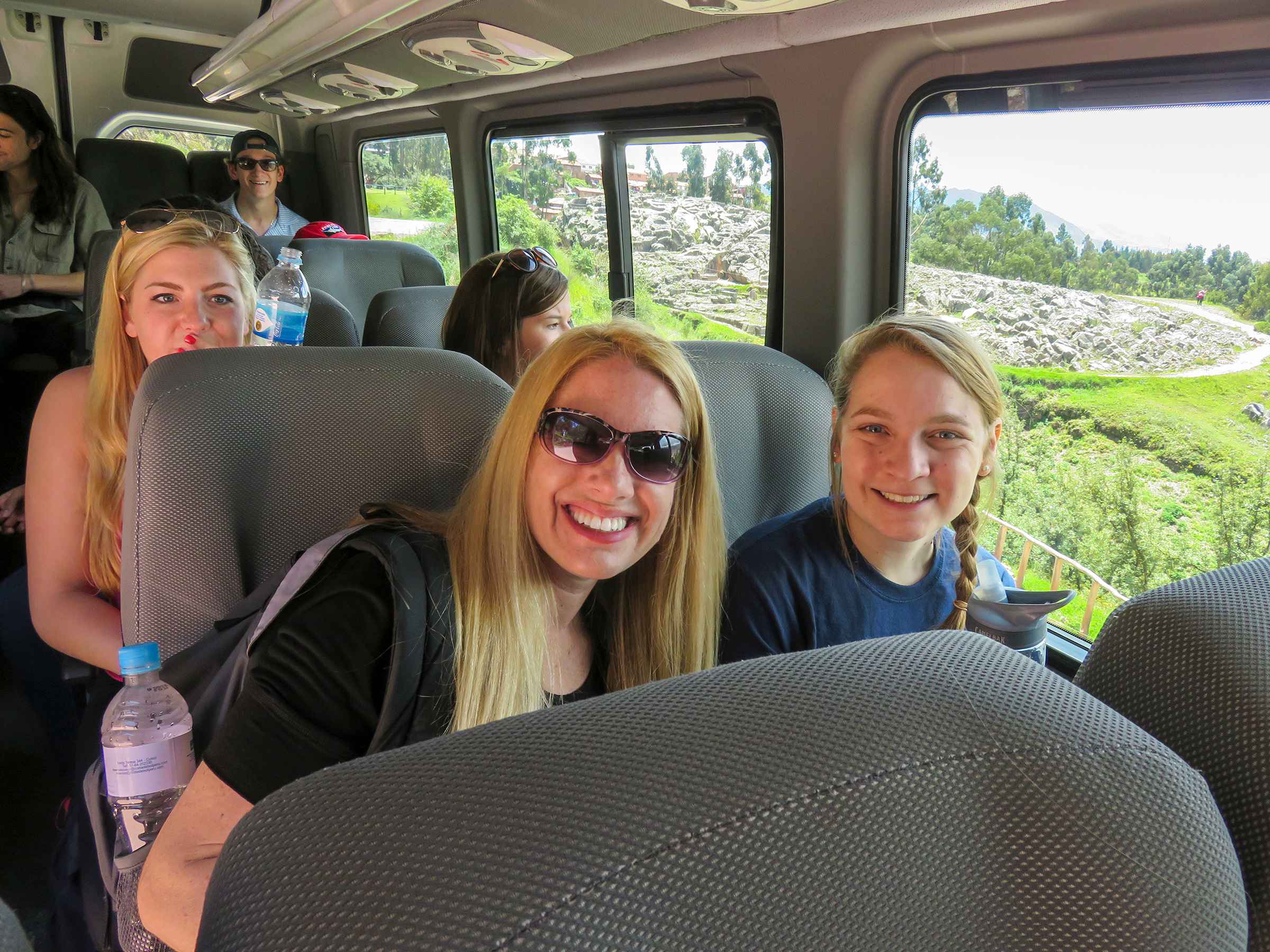
Group Transfer to Cusco Airport + Optional Adventure Add-Ons
The final day is flexible based on your group’s departure flight timing. Two scenarios:
Hotel checkout coordinated with your departure flight schedule. Group transfer to Cusco airport with sufficient buffer time for traffic, airport security, and luggage check-in. Your driver picks the group up from the hotel based on the optimal time we calculate from your flight departure.
For groups with late departures (afternoon/evening flights) or those extending their stay, Day 7 morning can include:
These add-ons are quoted separately based on group size and preferences — request at booking.
After add-on activity (if selected) and lunch, group transfer to Cusco airport timed to your departure flight.
Day 7 quick stats
Easy
None
None
Cusco: 3,350m (10,990 ft)
Cusco: 3,350m (10,990 ft)
Transport
Guides & entrances
Rainbow Mountain experience (Day 5)
Meals
Safety & taxes
As a direct local operator, we don’t bundle hotels because it hides 25-40% markups in the tour price. Educators booking student groups need transparency for budget approval — bundled pricing makes school finance offices nervous.
Group hotel recommendations by tier (10-22 students):
| Tier | Cusco (Days 1-2, 4-7) | Aguas Calientes (Day 3) |
|---|---|---|
| Budget — student-friendly ($35-60/student in shared room) | Pariwana Hostel Cusco, Wild Rover Hostel, Loki Cusco, Kokopelli Cusco | El Mapi by Inkaterra (group rate), Hatuchay Tower Hotel |
| Mid-range — for university programs ($80-150/student) | Tierra Viva Cusco Plaza, Casa Andina Standard, Sonesta Cusco | Sumaq Machu Picchu Hotel (group rate negotiable), Inkaterra Hatun Wasi |
| Premium — for executive/MBA programs ($200+/student) | JW Marriott El Convento Cusco, Belmond Hotel Monasterio | Inkaterra Machu Picchu Pueblo Hotel |
For school groups specifically:
Request our full group hotel recommendation PDF with current group rates at booking.
| Upgrade | Price | What you get |
|---|---|---|
| Vistadome train both ways | +$85/student | Panoramic glass-domed roof, complimentary snacks |
| Vistadome + Vistadome Observatory return | +$95/student | Premium experience for the return Day 4 |
| Vistadome Observatory both ways | +$125/student | Premium panoramic experience for both directions |
| Hiram Bingham luxury train (one way) | +$550/student | Belmond ultra-luxury train — typically for executive student programs |
| Huayna Picchu permit (Day 4) | +$75/student | Additional Machu Picchu side mountain hike |
| Machu Picchu Mountain permit (Day 4) | +$75/student | Alternative Machu Picchu side peak |
| Re-entry to Machu Picchu | +$75/student | Second entry into the citadel on Day 4 |
| Day 7 Maras bike tour | Quote on request | Half-day cycling adventure |
| Day 7 Raqchi zip line | Quote on request | Multiple zip lines south of Cusco |
| Day 7 White water rafting | Quote on request | Class II-III Urubamba river |
| Pre-trip academic preparation packet | Free for groups 10+ | Reading list, vocabulary list, cultural primer, post-trip reflection prompts |
| Custom educational deliverables | Quote on request | Lecture sessions with local archaeologists, field journal templates, faculty-only briefings |
Group discount tiers (10+ travelers): contact us for custom group quotes — university programs typically receive discounts not reflected in the standard pricing table.
Send ID or ISIC photo at the moment of booking — discounts cannot be applied retroactively.
The Student Travel Program Peru 7 Days is our only structured educational program designed for schools, universities, and study abroad groups (2-22 travelers).
It covers: Cusco arrival + Cusco City Tour (Day 1), Sacred Valley including Chinchero textiles + Maras Salt Mines + Moray + Ollantaytambo (Day 2), Short Inca Trail to Machu Picchu (Day 3), Machu Picchu guided tour on Circuit 3b (Day 4), Rainbow Mountain by horse (Day 5), **exclusive Potato Park
community visit + Pisac ruins (Day 6)**, and flexible departure (Day 7).
The package includes private transportation, bilingual guide experienced with student groups, all government entrance fees, Expedition train both ways, Short Inca Trail permit, Potato Park community participation fee, Rainbow Mountain horseback, organic community lunch at Potato Park, and
portable oxygen.
Hotels NOT included — educator chooses based on group budget tier (we provide curated recommendations from hostels to premium).
Four structural differences that make this an educational program:
(1) Community-based learning at the Potato Park (Day 6) — students participate in Quechua community activities, learning about indigenous biodiversity, food sovereignty, and intergenerational knowledge transfer. This is not a tour stop; it’s a structured cultural exchange.
(2) Built-in Spanish language immersion — Days 2, 5, and 6 include extended interaction with Quechua-Spanish speaking community members (textile weavers, horsemen, Potato Park farmers). Students practice real Spanish in authentic contexts.
(3) Learning outcomes mapping — each day’s activities map to academic disciplines (anthropology, environmental studies, geography, history, indigenous studies). Educators can request our learning outcomes guide showing how the program supports specific academic objectives.
(4) Pre-trip and post-trip materials — for groups of 10+, we provide free pre-trip academic preparation packets (reading list, vocabulary list, cultural primer) and post-trip reflection prompts. Custom academic deliverables available on request.
Result: educators can document academic value to their institution; students return with material for papers, presentations, and reflection essays.
The Potato Park is a community-managed indigenous biodiversity center at 4,070 m, established and managed by six Quechua communities that preserve over 2,000 documented native potato varieties — the largest in situ collection on earth.
Why students consistently rate this as the trip’s most memorable day:
industrial agriculture
prepared by community members using 5-7 native potato varieties
No other tour in our catalog includes the Potato Park. It’s our exclusive partnership with the Paru-Paru community for educational groups specifically.
The International Student Identity Card (ISIC) is the global standard for student identification, recognized in 130+ countries. With a valid ISIC card, students under 26 receive $40 off the Machu Picchu entrance fee.
How to get an ISIC card:
At booking: send a photo of each student’s ISIC card to apply the discount to their reservation.
Discounts cannot be applied retroactively — submit before final payment.
Other discounts:
Yes — customization is standard for educational groups. Common customizations:
Titicaca extension
materials** — reading lists, vocabulary lists, cultural primers
Insurance coordination — many universities require specific insurance providers
Request a custom educational quote with your specific program objectives.
Comprehensive safety protocols designed for educator and parent peace of mind:
Logistical safety:
communication protocols (24/7 WhatsApp)
Health safety:
Group safety:
Insurance: mandatory for all student travelers — many schools require specific insurance providers.
We recommend World Nomads but accept any reputable provider.
Pickpocketing: standard awareness in Cusco (especially crowded areas). Group orientation Day 1 includes safety briefing.
Altitude profile for educators:
5,100 m (highest, most demanding)
Critical considerations:
symptoms include headache, breathlessness, mild nausea, fatigue.
Usually resolves with rest, hydration, and coca tea
students with previous altitude issues
Medical clearance strongly recommended for students with pre-existing conditions.
Different seasons favor different educational program objectives:
May – September (Peak Season / Dry Season):
April & October (Shoulder Season):
November – March (Green Season / Rainy Season):
Educator note: many universities use this period for January/spring semester programs
For most educational programs: June-August is optimal for weather + alignment with academic calendars.
Possible with advance coordination, but with considerations:
The 7-Day Student Travel Program is designed for student cohorts traveling together. Parents can join the same booking with caveats:
parent discount available)
Better option for parent participation: book a separate parallel itinerary that we coordinate with the student group — same dates, same sites, but different pacing for adult travelers.
This typically uses our Premiere 5 Day Tour or Senior Travel Peru 5 Day (for older parents) running concurrently.
The groups meet for Machu Picchu Day 4 group photos and depart together on Day 7.
For full-family educational travel (with siblings under 18), consider our Family Travel Peru 5 Day Tour which is designed for mixed-age family groups.
All common dietary needs accommodated with advance notice:
dietary requirements** — accommodated (let us know specific requirements)
For the Potato Park community lunch (Day 6): the menu is plant-based and gluten-free naturally.
Vegan adaptations easily made.
For Day 3 Short Inca Trail box lunch: customized per student dietary need.
Submit dietary requirements form at booking — we coordinate with hotels, restaurants, and community for any meals included in the tour. For meals on students’ own expense (Day 1, Day 4 lunch, dinners), recommend students learn 3-5 key Spanish phrases for their dietary needs.
Three educator-focused reasons:
(1) Budget transparency. Bundled hotel pricing hides 25-40% markups. School finance offices need to verify that money paid to educational programs covers educational content — not hidden hotel commissions. Our transparent pricing lets schools document exactly what their money funds.
(2) Tier flexibility. Different educational programs have different budgets. A high school group might use budget hostels ($35-60/student). A university MBA program might use premium hotels ($200+/student).
Our pricing structure accommodates both.
(3) Chaperone configurations. Different schools have different chaperone-to-student ratios and rooming policies. Some require adjacent chaperone rooms.
Some require single-gender floors. Some require triple rooms for chaperone-student combinations. Direct hotel booking lets educators handle these specifics.
We provide curated recommendations by tier (budget, mid-range, premium) with current group rates and educator-friendly amenities (group spaces, breakfast options, central location, security).
Yes — Amazon and Titicaca extensions are popular for educational groups. Configurations:
Lake Titicaca extension (3 days post-program):
from Potato Park
Amazon Rainforest extension (3 days post-program):
Mountain Day 5
Lima cultural extension (2 days pre or post):
Combined multi-region educational programs (12-14 days) possible for university semester-abroad programs.
Request custom extension quotes at booking.
Standard cancellation policy:
Cancellations 60+ days before tour start: 80% refund (20% retained for non-refundable Short Inca Trail permit, Machu Picchu tickets, train tickets).
Cancellations 30-59 days before: 50% refund.
Cancellations 15-29 days before: 30% refund.
Cancellations less than 14 days: non-refundable, but rescheduling within 12 months is possible.
Group cancellation considerations:
disasters, political events, pandemic restrictions): full refund or free reschedule
Educator-friendly modifications:
Travel insurance with comprehensive coverage: strongly recommended — many universities require this for student programs. Some insurance providers offer trip cancellation coverage that protects against the non-refundable portions of our policy.
For all student travelers:
European, and Australian students don’t need a visa for Peru up to 90 days; check current requirements at www.gov.pe)
For chaperones/educators with student groups:
For students under 18 traveling without parents:
travel office
Important: passport requirements change.
Verify current requirements with the Peruvian embassy in your country before booking.
Ten concrete reasons educators specifically choose Kondor for student programs:
(1) Direct local operator in Cusco — DIRCETUR licensed, source price, no agency markups (transparency that school finance offices appreciate)
(2) 12+ years operating educational programs — we understand educator needs, not just tourist needs
(3) Exclusive Potato Park partnership — the most meaningful educational day is unique to our program
(4) Bilingual guides experienced with student groups — different from general tourism guides
(5) Free pre-trip and post-trip materials for groups 10+ — academic value extension
(6) Custom educational deliverables available — learning outcomes mapping, faculty briefings
(7) Group sizes up to 22 — largest in our catalog, ideal for school cohorts
(8) ISIC student discounts honored ($40 off Machu Picchu) — meaningful per-student savings
(9) Educator-friendly cancellation/modification policies — flexibility for school calendar changes
(10) Continuous on-site support from our Cusco operations team — 24/7 WhatsApp for educators

Student Travel Peru 7 Days
Transparent group-size pricing as a direct local operator. The larger your student group, the lower the per-student rate.
| Persons | Price (p/p) | |
| 1 | $ 1 903.00 USD | |
| 2 | $ 1 258.00 USD | |
| 3 | $ 1 031.00 USD | |
| 4 | $ 903.00 USD | |
| 5 | $ 839.00 USD | |
| 6 | $ 778.00 USD | |
| 7 | $ 740.00 USD | |
| 8 | $ 712.00 USD | |
| 9 | $ 711.00 USD | |
| 10 | $ 692.00 USD |