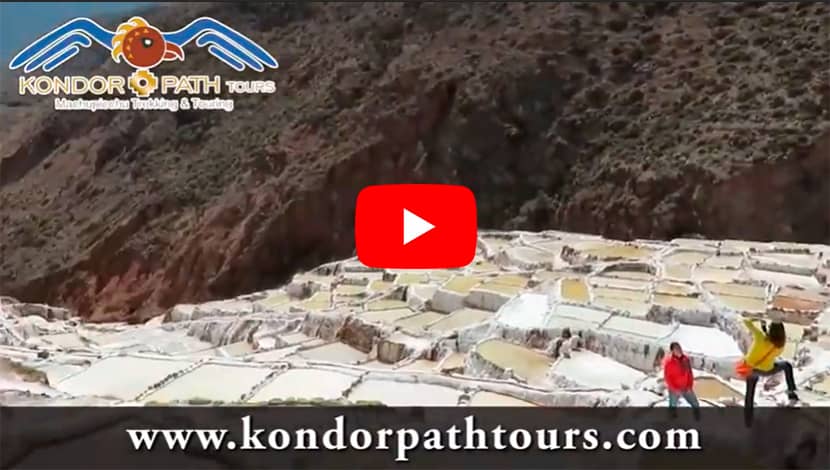
Maras Moray Salt Mines Tour — Half Day


The Sacred Valley’s Moray terraces and Maras salt pools, visited in a relaxed half-day outing.
The Maras Moray Half Day Tour is the most visually unique day tour in our catalog. Two sites you cannot see anywhere else in Peru — and an entire experience designed around them in just 5 hours.
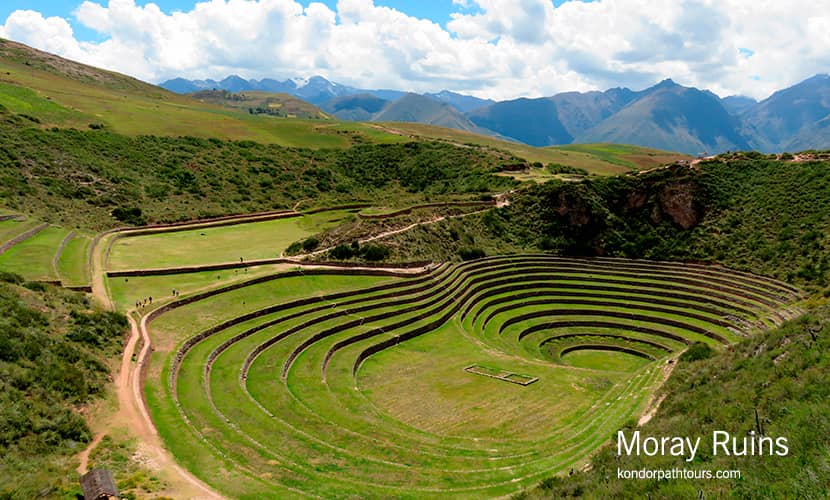
Moray is the Inca agricultural laboratory: three giant circular crater-terraces carved into a limestone plateau, where the Incas experimented with crop adaptation across 15°C of microclimate differential between the top and bottom rings. Salineras de Maras is 4,500 individual salt evaporation pools cascading down a steep mountainside in a geometric pattern that locals have maintained, family by family, for over 2,000 years.
Four reasons travelers choose this focused half-day format:
1. Flexible timing — morning, afternoon, or any hour your group needs. Most operators run fixed 08:00 morning departures only. We adapt to your schedule: arriving in Cusco at 10:00 AM and want to start at 11:00 AM? Done. Have a flight at 19:00 PM and want a 12:00 PM start to be back by 17:30 PM? Done. Want golden-hour light at the Salineras (16:00-17:00)? Book the afternoon slot. You tell us the time; we accommodate.
2. Pickup from your Cusco hotel OR directly from Cusco airport. Land in Cusco, meet your driver/guide at the airport waiting area with a Kondor Path Tours sign, and start the tour with your luggage in the vehicle. Useful for layover travelers, cruise day-trippers, or arrivals who want to use their day productively.
3. The complete sequence in 5 focused hours — not rushed, but efficient. We start at the Mirador de Machu Qolqa in Chinchero for the classic panoramic view of the entire Sacred Valley spread below. Then the Mirador de las Salineras where you’ll first see the 4,500 white salt pools cascading down the mountain from above (the iconic photo opportunity). Then we walk down INTO the Salineras themselves. Finally we drive to Moray for the Inca agricultural amphitheater. Logical sequence — viewpoint first, then descent into the sites you’ve just photographed from above.
4. Optional Pachamanca add-on — traditional Andean cooking experience. If you want to make this tour a full cultural immersion, we offer an optional Pachamanca add-on in the community of Pumas de Pumapata by Laguna de Piuray — a traditional Peruvian dish cooked underground using hot volcanic stones, served by the local community. This is a genuine cultural experience, not a tourist restaurant. Request at booking.
| ⏱️ Duration | 5 hours (pickup to drop-off ~5.5h) |
| 🕐 Timing flexibility | Morning, afternoon, or any hour your group prefers |
| 📍 Pickup | Your Cusco hotel OR Cusco airport |
| 📍 Drop-off | Your hotel or chosen location |
| 🏛️ Sites visited (in order) | Mirador Machu Qolqa → Mirador Salineras → Maras Salt Mines → Moray |
| 🎫 Entrance tickets | NOT included — purchase in soles at first site (~$24 USD total) |
| 🍽️ Pachamanca add-on | Optional traditional Andean meal in Pumas de Pumapata community |
| ⛰️ Max altitude | 3,800 m (Mirador Machu Qolqa, Chinchero) |
| 💪 Difficulty | Easy to moderate (short walks + Salineras descent) |
| 📅 Departures | Daily — year-round |
| 👥 Group size | 1-10 travelers |
| 💲 From | $28 USD per person (group of 10) |
| 🎓 Ideal for | Travelers with 5h window, families, photographers, foodies, cultural travelers |





The Maras Moray Salt Mines Tour packs half a day full of history and landscape. – Mirador de Machu Qolqa (Chinchero) — the classic panoramic view of the entire Sacred Valley spread below. – Mirador de las Salineras — first sight of the 4,500 cascading salt pools from above (iconic photo). – Salineras de Maras — 4,500 active salt evaporation pools, harvested by local families for over 2,000 years. – Moray — Inca agricultural laboratory with three giant concentric circular terraces and a 15°C microclimate. The Maras Moray Salt Mines Tour, distilled into its best moments.
The Maras Moray Half Day Tour is the most visually unique product in our day-tour catalog. It exists for any traveler who wants to see the two most extraordinary sites of the Sacred Valley — Salineras de Maras and Moray — without committing to a full-day Sacred Valley itinerary.
Who specifically benefits from this format:
(1) Travelers with 5-6 hours available in Cusco. Whether you’re between other activities, have a half-day window before/after Machu Picchu, or simply want to experience the Sacred Valley without a full-day commitment, 5 hours is exactly the right time to see both sites properly. We adapt the start time to your schedule.
(2) Travelers who already did the standard Sacred Valley tour. If your itinerary included the Sacred Valley Full Day Tour (Pisac + Ollantaytambo + Chinchero) but skipped Maras/Moray, this is the focused add-on tour to complete your Sacred Valley experience.
(3) Cultural travelers fascinated by Inca innovation. Moray is the Inca agricultural laboratory — a site where the Incas experimented with crop adaptation across microclimate differentials. The story behind Moray is more intellectually rewarding than any other archaeological site near Cusco, including Machu Picchu.
(4) Foodies interested in gourmet salt. Maras salt is one of the most prized culinary salts in South America, used by leading chefs in Lima, Buenos Aires, and beyond. You can buy directly from the families who harvest it at the source — at fair prices, with proceeds going to the harvesting community.
(5) Photography enthusiasts. The Salineras de Maras (4,500 white salt pools cascading down a mountainside) is one of the most photographed landscapes in Peru after Machu Picchu itself. The geometric pattern from the upper viewpoint is unforgettable.
(6) Families with children 5+. The visual impact of the salt pools and the giant circular Moray craters fascinates kids. The short walking sections and 5-hour duration are manageable for young attention spans.
(7) Travelers wanting cultural depth via Pachamanca add-on. The optional Pachamanca experience at the Pumas de Pumapata community (by Laguna de Piuray) lets you participate in a traditional Andean meal cooked underground with hot volcanic stones — a genuine community experience, not a tourist restaurant.
| Feature | Maras Moray Half Day ✓ | Super Sacred Valley Tour | Sacred Valley Full Day |
|---|---|---|---|
| Duration | 5 hours | 11 hours | 10 hours |
| Maras Salt Mines | ✅ | ✅ | ❌ |
| Moray | ✅ | ✅ | ❌ |
| Pisac | ❌ | ✅ | ✅ |
| Ollantaytambo | ❌ | ✅ | ✅ |
| Chinchero (Machu Qolqa viewpoint only) | ✅ (viewpoint) | ✅ (full visit) | ✅ (full visit) |
| Time at each site | Focused/extended | Spread across 6 sites | Spread across 4 sites |
| Pickup from Cusco airport | ✅ | ✅ | ✅ |
| Flexible start time | ✅ YES | ❌ (fixed 08:00) | ❌ (fixed 07:30) |
| Pachamanca add-on | ✅ Optional | ❌ | ❌ |
| From | $24 USD | Higher | Higher |
| Best for | 5h window + Maras/Moray focus | Full day all sites | Full day classic Sacred Valley |
Translation:
This half-day tour reaches two of the Sacred Valley’s most visually striking sites: the concentric agricultural terraces of Moray and the ancient salt-harvesting pools of Maras, both viewed first from their respective miradors before a closer visit.
Both sites sit at a similar, moderate elevation around 3,800 m, comparable to Cusco itself, meaning the tour doesn’t involve significant altitude change beyond what travelers have already adjusted to during their time in Cusco. The half-day format keeps walking light, making this an accessible outing even for those still acclimatizing.
The tour adapts to your schedule. Common start time options:
| Option | Pickup | End | Best for |
|---|---|---|---|
| Morning start | 08:00 | 13:00-13:30 | Travelers wanting to use afternoon for other activities; clearer light at viewpoints |
| Midday start | 11:00 | 16:00-16:30 | Travelers who want to sleep in or arrive in Cusco mid-morning |
| Afternoon start | 13:00 | 18:00-18:30 | Golden-hour light at Salineras (16:00-17:00); avoid morning traffic out of Cusco |
Custom times available — request at booking. We accommodate any start time your group prefers between 06:30 AM and 14:00 PM.


Hotel pickup: your driver/guide arrives at your Cusco hotel reception 5 minutes before agreed time. Identified with Kondor Path Tours sign.
Airport pickups work like this: your driver will be in the arrivals hall with a Kondor Path Tours sign displaying your name. The vehicle accommodates your luggage. After the tour, we drop you at:
For airport pickup: book 48 hours minimum so we allocate the driver. Provide flight number — we monitor for delays and adjust pickup time.
The drive from Cusco to the first stop takes approximately 45-50 minutes through the Chinchero plateau — a high-altitude agricultural plain with views of distant snow-capped peaks (Veronica, Chicón).
Mirador de Machu Qolqa is the classic panoramic viewpoint over the entire Sacred Valley — the same view used in postcards and travel documentaries about the region. You’re standing at approximately 3,800 m (the highest point of the tour) looking down into the valley where the Urubamba River cuts through the Andes.
What you’ll see from the viewpoint:
Your guide explains (8-10 minute narration):
This is also the moment your guide explains the day ahead — you’ll be visiting the highest viewpoint (here), descending to two more sites, and finishing at Moray. The visual context of seeing the entire valley before entering it gives meaningful framework for everything that follows.
Photography note: morning light (08:00-11:00) provides clearest visibility with crisp mountain backgrounds. Afternoon light (15:00-17:00) gives warmer tones but sometimes haze from valley convection. Bring a wide-angle lens if you have one — the panorama is genuinely 180°.
A short scenic drive (20 minutes) descends from the Chinchero plateau toward the Maras area. Just before we reach the Salineras themselves, we stop at the Mirador de las Salineras — the elevated viewpoint above the salt mines.
This is the iconic photo opportunity of the tour. From this viewpoint, you see the entire 4,500 salt pool complex from above — a vast geometric patchwork of white, beige, and pink pools cascading down the steep mountainside in a pattern that looks more like an abstract artwork than a working salt mine.
What you’ll see from the viewpoint:
Your guide explains (5-7 minute narration):
Photography from the mirador: this is the single best photographic spot of the tour. The aerial-style panorama of the 4,500 pools is the iconic Maras shot you see in travel publications. A polarizing filter cuts glare from the salt and enhances pool boundaries. Bring a telephoto lens if you want detail shots of individual pools and harvesters working below.
A 10-minute drive from the mirador brings us down to the Salineras themselves. This is the longest stop of the tour, because the experience is layered: walking among the working salt pools, interacting with harvesters, learning about the production process, and the opportunity to purchase salt direct from the community.
Important context — these are NOT a museum or archaeological site. The Salineras are a working operation that has continued without interruption for over 2,000 years (the pre-Inca Chanapata culture started salt production around 200 BC). Today, the operation involves about 480 local families, each owning between 1 and 8 individual salt pools. The 4,500 pools are entirely community-managed — no government, no corporation, no private ownership beyond family-level.
What you’ll experience here:
Section 1 — The descent into the salt pools (15-20 minutes)
A steep dirt path descends through the pool terraces. The path is approximately 200 meters long with gradual switchbacks. The path can be slippery due to salt crusts — proceed carefully and wear shoes with good grip. Your guide walks ahead identifying safe footing.
As you descend, you pass directly between active salt pools at all stages of the evaporation cycle:
Section 2 — The salt harvesting demonstration (15-20 minutes)
In the lower section of the Salineras, families work daily during the dry season. Your guide introduces you to harvesters (when available) and explains the 3-week harvest cycle in detail:
Most Maras families have harvested salt for 5-10 generations. The knowledge of which conditions produce which salt quality is passed down within families.
Section 3 — Salt purchase at community-owned stalls (15-20 minutes)
Near the bottom of the Salineras, the community operates community-managed sales stalls where families sell direct from their pools at fair prices. Common products:
Why buy here vs at Cusco shops:
Cash only at the salt stalls — bring soles. Card payments are not available.
Note about luggage: salt is heavy. If you’re at the start of a longer trip with luggage limits, consider buying smaller quantities. Maras salt is allowed through customs in most countries — verify your home country’s specific import rules for food products if planning to take large quantities.
Section 4 — The ascent back to the parking area (10-15 minutes)
The walk back up the same path. Moderately uphill but manageable — your guide sets the pace. Take photos along the way of pools you couldn’t see well on the descent.

None

Easy

A light walks

5 to 25 minutes

Cusco: 3,350m (10,990 ft)
Inca Salt Flats: 3,385m (11,105 ft)
Chinchero Ruins: 3,800m (12,467 ft)
Transport
Guides
Other
Entrance fees — buy in soles at the first archaeological site:
We intentionally don’t bundle entrance fees. Other agencies often mark up bundled tickets by 25-30% — we book separately instead, which keeps prices honest and discounts intact.
| Ticket | Cost in Soles | USD equivalent | What it covers |
|---|---|---|---|
| Boleto Turístico Parcial Circuit 3 | S/70 | ~$19 USD | Moray + Pisac + Ollantaytambo + Chinchero (valid 1 day) |
| Boleto Turístico Integral | S/130 | ~$35 USD | 16 sites across Cusco region including Moray (valid 10 days) |
| Maras community entrance | S/20 | ~$5.50 USD | Maras Salt Mines (managed directly by local community, separate from Boleto Turístico) |
Recommended ticket combination:
How to pay: your guide takes you to the ticket office at the first archaeological site (Moray or Salineras, depending on order — Salineras is typically first). You purchase directly from:
Cash in Peruvian soles preferred at both — bring S/100 in soles to cover entrance fees + small expenses. ATMs available in central Cusco before the tour.
Discounts apply directly at ticket offices:
Pachamanca — optional add-on, paid separately:
The traditional Pachamanca meal at Pumas de Pumapata community is an optional add-on. Request at booking and we coordinate. Pricing varies — contact us for current rates.
Other items NOT included:
As a direct local operator, we refuse to hide markups inside bundled tour pricing. You pay actual rates in soles at each ticket office:
Total cost with us (Half Day tour + entrance fees at $34 USD group rate): ~$48 USD per person. Total cost with bundled operators: typically $65-80 USD per person (35-65% markup).
You save $15-30 USD per person by booking with transparent pricing.
Primary audience:
Secondary audience — Pachamanca cultural experience:
Honest disclosure:
Everything you need to know about our Maras Moray & Salt Mines Half Day Tour — a focused half-day excursion to two of the most photogenic and geologically remarkable sites in the Cusco region.
The Maras Moray Half Day Tour is a 5-hour guided tour visiting 4 sites in order: Mirador de Machu Qolqa (Chinchero) for the classic panoramic view of the Sacred Valley, Mirador de las Salineras for the aerial view of the salt pools from above, Salineras de Maras (the 4,500
working salt evaporation pools), and Moray (the Inca agricultural amphitheater).
The tour includes private transportation, certified bilingual guide, pickup from your Cusco hotel OR Cusco airport directly, bottled water, and drop-off at your chosen location.
Entrance fees (Boleto Turístico Parcial Circuit 3 + Maras community entrance) are NOT included — purchase in soles at the first archaeological site for pricing transparency. Optional Pachamanca add-on available at Pumas de Pumapata community.
The tour follows a logical visual sequence: start high, descend, finish at the laboratory site.
(1) Mirador de Machu Qolqa (Chinchero) — 3,800 m: highest viewpoint, classic Sacred Valley panorama from above.
(2) Mirador de las Salineras: elevated viewpoint above the salt mines for the iconic aerial photo before you descend into them.
(3) Salineras de Maras (Maras Salt Mines): walk down into the 4,500 active salt pools, see harvesters working, buy salt direct from the community.
(4) Moray archaeological site — 3,500 m: the Inca agricultural amphitheater with three concentric circular terraces.
Why this order: viewpoints first to give visual context, then descent into the sites you’ve photographed from above, finishing at Moray (the most intellectually rewarding site) so you process the agricultural innovation story last.
The sequence also makes physical sense — viewpoints require minimal walking, and the steeper descents are at the end when you’ve warmed up.
The Mirador de Machu Qolqa is the panoramic viewpoint located near Chinchero (the Andean village on the Cusco plateau) at approximately 3,800 m altitude. It offers the classic view of the entire Sacred Valley — the same panorama used in travel publications about Peru.
From this viewpoint you see:
cultivation
We stop here for approximately 20 minutes — enough time for panoramic photography and your guide’s contextual explanation of the day ahead.
5 hours is the optimal duration for proper experience of all 4 sites without rushing.
Breakdown:
60-75 min
Shorter: not recommended — would require cutting either Salineras (the most experiential stop) or Moray (the most intellectually interesting).
Longer: yes, add the Pachamanca add-on for ~2-2.5 hours additional, totaling ~7-7.5 hours including a traditional Andean meal at the Pumas de Pumapata community.
Yes — operational specialty of ours. Your driver/guide waits at the airport arrivals waiting area with a Kondor Path Tours sign showing your name. The vehicle accommodates your luggage.
After the tour, we drop you at:
For airport pickup: book 48 hours ahead minimum so we can allocate the driver. Provide your flight number and arrival time. We monitor your flight for delays and adjust pickup time accordingly.
Yes — timing is fully flexible. We accommodate any start time your group prefers between 06:30 AM and 14:00 PM.
Common slots:
Salineras (16:00-17:00), best photographic conditions for the iconic salt pool shot
Custom times available — request at booking.
Why we’re upfront about pricing — three reasons:
(1) Cost clarity. Other operators typically tack on a 25-30% markup when bundling tickets. You’d pay $35-40 USD for what should cost $28.50 USD (S/70 + S/20). Splitting them out keeps the real cost visible to you.
(2) Discounts apply directly. ISIC student cards (50% off Boleto), Andean Community citizens (promotional rate), and children under 10 (50% off Boleto) get reduced rates at the official ticket offices — not at bundled tour prices.
(3) Easy purchase in soles. Your guide takes you to the ticket office at the first archaeological site (Salineras or Moray), where you pay directly from Peru’s Ministry of Culture cashier and from the Maras community gatekeeper. Takes 5 minutes total. Cash in soles preferred.
Recommendation: bring S/100 in soles to cover both entrance fees + small expenses (salt purchases, restrooms, tips). ATMs available in central Cusco.
Decision tree:
✅ Are you doing other Sacred Valley tours later (Pisac, Ollantaytambo, Chinchero, or Cusco City Tour)? → Buy Boleto Integral S/130 (~$35 USD). Valid 10 days, covers 16 sites region-wide.
❌ Only this Maras Moray tour, no other Sacred Valley plans? → Buy Boleto Parcial Circuit 3 S/70 (~$19 USD).
Valid 1 day, covers exactly the sites on this tour plus Pisac/Ollantaytambo/Chinchero (in case you change your mind).
Important: the Maras community entrance fee (S/20) is separate from any Boleto Turístico — Maras is community-managed, not government-managed. You pay it regardless of which Boleto you choose.
Deliberate sequencing for the best experience. The Mirador de las Salineras is an elevated viewpoint above the salt mines that gives you the iconic aerial view of all 4,500 pools at once — the photo you’ve probably seen in travel publications.
From the mirador you understand:
mines
Then you descend into the Salineras themselves with that aerial context already in mind.
It’s the difference between seeing a tree close up vs seeing the whole forest first. Travelers who skip the mirador and go straight to the Salineras consistently report feeling disoriented and missing the scale.
Yes — and this is one of the best parts of the tour. The community operates sales stalls in the lower section of the Salineras, where families sell directly from their pools. Common products:
Salt-based skincare (scrubs, bath salts, soaps)
Why buy here vs Cusco shops: direct from harvesters (no middleman markup), 40-60% cheaper than Cusco souvenir shops, authentic guarantee, proceeds support the community directly.
Cash only — bring soles. Salt is heavy — pack smaller bags if you have luggage limits. Maras salt is allowed through customs in most countries — verify your home country’s rules for food products if planning large quantities.
The Pachamanca is a traditional Andean cooking method dating back to pre-Inca times: meat, potatoes, sweet potatoes, corn, fava beans, and Andean herbs are buried underground with hot volcanic stones and slow-cooked for 1-2 hours.
Our Pachamanca experience is at the community of Pumas de Pumapata by Laguna de Piuray — a genuine Andean community where the Pachamanca is prepared in the traditional way by community members. This is a cultural experience, not a tourist meal.
Typical menu:
Andean salad
Vegetarian/vegan options available with 48-hour advance notice.
While the Pachamanca cooks (1-2 hours), you can walk by Laguna de Piuray, photograph the views, interact with community members, or visit weaving demonstrations if available.
Cost: contact us at booking — pricing varies by group size (typically $15-25 USD per person). Request 3-5 days ahead so we coordinate with the community.
Tour timing with Pachamanca: adds ~2-2.5 hours, totaling ~7-7.5 hours. Best scheduled at the end of the tour before returning to Cusco.
Consider the altitude. The tour starts at 3,800 m (Mirador Machu Qolqa) — 450 m above Cusco’s 3,350 m. Pacing is gentle and short walks, but first-day altitude exposure to 3,800 m can be challenging for travelers with altitude sensitivity.
Recommendations:
in Cusco
Our portable oxygen is available in the vehicle for any traveler who needs it.
Kids of any age are welcome. We do recommend 5+ if accompanied by an adult guardian over 21. For unaccompanied travelers, 18+ required.
Kid-friendly elements:
the giant circular crater (looks like a Roman amphitheater); optional descent feels like an adventure
Child discounts on Boleto Turístico:
Important: children under 18 traveling without a parent require a notarized parental consent letter (Peruvian regulation).
Yes — many of our travelers are 60+ years old. The half-day format is much less tiring than full-day Sacred Valley tours.
Senior-friendly aspects:
Portable oxygen in vehicle
Less senior-friendly elements:
For seniors with mobility concerns: walking poles helpful. Skip the Salineras descent if knees are sensitive. Mention concerns at booking.
Limited accessibility — honest assessment:
Accessible sections:
NOT accessible:
Recommendation: for wheelchair travelers, this tour offers only partial value.
Consider Accessible Peru Tours which is designed specifically for wheelchair users with 2 dedicated guides for lifting assistance, or contact us to discuss whether a customized private version of this tour can work for
your specific mobility needs.
Year-round operation with seasonal considerations:
May-September (Dry Season — best for Salineras):
April & October (Shoulder Season):
November-March (Green Season / Rainy Season):
⚠️ Some path sections may be slippery when wet
If photography at Salineras is your priority: prioritize June-September for the most active and photogenic salt pools.
Moray looks dramatic in any season — terraces not weather-dependent.
Maras Salineras:
Moray:
Mirador Machu Qolqa:
Best general slot for photography: afternoon tour (13:00 pickup) captures Salineras at peak midday brightness AND Moray in golden hour.
Clothing:
poncho** (December-March)
Bring:
protection needed at Salineras)
Don’t bring: heavy luggage (we hold it in the vehicle if needed).
Yes — most travelers combine. Common patterns:
Same-day combinations (request private tour for custom timing):
Multi-day combinations:
3**: Maras Moray Half Day
Pre-Machu Picchu pattern:
We build complete custom itineraries — request a quote.
Cancellations 72+ hours before departure: full refund.
Cancellations 24-72 hours before: 50% refund.
Cancellations within 24 hours: non-refundable, but can be rescheduled within 6 months at no extra cost (subject to availability).
Force majeure cancellations (extreme weather, strikes, road closures): full refund or free reschedule.
Why we’re flexible: no pre-purchased non-refundable items (no train tickets, no Inca Trail permits).
Need to reschedule? It’s free up to 24 hours out, based on availability.
Pachamanca add-on cancellations: same policy, but please cancel 48 hours before so we can notify the Pumas de Pumapata community in time (they prepare ingredients specifically for confirmed groups).
Four concrete reasons:
(1) Logistical efficiency: visiting 4 sites independently requires expensive taxis between sites (~$60+ total) or slow buses with extensive walking. Our $24-142 USD includes a private vehicle covering everything efficiently.
(2) Salt purchase navigation: most signage at the Salineras community stalls is in Spanish/Quechua only. Our guide helps you identify quality grades, negotiate fair prices, and understand product differences.
(3) Moray context matters: independent visits to Moray leave you looking at “circular terraces” without understanding the agricultural laboratory function. Our guide explains the microclimate science and Inca agricultural innovation that makes Moray intellectually rewarding.
(4) Pachamanca coordination: the community-based Pachamanca add-on is only accessible through guided tours that coordinate with the community in advance.

Maras Moray Tour Half Day
Transparent group-size pricing — the larger your group, the lower the per-person rate.
| Persons | Price (p/p) | |
| 1 | $ 185.00 USD | |
| 2 | $ 110.00 USD | |
| 3 | $ 77.00 USD | |
| 4 | $ 59.00 USD | |
| 5 | $ 50.00 USD | |
| 6 | $ 43.00 USD | |
| 7 | $ 37.00 USD | |
| 8 | $ 33.00 USD | |
| 9 | $ 30.00 USD | |
| 10 | $ 28.00 USD |


Maras Salt Mines tour