Amaru Community Tour: Pisac Weaving & Textile Day Trip


A full day with Andean weavers, from natural dye-making to a hands-on textile workshop near Pisac.
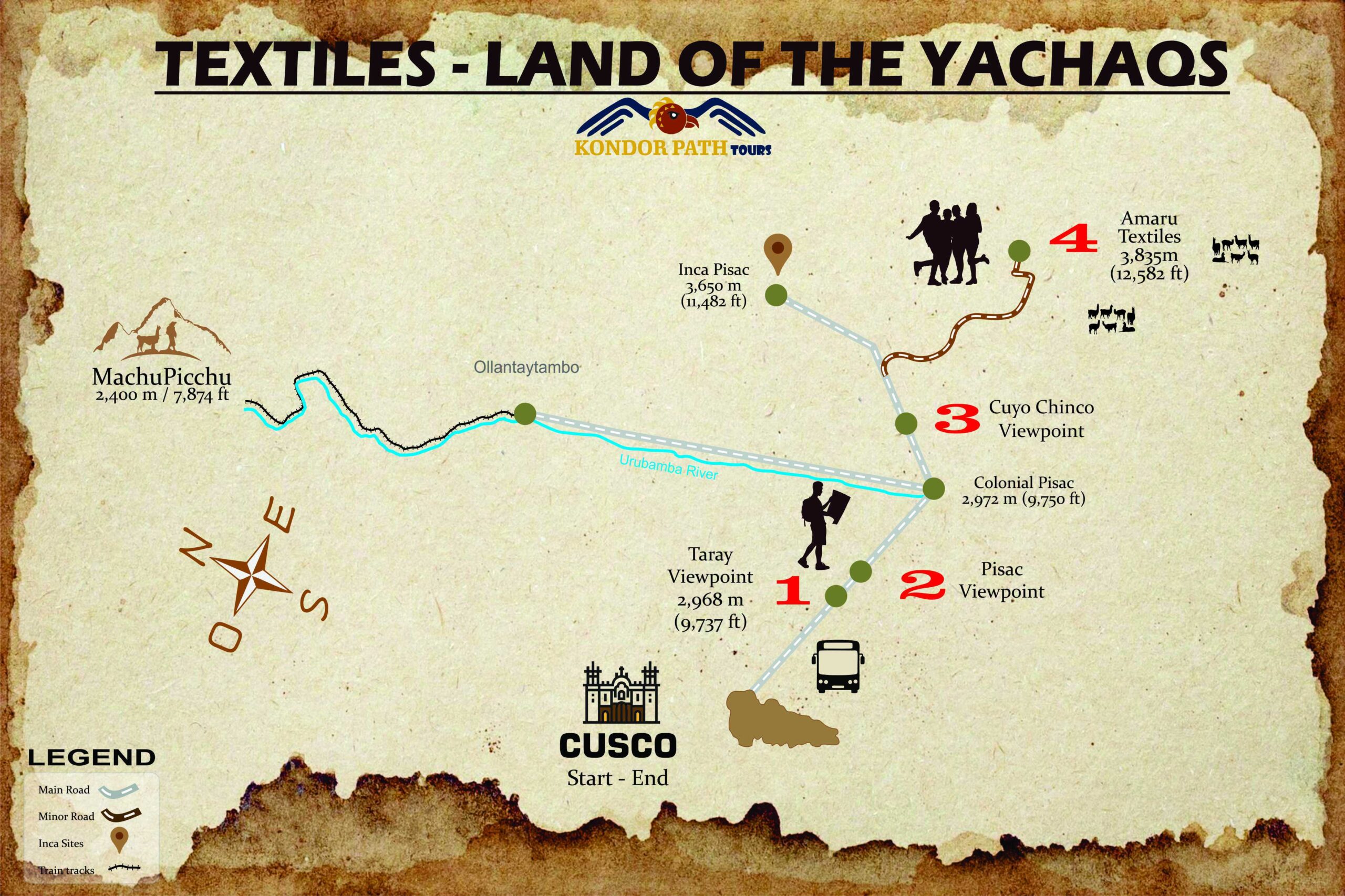
The Amaru Community Tour is a full-day cultural immersion in one of the Sacred Valley’s most respected weaving villages — not a rushed photo stop, but hours spent alongside the artisans themselves: spinning alpaca wool, watching natural dyes take shape from local plants, and sitting down to a homemade lunch prepared by the women of Amaru. Along the way, the route also takes in Awanakancha’s camelid farm and two of the valley’s best viewpoints, Taray and Pisac, before the deeper stop in Amaru itself.
The day is built around a simple idea: altitude and pace both ease you in gradually. Awanakancha and the viewpoints sit at moderate elevation on the way out from Cusco (3,400 m), and Amaru itself — the day’s highest point at 3,835 m — comes only after that gradual approach, with the walking inside the village itself kept short and easy (5-10 minutes). There’s no trekking here, just a full day of genuine cultural exchange at a comfortable pace.
| 💰 From | $72 USD per person (group of 10) |
| ⏱️ Duration | Full day (~8 hours: 8:30 AM–4:30/5:00 PM), including ~4-5 hours in Amaru |
| ⛰️ Max altitude | Amaru Community, 3,835 m (12,582 ft) |
| 🚶 Physical level | Easy — short walks only, 5-10 minutes at a time |
| 📅 Season | March–December daily (heavier rain Dec–Mar, still runs) |
| 👥 Group size | Private, 1-10 travelers (10+, contact us) |
| 🎂 Minimum age | 5+ with a guardian over 21 |
| 🍽️ Meals | Homemade lunch in Amaru included |





A full day built around genuine cultural exchange, not a checklist of photo stops. – Meet all four Andean camelids — llamas, alpacas, vicuñas, and guanacos — at the Awanakancha farm. – Take in panoramic Sacred Valley views from both the Taray and Pisac viewpoints. – Join a hands-on textile workshop in Amaru: spinning, natural dyeing, and weaving, taught by the artisans themselves. – Share a homemade lunch prepared by the women of the Amaru community. This is the Amaru Community Tour at its best.
Most Sacred Valley day trips treat Pisac as a stop on the way to somewhere else — twenty minutes at the market, a quick look at the ruins, back on the bus. This tour flips that entirely: the destination is Pisac’s less-visited side, built around a full day inside the Amaru community, one of the Sacred Valley’s most respected weaving villages.
The day opens at Awanakancha, a working camelid farm where llamas, alpacas, vicuñas, and guanacos graze side by side — a good first stop for understanding where Andean wool actually comes from before watching it become textiles later in the day. From there, the Taray and Pisac viewpoints offer sweeping views over the valley floor, setting up the drive into Amaru itself.
In Amaru, the pace slows down considerably. Visitors are welcomed with traditional Andean music, dress in traditional textiles alongside their hosts, and take part in a Pachamama ceremony led by a local Andean priestess — a genuinely spiritual moment, not a staged photo op. The afternoon is spent hands-on: spinning wool, learning how local plants become natural dyes, and trying the weaving techniques themselves, before a homemade lunch prepared by the women of the community and a chance to buy textiles directly from the artisans who made them.
Both tours visit indigenous communities near Pisac, and it’s easy to confuse them. Amaru is a weaving village — its identity, activities, and income center on textile production, natural dyes, and the Pachamama ceremony. The Potato Park Pisac Tour visits a completely different community, Paru Paru, whose focus is agricultural: preserving over 1,400 native potato varieties. If textiles and weaving interest you more than farming, Amaru is the better fit — and vice versa.
The Amaru Community Tour moves through the Sacred Valley in stages, saving the deepest, slowest part of the day for last. Awanakancha and the two viewpoints keep the morning at a relaxed sightseeing pace, before the afternoon settles into several unhurried hours inside Amaru itself.
Altitude rises gradually across the day rather than all at once. Leaving Cusco at 3,400 m, the morning stops at Awanakancha, and the viewpoints sit at broadly similar elevation, and Amaru — the day’s high point at 3,835 m — is reached only in the early afternoon, by vehicle rather than on foot. Since the walking inside the village itself is short (5-10 minutes at a time), the altitude gain is never something travelers have to work for; it’s simply where the day ends up.

Your guide picks you up from your hotel at 8:30 AM (or from anywhere near Cusco, by arrangement). The first stop is Awanakancha, home to all four Andean camelids — llamas, alpacas, vicuñas, and guanacos — grazing together on the farm grounds, a good opportunity for close-up photos before continuing into the valley. From there, two viewpoints follow in quick succession: Taray, overlooking the Sacred Valley with the Urubamba River visible below and Pisac’s terraced hillsides in the distance, and Pisac itself, one of the clearest wide views of the valley on the entire route. A short stop at the Cuyo Chico lookout point rounds out the morning before the road turns toward Amaru.
Arrival in the Amaru community — known locally as “Tierra de los Yachaqs” — comes with a welcome of traditional Andean music, a Kantu flower necklace, and traditional Amaru clothing shared alongside your hosts. A short walk (5-10 minutes) through the community garden introduces the native plants still used today for dyeing, medicine, and ritual, before a Pachamama ceremony led by a local Andean priestess — a genuine offering of gratitude, not a performance for cameras. The afternoon settles into the community’s textile workshop: spinning raw alpaca wool, preparing natural dyes from local plants, and trying traditional weaving techniques with guidance from Amaru’s own artisans.
The day closes with a homemade lunch prepared by the women of Amaru, served in the community’s own Yachaq Hall, followed by time to browse and purchase handwoven textiles directly from the artisans who made them, with proceeds going straight to their families. Departure from Amaru is around 3:00–3:30 PM, arriving back in Cusco by approximately 4:30–5:00 PM depending on traffic.
Day 1 stats

Amaru Lunch

Easy

A light walk

5 to 10 minutes

Amaru: 3,835m (12,582 ft)
Amaru: 3,835m (12,582 ft)
Looking for something that also covers the Pisac ruins and market? The Super Sacred Valley Tour includes those alongside several other Sacred Valley stops.
There are no paid add-ons for this tour — it runs as a single, complete full-day experience.
Most Pisac tours focus on the ruins and the market. This one is built entirely around the Amaru weaving community — a full day of hands-on textile work, a Pachamama ceremony, and a home-cooked lunch, rather than a quick stop.
They visit two different communities. Amaru’s identity centers on weaving and textiles; the Potato Park Pisac Tour visits Paru Paru, a community focused on preserving native potato varieties. Choose based on which craft interests you more.
Visitors take part in the full process the Amaru weavers use: spinning raw alpaca wool by hand, preparing natural dyes from local plants, and trying the traditional loom techniques themselves, with guidance from the community’s artisans throughout.
It’s a genuine Andean spiritual practice, led by a local priestess as an offering of gratitude to Mother Earth — the same kind of ceremony still held across highland communities, not something staged specifically for visitors.
All four South American camelids: llamas, alpacas, vicuñas, and guanacos, grazing together on the farm grounds — a useful stop for understanding where the wool used in Amaru’s textiles actually comes from.
Yes — a homemade lunch prepared by the women of the Amaru community, served in the community’s own Yachaq Hall, made with local ingredients.
Very little. The longest walk of the day is 5-10 minutes through the community garden. This is a cultural immersion day, not a trekking day.
Yes, children aged 5 and older are welcome when accompanied by a guardian over 21. The easy pace and hands-on activities make it a good fit for families.
Yes — there’s time at the end of the visit to purchase handwoven textiles directly from the artisans who made them, with the proceeds going straight to the families of Amaru.
The tour runs daily from March through December. April through September offers the driest conditions; December through March brings a higher chance of rain, though the tour still operates.
Yes — the community is welcoming and family-oriented, and groups are always accompanied by a guide throughout the visit.
Quechua is the community’s first language, though your guide translates throughout the visit; some community members also speak conversational Spanish.
Yes, photography is welcome, though your guide will let you know if there’s a moment better experienced without a camera in hand.
Season 2026
Let us know if your group size exceeds ten so we can arrange the best rates and support.
| Persons | Price (p/p) | |
| 1 | $ 315.00 USD | |
| 2 | $ 185.00 USD | |
| 3 | $ 142.00 USD | |
| 4 | $ 115.00 USD | |
| 5 | $ 104.00 USD | |
| 6 | $ 92.00 USD | |
| 7 | $ 86.00 USD | |
| 8 | $ 79.00 USD | |
| 9 | $ 75.00 USD | |
| 10 | $ 72.00 USD |